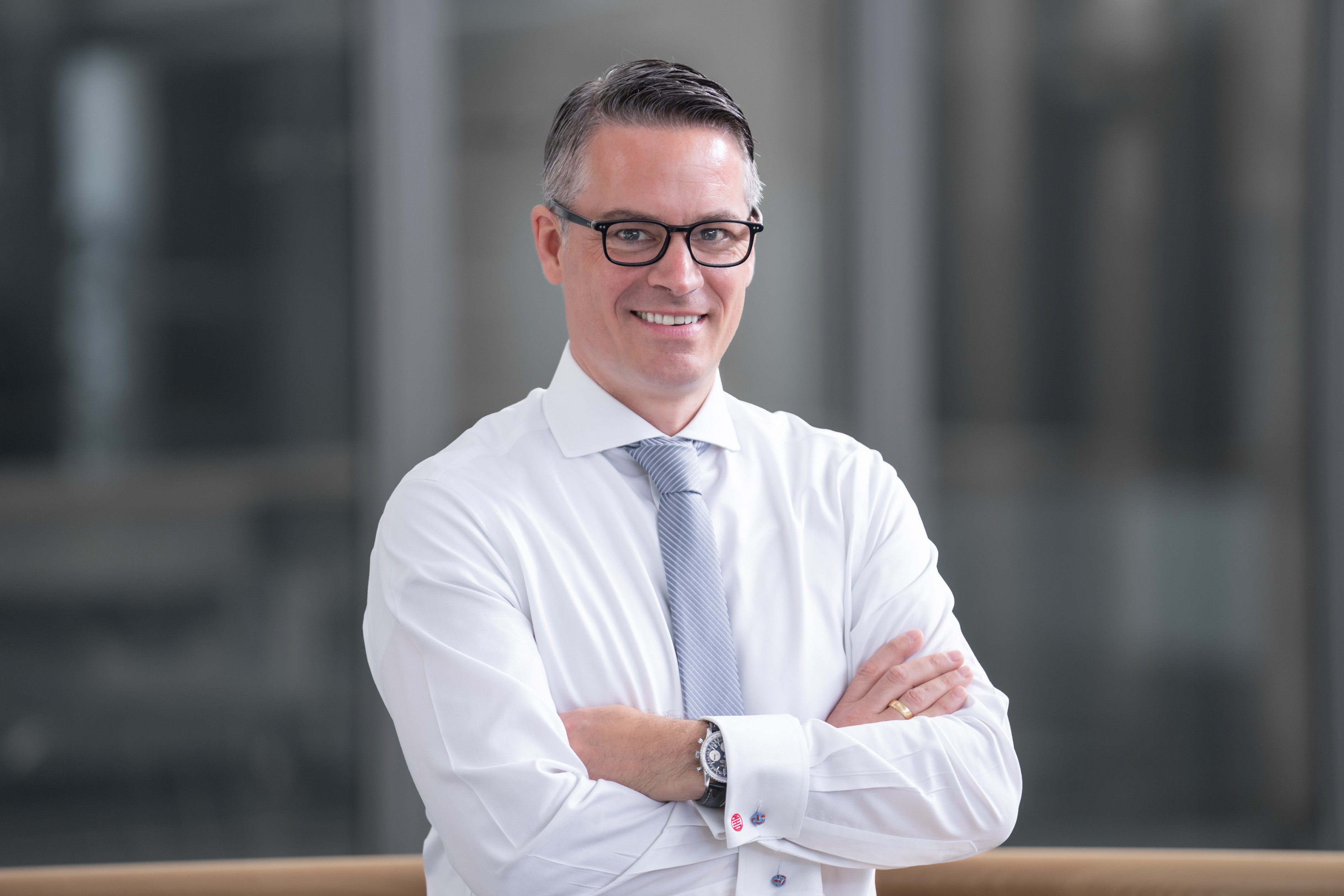
Dynamic Sealing is in a solid financial position — and that can make leadership more challenging than it appears from the outside. After all, when there’s no major restructuring to be dealt with, no spectacular M&A project making headlines, and no crisis forcing quick action, success is often determined by the details. Dr. Mark Ostwald, head of the Dynamic Sealing Division, discusses in this interview why “nuances” make the difference, why he focused primarily on listening and visiting locations around the world — and how he fostered a new team spirit during a period of reorganization.
Mark, Dynamic Sealing appears—at least from the outside—to be a very stable business. What still makes your job so exciting?
Precisely that stability. We are not dealing with major “headline issues.” In other parts of the company, restructuring or M&A activities tend to dominate attention; in our case, the focus lies elsewhere. That can be a disadvantage, because it means you quickly slip out of the spotlight. But it is also a strength: it gives you the space to focus on what truly matters.
Overall, Dynamic Sealing is in very good shape. And when a business is healthy, it’s rarely the big, radical changes that make the difference—it’s the nuances. Small differences in setting focus and priorities, in implementing ideas, or in communication can be decisive. To be honest, I find working on these finer points incredibly exciting.Fokus und Prioritäten, bei der Umsetzung von Ideen oder bei der Kommunikation können entscheidend sein. Dieses Arbeiten an den Feinheiten finde ich ehrlich gesagt hochspannend.
You’ve already held various positions at Freudenberg—including in the medical division and, prior to Freudenberg, in consulting. Is the role more challenging today—or simply different?
I’m not sure if everything here is really that “different.” When I started, the question naturally came up right away: “What are you bringing from the medical sector—what are you introducing now?” I jokingly replied, “Starting tomorrow, we’ll all be wearing cleanroom suits and hairnets.” But that’s not how it works.
What’s much more crucial is: What’s comparable—and what isn’t? When it comes to technologies, there are surprisingly many parallels. Injection molding, transfer molding, compression molding: these are manufacturing principles we used just the same in the medical sector. Differences tend to lie in the details—for example, different materials, more thermoplastics and silicones there, more rubber here—and in individual post-processing steps.
The fact that the medical division historically emerged from FST made the transition even easier. Of course, there are medical business units that operate completely differently—but for my start here, the transition itself wasn’t a major issue. It was more challenging to understand the specific setup: How does our sales function work? How are we organized? What products and market segments do we have? And above all: Which teams do we collaborate with globally?
What did you prioritize right at the beginning—processes and numbers, or people and plants first?
Definitely the people and the plants. That’s a lesson I’ve learned from experience. If you don’t get that right from the start, your schedule eventually becomes so packed that it’s very hard to make up for it later. And it makes a huge difference at a site when colleagues realize that the “new guy” is genuinely interested in them.
That’s why I traveled to the plants very quickly, got to know my leadership teams, and saw how differently the sites operate. That was motivating because I saw the passion with which colleagues all over the world care for products, customers, and their respective plants. At the same time, it gives you a compass: What do I need to prioritize as a leader?
What surprised you most during this “tour” of the sites—and where did you make specific adjustments?
To be honest, I had expected operations to be more consistent—more standardized, with more uniform processes around the world. When it comes to equipment, we are actually fairly standardized. But as soon as you look at processes—Lean, shop floor communication, employee relations, established routines—the differences were sometimes quite striking.
For me, this was not just an observation; it was also a clear mandate to address these issues. In some areas, we had to roll up our sleeves, because otherwise it would have been difficult for the division to truly grow together. This also involved an issue with historical roots: two divisions had been merged, followed later by the consolidation of Lead Centers with Lead Center Powertrain and Lead Center Simmerring Industry—and there was often a certain lack of understanding for the “other side.”
Comments such as, “That’s automotive; you can’t compare that to our business,” were common. Friction points like these do not create value. We therefore made a deliberate effort to increase transparency, strengthen communication channels, and bring the team closer together. The willingness was there—we simply had to create the right framework. For me, one thing was clear: at some point, this post-merger integration process has to be completed; otherwise, we will remain stuck in old structures.
You’ve also made some organizational changes. How much tact does it take to ensure that something like this is not perceived as a “power play”?
It takes a great deal of tact—and, above all, clarity about the purpose behind it. In the end, there can only be one Lead Center manager. Decisions like these are never purely organizational; they touch on identities, long-established teams, and personal pride.
At the same time, we were facing a second major challenge: José Serrano, the long-serving Lead Center manager in Langres, retired. With him, we lost not just a position, but a key figure—a personality with immense experience, standing, and deep production expertise. When this became reality, I had only been in the role for four months. The questions were: Do we look externally? Can we find someone internally? And how do we ensure continuity?
At the time, I very deliberately chose what I would call “nuance over radical change.” Many of our Lead Center managers had been in their roles for a very long time. I found the idea appealing—if also somewhat bold—to move people around strategically: not because anything was going wrong, but to look at a successful business from a new angle and with fresh eyes.
I discussed this approach at length with my colleagues in Human Resources, considered different scenarios, and then put it into action. In short, we set the personnel carousel in motion and initiated a series of rotations. Since 2026, the leadership teams have been operating in a new configuration. What mattered most to me was this: it was never about creating unrest. It was about keeping teams intact while at the same time opening up new perspectives. Based on what we have seen so far, that has clearly released new energy.
Some teams swear by continuity—others benefit from rotation. How do you find the right balance?
Both can be right—continuity provides security, while rotation can create new perspectives. For me, it was important that we view this change not as an end in itself, but as part of talent development.
What does that mean?
One strong signal was that we were able to fill all open positions internally. We opened up new opportunities for colleagues—and we also deliberately took people out of “boxes” by assigning them different tasks. Of course, this kind of rotation isn’t without risk. But so far—knock on wood—it’s been very successful.
I recently joined a division meeting in Opatovice. There, I deliberately said: As of today, the post-merger integration process is officially over. Why? Because not once all week did I hear: “That’s automotive” or “That’s general industry; you can’t compare the two.” That wasn’t an issue anymore—because we’d worked on it beforehand: trust, communication, transparency, respect, openness.
And that openness is crucial. When someone from the outside looks at your business and says, “Have you thought about this? From my perspective, it doesn’t quite add up,” then the question is: Do we feel offended, do we become defensive—or do we explain our perspective while also engaging with the other point of view? The latter would be ideal and would mean accepting constructive criticism.
For you, talent management is a lever. Where do you start—and what have you learned from looking at North America?
During my site visits, I noticed how “Europeanized” many of our North American locations have become—including in the way they’re managed and how communication takes place. During my time in the medical sector in the U.S., I would have had quite a few things thrown back in my face, because employees there process criticism and directness differently.
When you talk about growth markets—North America, China, India—how do you avoid Europe “explaining the world” to others and thereby missing the mark in the market?
By accepting that “similar” does not mean “the same.” Especially when it comes to North America, Europeans often underestimate the differences. On the surface, much of it looks familiar, but when you look behind the scenes, there are major differences culturally, commercially, and in decision-making processes. It becomes dangerous when Europeans convince themselves: “It’ll work out somehow.”
A practical example: In the heavy-duty and oil seal industries, we’ve struggled in North America for decades. The measures taken over the past 15 to 20 years weren’t wrong per se—but perhaps the combination wasn’t ideal. Perhaps we didn’t focus on the right market segments. We can’t simply adopt what works in Europe or what is recommended from here. Strategic responsibility must lie with the region—but so must the freedom to act accordingly.
The same applies to China and India. A Lead Center can define structures and tools, but the content must come from the region. We cannot use a European lens to define which market segments, for example in India, should be prioritized.
Our joint venture partner NOK has also realized that we are not sufficiently profiting from market growth in China and India because we do very little business with local companies, but primarily with Japanese or Western ones. Why? Because the goals, strategies, and degree of autonomy for the local teams are not set appropriately.
For me, the conclusion is this: If we want to be successful in these regions, we must expand the decision-making autonomy of local management teams. Autonomy is not a loss of control—it is a prerequisite for gaining market share in local markets.
When it comes to “Operating System”: What changes did you make deliberately?
My focus here is on how we lead the division: What are the regular meetings and decision-making processes? How do we interact with the regions—from monthly meetings to quarterly formats? How do we communicate within the division, including through Human Resources? What communication channels keep us connected to the front lines?
A first step was to understand this system and continue it as a matter of principle—because stability is especially important in a newly merged organization. At the same time, we also refined certain aspects within the Leadership Team, because some things simply weren’t being fully implemented yet.
For me, a key success factor for Dynamic Sealing is clearly the so-called “Rolling Top 5,” a dynamic list of the five most important projects with the greatest impact for the site, which we want to implement with focused priority. These top projects are continuously reviewed. This ensures that even when priorities shift due to changes and trends, the sites are working on the topics that are currently most important. The Rolling Top 5 can be applied across an entire organization, in all departments. So far, however, we have not yet applied this highly successful management approach uniformly everywhere. We are currently assessing where harmonization makes sense and at what point standardization and clear guidelines are necessary.
Another element is what we call Multi-Gen Plans. By this we mean a long-term development roadmap for a core process that describes, in clearly defined maturity levels—generations—where we stand today and what needs to be done next to achieve world-class standards. It creates transparency by standardizing goals, process standards, and metrics across teams and locations. Unfortunately, in my view, the Dynamic Sealing method has not yet yielded any measurable efficiency gains—but it is nevertheless demonstrating its value.
Why?
Because the teams exchange ideas, think strategically about the development of their functional areas, and define measures to become “best in class.”
We have recently refined the methodology, defined key performance indicators, and established review cycles to ensure that our Multi-Gen Plans deliver measurable contributions to results in the future. It is also important to me that we create networks at all levels. In our organization, networks often function well up to the General Manager level—but beyond that, they tend to become thinner.
There is often a lack of a suitable platform for regular exchange. The aforementioned Multi-Gen Plans and cross-functional forums help bridge this gap—even informally, because people who know each other are more likely to pick up the phone and help one another.
In this context, you also mention new metrics—such as a Supply Chain Performance Index—and “Value Stream Costing.” What’s behind these?
Our supply chain team has developed a new key performance indicator (KPI): the Supply Chain Performance Index. This metric combines several KPIs with different weightings, including material availability, supplier performance, our own on-time delivery rate, and other indicators. It gives us a clear monthly picture of whether our plants are moving in the right direction.
The second topic—value stream costing—addresses something fundamental: cost transparency that is easy to understand at every level. Value streams are mapped, and direct and indirect costs are assigned to individual stations. If everyone can see and understand this, I expect it to lead to a significant boost in cost reduction. Some employees feel powerless because they do not understand how they themselves can contribute. Tools that make these connections visible release energy—and make contributions measurable.
When it comes to operational excellence, companies sometimes seem to be in a “tool competition.” How do you see this—and what is needed instead?
I do see a certain proliferation of tools. Then the focus quickly shifts to: Is there a tool that’s more complex, more exciting, or more academic? And in the process, “back to basics” often takes a back seat—that is, getting shop-floor employees on board, not just introducing standards but actually living by them, and solving problems where they arise.
With some process improvement tools, we may end up leaving parts of the organization behind because they’re only partially involved. What sets GROWTTH or Lean apart, however, is that all employees can participate in a Kaizen event and add value. It’s not about “siphoning off information and walking away,” but rather working together to create something better—staying with it as a team until the end, with a clear understanding of the results and benefits.
And that’s exactly where the circle closes for me when it comes to talent management: In Kaizen workshops, people work together on a problem; everyone can contribute and certainly demonstrate their own potential. Allowing and encouraging this is part of our culture—and it ensures that we don’t lose touch, but remain close to our customers and to reality. And discover our talents within our own ranks.
Let’s look ahead: How is Dynamic Sealing’s business changing—and where will growth come from?
Following the merger, we have three strategic lead center priorities: Simmerring Industry, Heavy Duty, and Powertrain. Powertrain is expected to decline in the traditional business going forward—that is a realistic assessment. We expect Heavy Duty and Simmerring Industry to offset the downturn and stabilize the business.
At the same time, we are launching new products in all three areas. In the Powertrain sector, the focus is strongly on electric drives. For example, we are concentrating on high-speed seals that provide reliable sealing at very high speeds without wearing out quickly due to friction or heat. Or on e-grounding solutions.
What are those…?
In electric motors and/or inverters, switching operations, among other things, generate shaft and bearing currents. If these were not specifically dissipated, the bearings could be damaged or the applications could fail prematurely.
What about incubators?
Incubators are intended to drive the actual growth of Dynamic Sealing. There, we’re primarily talking about battery cell caps and thermal barriers—for both automotive applications and stationary battery storage solutions.
Incubators sound like a fresh start—but also like pressure. What makes this so challenging?
Because the pace here is different from that of our traditional business. We’ve won a customer for battery cell caps, and as things stand now, production is set to begin in September. At the same time, we’re competing for an order for thermal barriers. If we win that, it’s not just “an incubator project”—if we succeed, it means “all hands on deck!” Many underestimate how much in resources such a ramp-up requires.
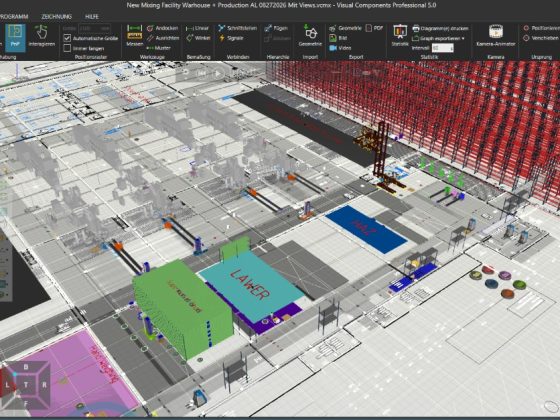
The deadlines are also extremely demanding. In some cases, customers want production to start quickly, even though the design isn’t finalized yet. That’s a completely different pace than in traditional business. And that has very practical consequences: We have to allocate resources where we’re ramping up. When in doubt, production sites must make room, sometimes even through a “open-heart” relocation, as we’ve just seen between the Pinerolo and Bursa sites. Pinerolo focuses on new business, while Bursa takes over traditional business.
All of this is a mammoth task: making space, changing the layout, training or hiring people, installing new technologies—and orchestrating it all seamlessly. Both the transferring and receiving plants must know exactly what is coming and when, and how they can prepare. Handoffs must be managed professionally.
We must draw on the experience from previous projects. It is imperative that we first define the ideal scenario for material flow and the future layout—and consistently align the implementation with that vision.
Thank you very much for the interview!