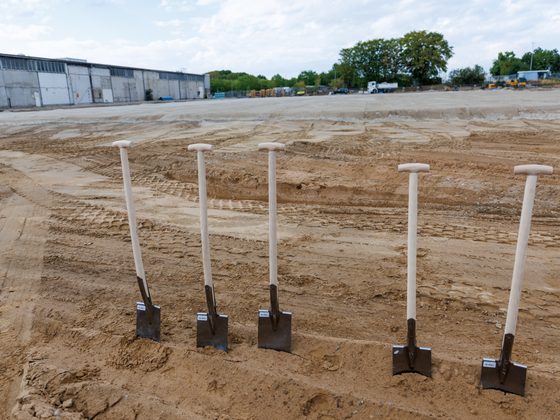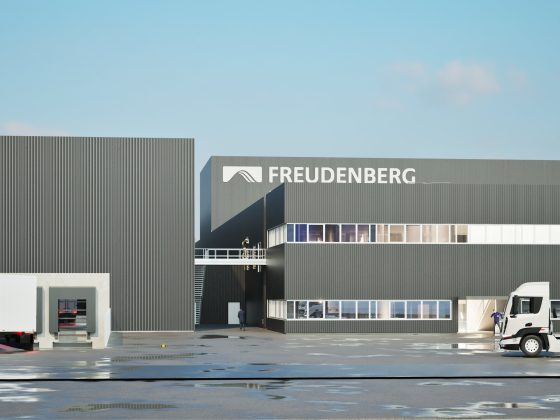
Using robust autonomous processes to ensure a lean material flow – that is what Freudenberg Sealing Technologies (FST) has made a top priority as it constructs a new mixing plant in Weinheim. To make it happen, FST relies on a high degree of automation.

In Brief
- FST is building a highly automated mixing plant and logistics center in Weinheim to ensure a reliable, lean material supply for around 30 production sites.
- Cross-functional workstreams are jointly designing an end-to-end material flow, from the delivery of raw materials to the shipment of finished products.
- Automation will reach an unprecedented level at FST, including a fully automated “dark” warehouse, autonomous transport vehicles and a vertical conveyor connecting three floors.
- Standardized processes, employee safety and precise master data are key priorities, as six existing warehouse locations are consolidated into a single site.
- A new digital infrastructure will control complex logistics processes, integrating SAP S/4HANA, PP/DS and EWM with a material flow controller and fleet-management system.
Every Freudenberg Sealing Technologies (FST) production site relies on a dependable supply of components from its mixing and stamping operations. This is especially true of the mixing facilities in Weinheim, which supply materials to around 30 FST locations. In many ways, the plant is the heart of FST: Any disruption there would be felt throughout the company.
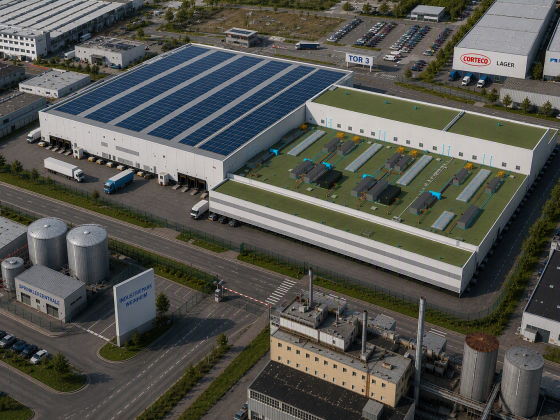
Everyone involved in building the new mixing plant in Weinheim is aware of its significance. On top of that, the new logistics center directly adjacent to the future mixing plant will also serve as the logistics hub for stamping and forming technology at the company headquarters.
Three Workstreams, One Goal
The project is far-reaching not only in its importance and scale, but also in its complexity. It has therefore been divided into specialized subprojects, with individual workstreams focusing on specific tasks. To prevent silos from forming, the workstreams are closely interconnected and collaborate within a matrix structure.
One example of this cross-functional collaboration is the development of an end-to-end material flow–from unloading raw materials to loading finished materials onto trucks.

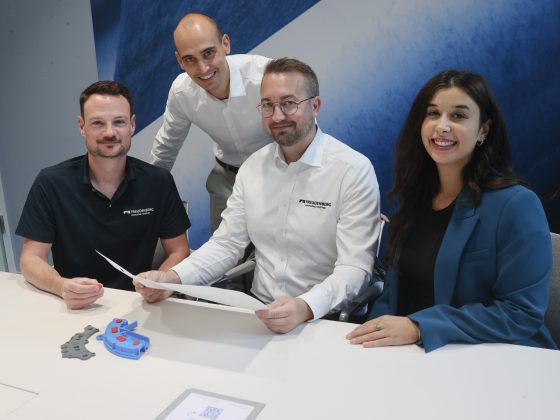
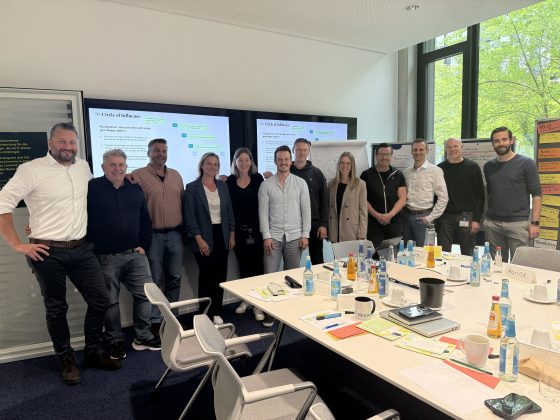
“We only come as a three-pack,” Holger Kirsch says with a wink. As head of the logistics workstream, he works closely with Daniel Pressler and Stefan Findeisen and their respective teams. Pressler’s team specializes in areas including digitalization and the automated guided vehicle (AGV) systems that will be deployed on a large scale in the future. Findeisen and his Supply Chain Management team are mapping the complex warehouse and production processes in the IT systems, enabling them to be managed with modern software.
A new dimension of automation
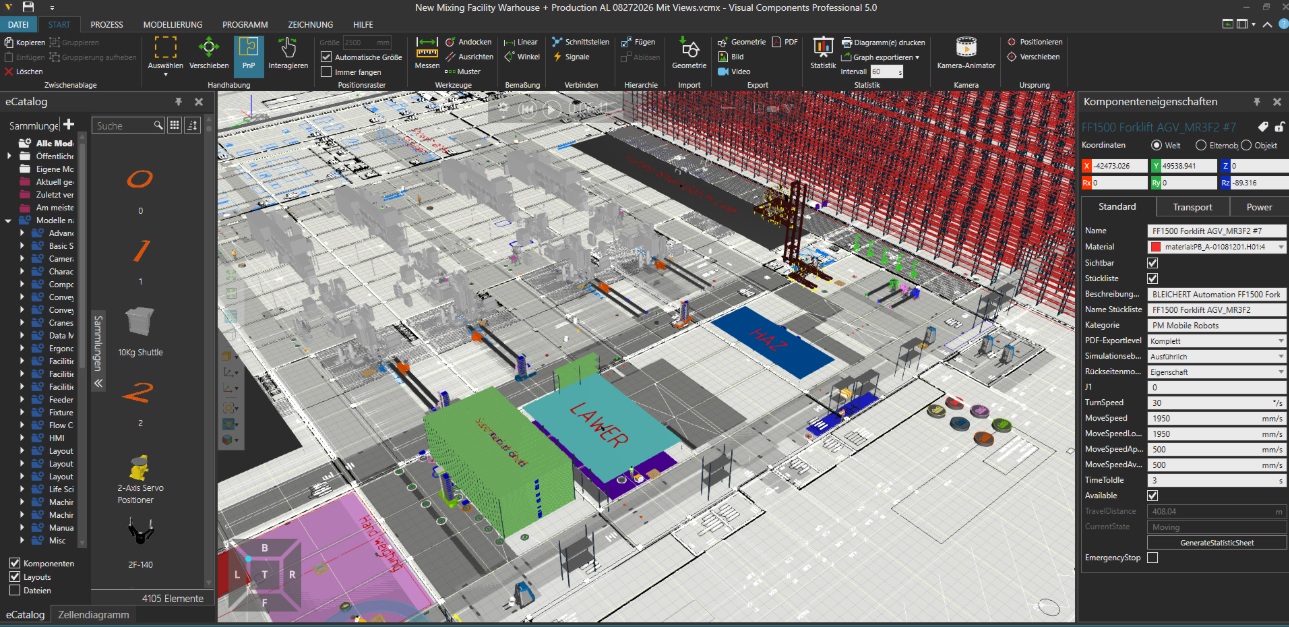
The mixing plant in Weinheim is already one of FST’s trailblazers when it comes to automation. For five years now, several automated transport vehicles have been moving through the mixing facility as if guided by an invisible hand, carrying pallets of raw materials to production lines and weighing stations. At the new mixing plant, however, automation will reach dimensions that are entirely new for FST. The warehouse will be at the forefront of this process – it will operate fully automatically, making it what is known as a “dark” warehouse.
Process stability, quality gains, and uninterrupted, round-the-clock supply are the main arguments in favor of such a high degree of automation. One challenge is that the AGVs will operate both in a largely unmanned warehouse and in production areas alongside employees and transport vehicles. FST has never before deployed the same AGVs in this kind of dual role across different operating environments. “We’re breaking a great deal of new ground,” Kirsch says. Employee safety is the top priority in the planning process.
Another major challenge is the enormous variety of goods and containers that autonomous vehicles will have to handle. Boxes, sacks, completely different types of packaging and pallet sizes – this diversity has to be managed. “That’s why everything has to be configured,” Kirsch explains. In other words, employees are precisely measuring and documenting the heights, widths, depths, weights, entry openings and more.
Autonomy on three floors
A particular challenge in the new mixing facilities is supplying the weighing systems, kneaders, mixers, and other stations autonomously across three floors. This task will be handled by a vertical conveyor – essentially an automated freight elevator. To ensure that all internal transport processes work together seamlessly, the conveyor will be centrally coordinated with the automated guided vehicles (AGVs). The entire process – from entry and transport between floors to exit – will be fully automated, with no manual intervention required.
The comprehensive use of autonomous systems generally requires a highly detailed understanding of the company’s own processes. “That’s why we’ve turned all of our workflows upside down over the past few months,” Kirsch says. The mixing plant’s current six warehouse locations across the campus will be consolidated into a single site in the future. This will leave no room for exceptions or back doors related to different process flows. Firm standards will apply in the future. The guiding idea is to reduce complexity. Otherwise, it would not be feasible to achieve the high level of process reliability intended through automation. In that sense, the entire preparation for the new mixing plant resembles a large-scale continuous improvement process in accordance with lean management.
Two other factors play a crucial role in planning: IT control of the entire process is a key priority. It is also important to select the right automated transport vehicles.
ERP, EWM and MFC
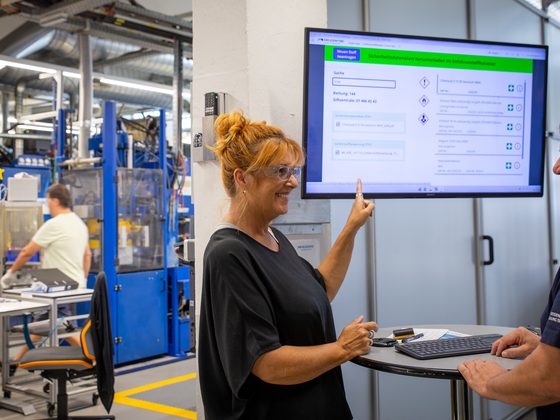
For an efficient, lean and robust material flow, autonomous technologies require intricate software solutions. FST uses its SAP ERP system to manage material, customer, delivery and financial master data as well as order processing. “In 2027, we will replace our existing SAP ERP system with SAP S/4HANA throughout FST. At the same time, we will integrate SAP PP/DS and SAP EWM as both a new production planning tool and a new standalone Extended Warehouse Management (EWM) system. This is the only way we can control, monitor and manage our internal material flows and logistics processes as needed,” explains Stefan Findeisen. Compared with the much more limited WM (Warehouse Management) module currently integrated into the ERP system, this expansion will result in significantly enhanced performance.
Without this triple update, it would not be possible to control the mixing plant’s complex processes autonomously. At the same time, the system change means that the processes already have to be set up in the current systems in the way they are intended to run in the new EWM system in 2028.
For non-experts, it may get complicated when Findeisen explains how the future ERP and EWM systems will interact with the material flow controller (MFC) and fleet manager. The interaction between the MFC and fleet manager makes it possible to coordinate and control both mobile vehicles such as automated transport systems and stationary equipment, including roller conveyors, conveyor belts and vertical conveyors, according to each task.
To put it simply, numerous IT cogs have to mesh with one another. It goes without saying that reliable master data and a precise understanding of the processes are essential for this complex interaction between different IT systems.
Glossary: FTS, AGV and AMR
“FTS, AGV, AMR – these abbreviations for autonomous transport systems are often used synonymously,” says Daniel Pressler, head of the Material Flow workstream, explaining:
“AGV stands for Automated Guided Vehicle. They travel along strictly defined routes. In the past, the vehicles followed wires embedded in the floor and today, they move on virtual guide paths – ‘software rails’ in effect. If an obstacle blocks their path, they stop automatically and wait until it is clear again. AGVs are agile and typically used in warehouses.”
How do AMRs differ? “Automated Mobile Robots are more intelligent than AGVs. They determine their own routes and can move around obstacles independently. Because they can avoid people and other vehicles autonomously, they are also suitable for busy production areas,” Pressler explains.
Driverless transport system technology has advanced considerably in recent years. These systems are currently suitable for virtually all transport tasks, with the exception of autonomously loading and unloading trucks. Working closely with Technology & Innovation (T&I) and Technical Purchasing, Pressler and his team are keeping updated on developments as they decide on the right “vehicle mix” for the interaction between the new warehouse and mixing plant.