From initial customer discussion to prototype order in just eight working days: Collaboration with a German start-up demonstrates what is possible when customer focus and teamwork come together.
When people talk about “China Speed” today, they are referring to the ability to turn ideas into tangible projects at record pace. That is exactly what a cross-functional team at Freudenberg Sealing Technologies (FST) recently demonstrated in impressive fashion.
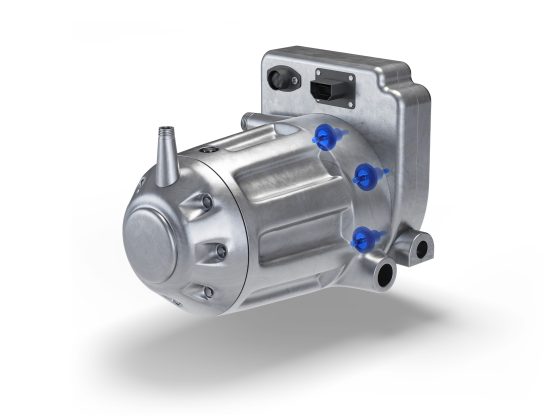
The project began with a short-notice request from a Munich-based technology start-up. The Busbar Incubation Team had already been working with the company on sealing solutions for its in-wheel motors. During a recent discussion about that project, another business opportunity emerged: The customer urgently needed a busbar sealing solution, including prototypes, for a range extender generator used in electric vehicles as part of an upcoming nomination process.
Days instead of weeks
What followed was an exceptional team effort. Under normal circumstances, several weeks or even months can pass between the initial technical discussions and a customer’s prototype order. This time, however, everyone involved understood that there was no room for traditional development and coordination cycles. The incubation and sales teams moved quickly and worked closely together. The result: a technical design, manufacturing concept, and competitive quotation were completed within just eight working days. The customer responded with the same sense of urgency and immediately placed the prototype order.
“The successful collaboration on previous projects gave the customer confidence that FST could develop a technically robust solution for the interface despite the highly demanding project timeline,” said Rouven Ratfisch, Lead Engineer of the Busbar Incubation Team.
From a business perspective, the project holds significant promise. If the customer secures the nomination, current estimates indicate a future production volume of approximately 150,000 vehicles per year. With six sealing components required per generator, this would translate into around 900,000 parts annually.
The team also sees additional growth potential should the company deploy the technology with other vehicle manufacturers in the future. “In addition, the current busbar project further strengthens our position as a reliable partner when it comes to the original in-wheel motor project,” said Pascal Denkhaus, Key Account Manager.
Whether one or both opportunities ultimately lead to series production awards will be decided in the coming months. What is already clear today, however, is that the team has shown that speed, technical excellence, and customer-focused collaboration are not mutually exclusive.
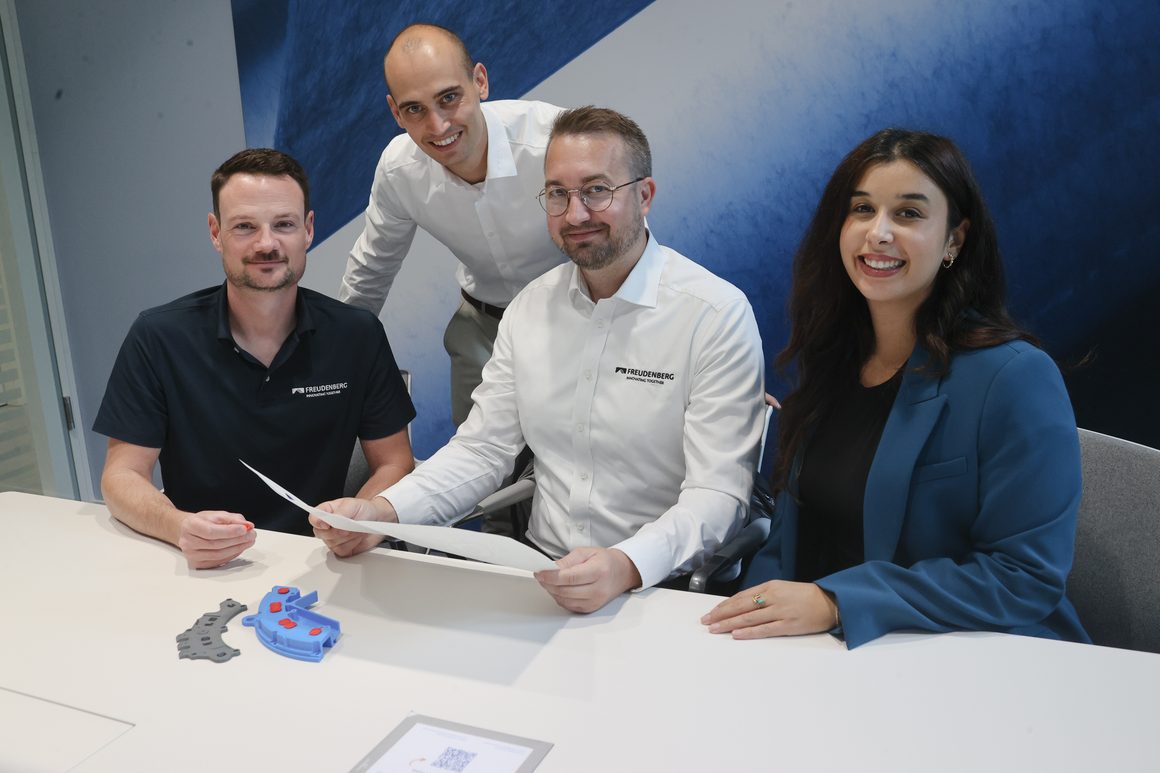
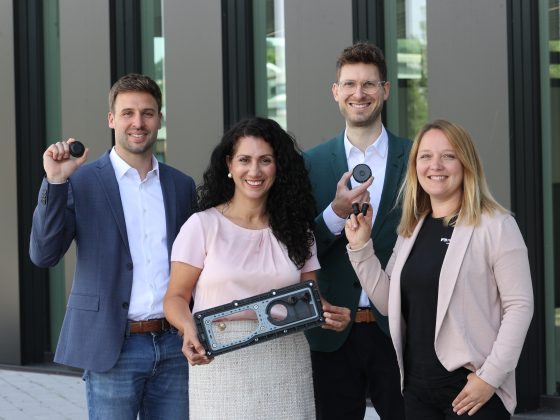
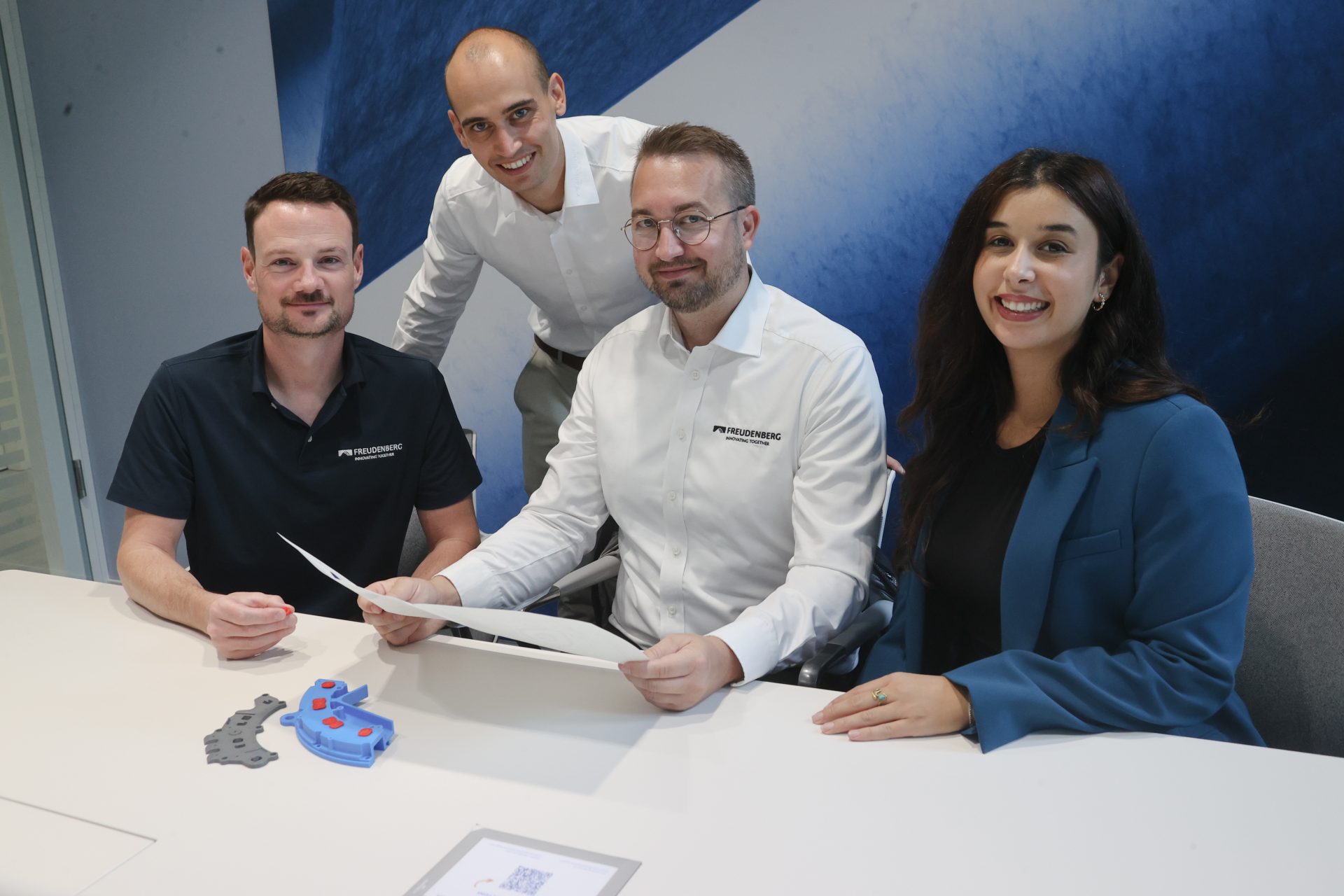
Cross-functional collaboration and fast decision-making create new business opportunities. From left to right: Christian Jaschke, Pascal Denkhaus (standing), Rouven Ratfisch, Elena Awwad.