The automotive industry is facing profound changes – in terms of technology, economy, and culture – and the transformation is not a sure-fire success. It requires people to be courageous, to work together, and to leave their comfort zones. In this interview, Michael Link, Senior Vice President Sales Automotive since January, talks about how Freudenberg Sealing Technologies (FST) is repositioning itself amid market turmoil, electrification, and global regionalization – and why real change always starts with oneself.
Michael, when you take a look at the current market situation in the automotive sector, how would you describe the situation?
Since mid-2024, we have seen a noticeable economic slowdown, particularly in Europe. The situation in the US appears to be comparatively stable, while China and India continue to grow, albeit from a lower starting point. Overall, the situation currently feels a bit like déjà vu to me in terms of market developments in the general industry – just with a time lag of about a year. We are experiencing headwinds from the market, but at the same time tailwinds from the openness of our global automotive team to face this structural change in the industry.
What exactly does this change mean for the automotive industry?
The changes are profound. Electrification remains a key issue, even if the transition is slower than originally predicted. By 2040, battery electric vehicles are expected to account for 70 to 90 percent of the market. At the same time, the automobile is increasingly becoming a software-driven system. Issues such as energy management, autonomous driving, connectivity, and user experience are becoming massively important.
This is also shifting the focus of value creation away from purely mechanical performance characteristics toward system competence, integration, and speed. As a result, the importance of the players in the market and thus our future customer base is also expanding and shifting.
Speed is a good keyword. The term “China speed” is synonymous with high speed. How are the different regions of the world performing in this regard?
China is a leader in many respects – technologically, industrially, and above all in terms of speed. Development cycles of 18 months for new vehicles are a reality there. By comparison, manufacturers in the Western hemisphere need three to five years to do this. At the same time, we are seeing massive overcapacity in China – largely due to government subsidies in recent years – which is putting enormous price pressure on OEMs and suppliers worldwide. We see this reflected very clearly in the industry’s recently published annual reports, which show significantly reduced profit margins.
For us, this means that we have to distinguish very carefully between where we can learn and where we consciously choose to go down a different path.
Many discussions revolve around the end of the combustion engine. How do you see its future?
The combustion engine will remain relevant for longer than some debates suggest – although this will vary greatly from region to region. In the US, we expect to see stable volumes until the end of the decade, and in China, we also expect to see high numbers despite massive e-mobility initiatives. In Europe, too, we are not talking about an abrupt phase-out, but rather a gradual decline. Economic realities will play a major role here. Existing infrastructure, investments, and jobs cannot simply be ignored.

What “residual volumes” are we talking about?
Looking at the regions, we see around 13 million vehicles with combustion engines in the US by 2029, while India will even grow slightly from around 6.4 million to around 6.9 million vehicles. Despite the strong expansion of e-mobility, China will still produce around 20 million vehicles with combustion engines in 2029, and even in Europe, around 10 million combustion engines will remain on the roads after a reduction of around 4 million vehicles.
What does this mean strategically for Freudenberg Sealing Technologies?
We have to master both: actively shaping the transition to electric mobility while professionally securing our existing business. This leads to a clear shift in focus. Innovative strength remains central, but another goal is to increasingly be perceived as a cost leader in the future. The aim is to make proven products more efficient, scalable, and economical without compromising quality or reliability.
How do you assess the development the e-mobility portfolio?
After my time at Sales General Industry, I was extremely impressed to see the bandwidth of what we can offer in terms of e-mobility. It is clear how strong and diverse our overall positioning is.
What role does FST’s organizational structure play in this?
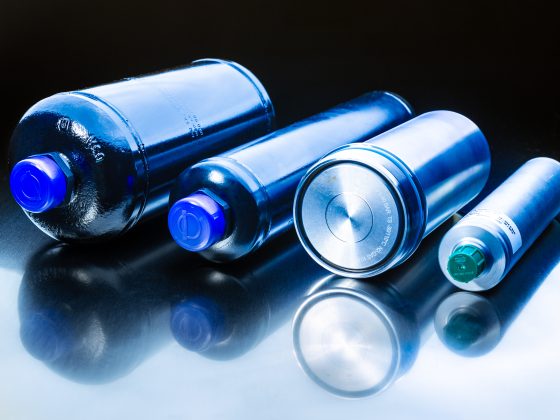
Our incubator organization within clearly defined lead centers and the close integration of Technology & Innovation are key success factors. This has enabled us to build a very strong portfolio. Regarding battery cell caps, we have already achieved a significant milestone by successfully launching our first series production runs – an accomplishment we are extremely proud of. This success clearly demonstrates our strong entry into the market.
But even beyond the incubators, we have many new products, such as the DIAvent product family, which is very successful in the market.
Where does FST currently stand – and where do you see further potential?
Of course, there is always room for improvement, and we are naturally hungry for more. That is why I would like to say that we have successfully mastered the first step of entering the series production business. We can build on this. We are therefore already working intensively on further expanding our range of battery services and thinking holistically. The key will be to learn quickly from our project-specific experience and evolving market conditions, refine our focus accordingly, and deliberately fine-tune our electromobility range of services.
Which specific technologies are you currently promoting in particular?
Busbars are a good example: the first series projects are already underway. This expertise is not only relevant for battery applications, but also for units such as A/C compressors. This underlines the strategic importance of this technology for our overall portfolio.
How do you assess FST’s role as a materials expert in new applications?
We are currently in the early prototype stages for challenging topics such as thermal barriers. This is no easy task for anyone involved. At the same time, as materials experts, we are predestined to develop solutions in this segment that ultimately hit the mark.
What role does Automotive Sales play in this?
A very central one. In recent years, the role of sales has been strongly influenced by price negotiations – this was necessary, but from the perspective of our sales engineers, it was not their sole core competence. Our goal is to restrengthen our role as a solutions partner.
To this end, we have launched a top-line initiative with which we aim to secure volume in the short term while laying the foundation for long-term, constructive customer dialogue.
So what’s the plan?
We are committed to re‑establishing a more balanced and constructive dialogue with our customers. Acknowledging the impact of our pricing discipline, we now see a clear turning point toward stronger partnerships and win‑win solutions.

What does that mean?
Specifically, it means that we are approaching our customers in a targeted manner with tried-and-tested products that have been approved for years. Our approach follows three clear steps.
First of all, in the short term, we plan to submit more competitive offers for selected products. This targeted approach is designed to build on existing customer approvals, enabling us to secure – and where possible expand – volumes quickly, without requiring any additional effort from the customer.
As a second step, based on customer feedback regarding achievable volumes, we intend to move away from a single-item view per customer and consolidate to product groups in order to offer further economies of scale.
Last, but not least, we are thinking strategically: we want to work closely with our customers to further increase their competitiveness for as many product groups as possible. However, this will also involve changes that require notification, such as product or process adjustments or relocations, depending on what is important for the customer and makes sense for us.
Our goal is to achieve a long-term, stable cooperation based on partnership.
Global trade is changing dramatically. What conclusions do you draw from this?
We are experiencing clear regionalization. “Local for local” is not just a buzzword, but a necessity. Trade barriers, supply chain restrictions, geopolitical tensions, and regulatory requirements mean that regional value creation is becoming increasingly important.
For us, this means more local responsibility and more regional innovation – but still embedded in a global network.
Change does not only affect products and markets, but also culture. What is particularly important to you in this regard?
I focus on cooperation, trust, and a willingness to learn. Change rarely takes place in the comfort zone – neither for organizations nor for individuals, and that can be very demanding and exhausting at times. It is essential that, as a team, we collaborate more closely with the lead centers, share responsibility, and be prepared to step in for one another – being fully aware of the considerable demands this places on our employees.
And we are very proud to work with people who are willing to join us in this challenging transformation. Partnerships – both internal and external – are key success factors in this regard. Long-term thinking beats short-term optimization.
Finally, what does “Change starts with I” mean to you personally?
Change begins with self-critical reflection on the part of each individual – but it can only succeed if everyone is on the same page. It’s about showing attitude, taking responsibility, and always remaining open to new approaches. Not everything will be comfortable, but that’s exactly how we create sustainability – for each and every individual. From sales staff to all employees in our plants. If we succeed in this – in the organization, in our partnerships, and in leadership – then I am very confident about the future.