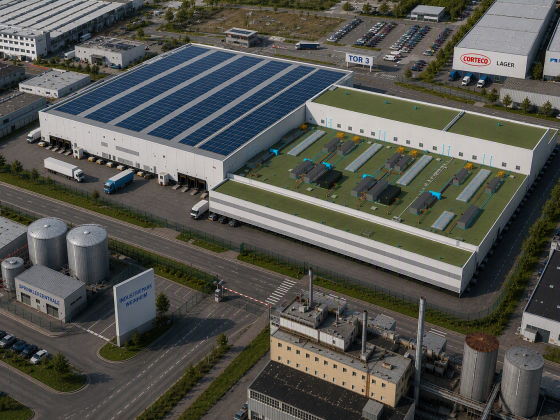
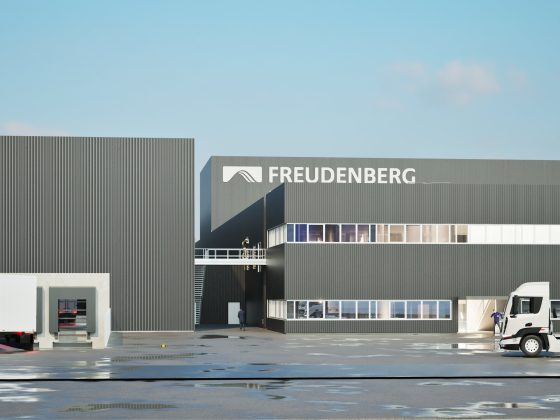
With the planned construction of the new mixing facility in Weinheim, Freudenberg Sealing Technologies (FST) is leaving nothing to chance when it comes to safety. The precautions against fire and flooding are sophisticated, planned down to the smallest detail and thoroughly checked. Even if the worst should happen, materials production – and therefore the supply of FST locations with rubber and silicone compounds – can continue.
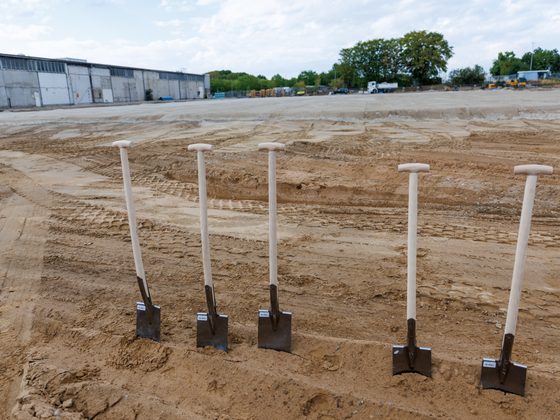
More than half of the material compounds processed by FST locations around the world come from Weinheim; the mixing facilities at the company’s headquarters are the business group’s leading center of materials expertise. That makes it enormously important that kneaders, rolling mills and other equipment are not damaged by unforeseen events such as fires or flooding. The newly planned mixing plant, whose construction is scheduled to begin in late summer, addresses this requirement. The protective measures are wide-ranging, carefully considered and meticulously planned.
“Our safety concept has three dimensions: First, we make sure that, to the best of human judgment, nothing can happen. Second, if something does occur, the incident must cause only minimal damage. Third, we are prepared to repair any potential damage as quickly as possible,” says Christian Pfeifer, Manager Factory Planning, describing the basic approach.
Mini-Extinguishing Systems Stop Fires Before They Spread
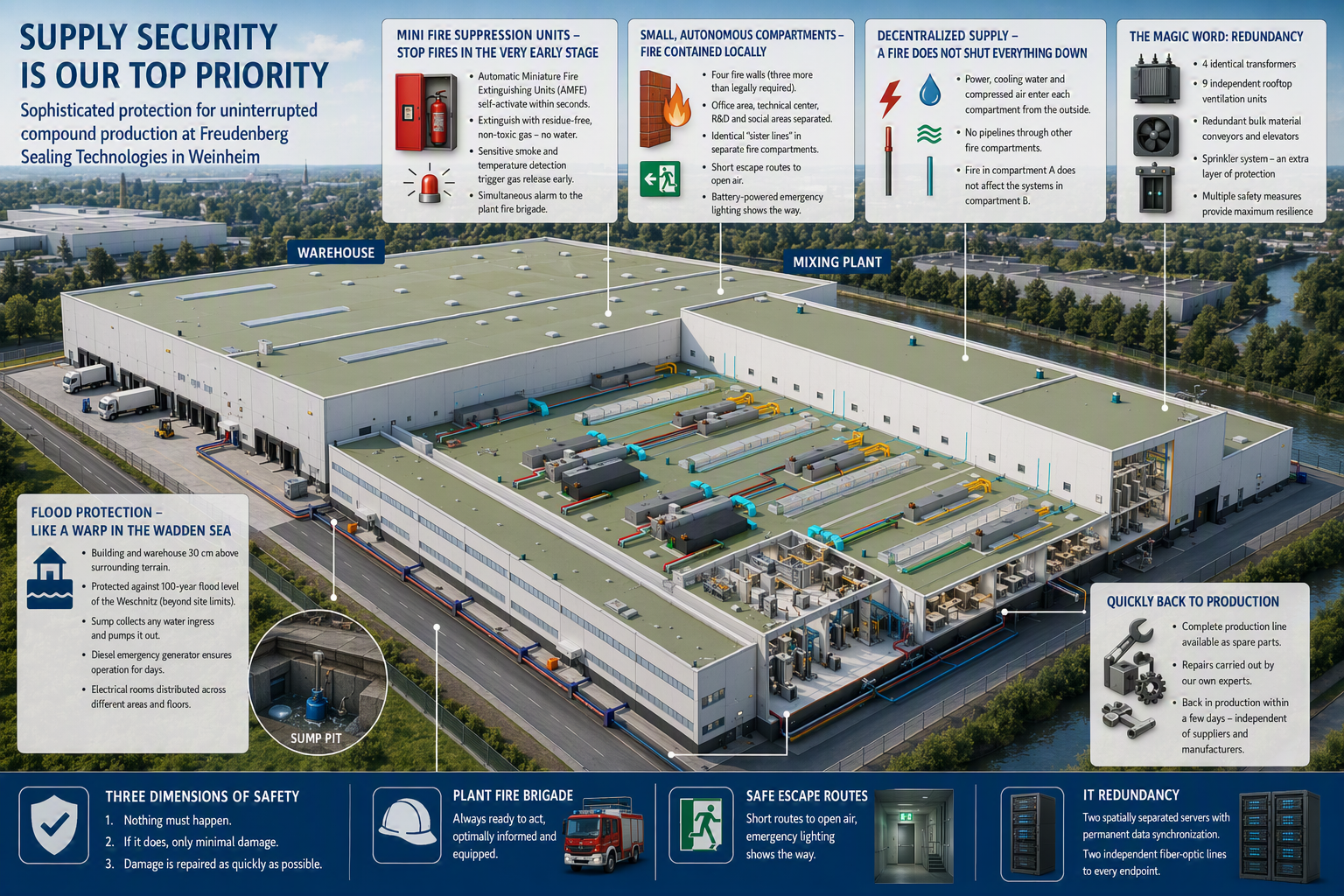
Fires most often start because of electronic defects, frequently in control cabinets. For that reason, fire protection particularly emphasizes on these cabinets. In the new mixing plant, FST is using what are known as automatic miniature fire-extinguishing units, or AMFEs. Self-activating, they extinguish incipient fires within seconds — not with water, but with a residue-free, non-toxic gas that does not damage the electronic components inside the control cabinet.
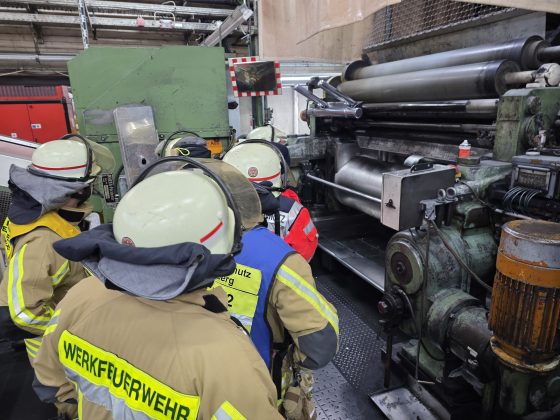
With its AMFEs, however, FST has not been content with the standard solution; the company has further developed the systems in-house. In addition to the conventional mechanical sprinkler head, the FST units are equipped with sensitive measurement and fire-alarm technology. The electronics detect smoke and rising temperatures far earlier than their mechanical counterpart — and immediately release the extinguishing gas. “We extinguish a fire before it really starts burning,” Pfeifer says. At the same time, the Freudenberg plant fire-protection system automatically alerts the works fire department, which can respond immediately.
Small, Self-Contained Sections
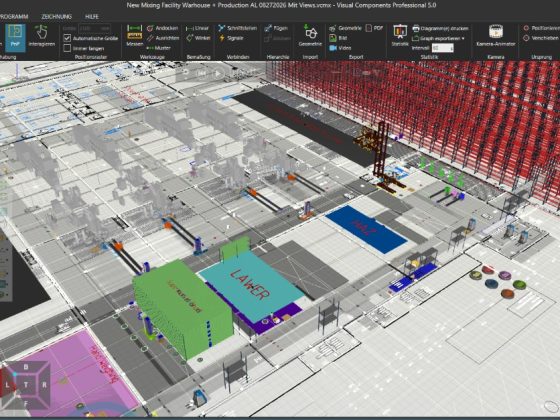
If a fire were to occur despite these precautions, it is important to prevent it from spreading. This is done with fire walls. The new mixing plant will have four of them — three more than required by law. The adjacent warehouse will be divided by an additional fire wall.
In the production building, the office wing, technical center, development area and social rooms, among others, are separated by a fire wall. This increases safety in particular for the employees working there. Routes to the outside are short. In the dark, battery-supported emergency lighting shows the way.
From a production-technology perspective, one point is especially important: identical “sister lines” will be located in separate fire compartments in the future. If one mixing line were to fail, the other could continue producing.
This kind of continuity is also ensured by the sophisticated energy and media supply for all systems. Power, cooling-water and compressed-air lines never run through other fire compartments. They are not routed centrally into the building at a single point, but instead are supplied decentrally from outside directly into the individual fire compartments. “This means that a fire in one location cannot disable everything else. If there is a fire in fire compartment A, the lines needed to operate the system in fire compartment B are not affected,” Pfeifer says.
Redundancy is Key
Four identical transformers, nine fully separate ventilation systems distributed across the roof, redundant conveyor elevators and systems for fillers in different parts of the building — all of these are examples of how extensively the new raw mixing plant is designed with a safety net and backup in place. A sprinkler system will also be installed, for example, even though the relevant industrial construction guideline does not require one given the numerous safety precautions — a belt in addition to suspenders, so to speak.
Redundancy is also key in IT. “Our know-how, our formulations, our process instructions and the controls for our systems are stored on the IT servers. Here, too, we play it safe,” Pfeifer says. In the new mixing plant, two spatially separated servers will be operated and connected for continuous data synchronization. Independent fiber-optic cables will run from each of the two servers to every single end device. That means every computer and every system control will always have two data lines – one from each server. If one server fails, work can still continue without difficulty in production, the technical center and the offices.
Like a Warft in the Wadden Sea
Along the North Sea coast, raised mounds known as warften protect residents in their homes from storm surges. Storm surges are not expected in Weinheim, but two channels of the small Weschnitz River run through the industrial park. “We studied the 100-year flood maps and determined that, to the best of human judgment, the flood risk already ends before our building site,” Pfeifer reports. Even so, both the raw mixing plant and the warehouse will be built 30 centimeters above the surrounding terrain — like warften on the North Sea coast.
If, contrary to expectations, floodwater were ever to enter the building, structural precautions have been taken for that scenario as well. As in a funnel, the water would collect in what is known as a pump sump and could be pumped out from there long before it could damage the systems standing on foundations. A power outage would not be a problem either: “With a diesel-powered emergency generator, we could help ourselves and keep going for days,” Pfeifer says. The fact that switchgear rooms in the new buildings are distributed across different sections and floors benefits both fire protection and flood protection.
Quickly Ready for Production Again
And what if, despite everything, a machine were damaged? “Then we repair it ourselves. We have a complete line in stock as a spare-parts reserve. Within just a few days, we would be ready for production again, without having to wait for orders and without being immediately dependent on the machine manufacturers,” Pfeifer says, underscoring the expertise of the employees in the raw mixing plant.