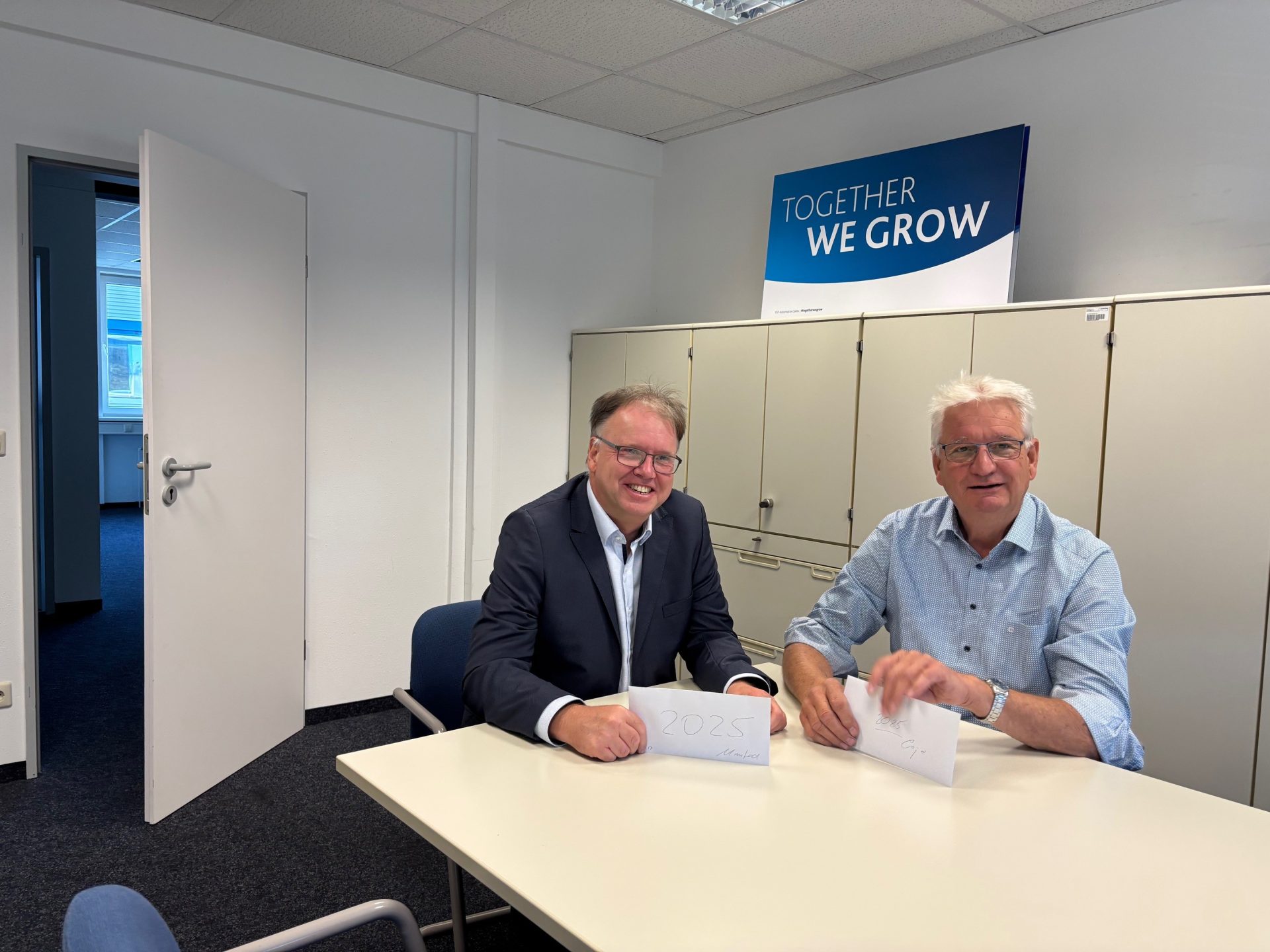
In 2017, Manfred von Wensierski and Carl-Josef Testroet made an educated guess about future trends in automotive drive systems – and have now checked their assumptions from back then.
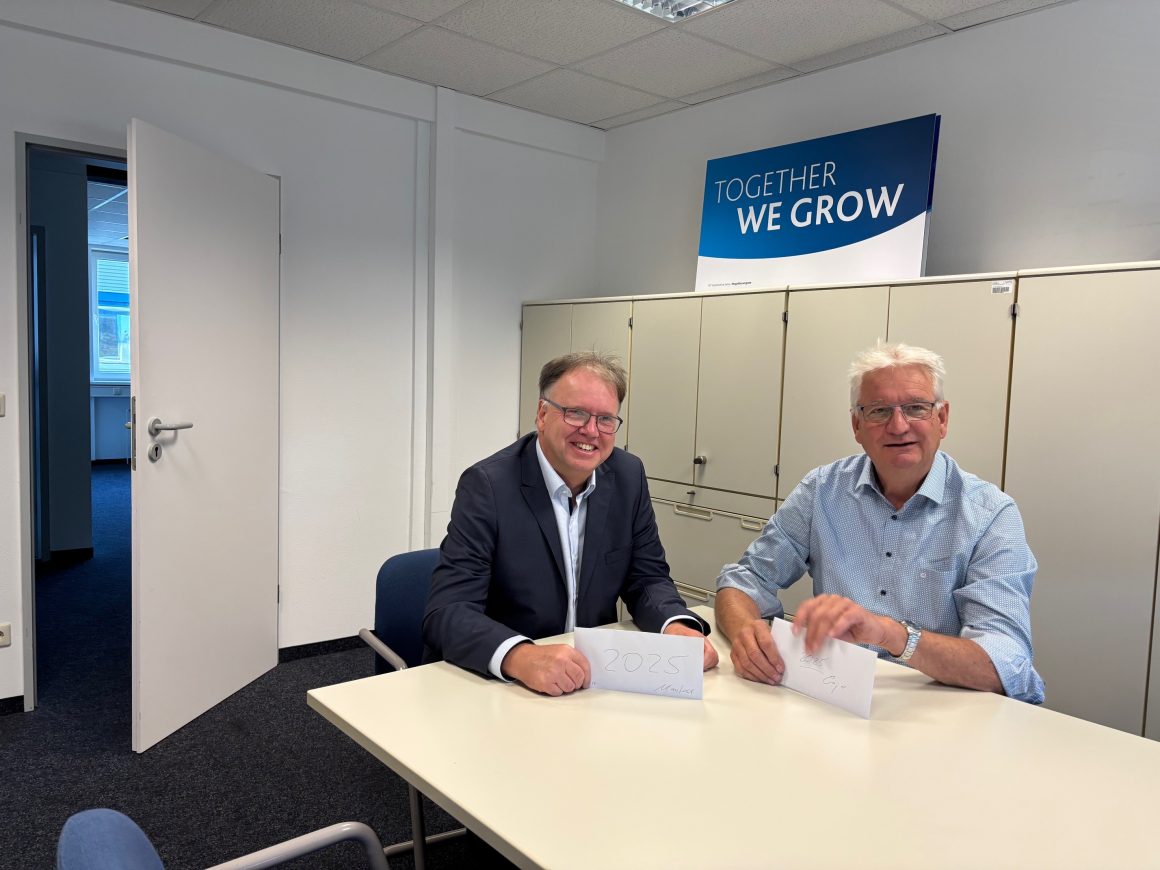
Manfred von Wensierski and Carl-Josef Testroet don’t meet very often anymore. Wensierski has been head of Key Account Volkswagen at Automotive Sales in Wolfsburg for many years. Testroet used to be his colleague for a long time, but retired a while ago. At the end of September, Testroet stopped by his old workplace once again. For good reason. The two experts on the automotive business had sealed two envelopes in 2017 with an educated guess for the future, and now it was time to open them.
Back in 2017, both ventured a glimpse into the future in a questionnaire: they looked deep into their crystal balls and predicted how the automotive industry – specifically the production figures for individual drive types – would develop over the next few years. What would become of combustion engines, especially diesel engines? What role would fully electric and hybrid drives play in the market in general and at Volkswagen in particular?

“It was a kind of bet at the time, a bit of fun, not a scientific forecast,” recalls von Wensierski. However, both of them – plus the entire key account team – were now very excited to see whose predictions made in 2017 would better reflect the reality of 2025.
The answer: Neither of them was a real fortune teller. However, one was significantly closer to today’s reality than the other in answering all four questions.
Testroet’s predictions reflect his skepticism about e-mobility at the time. He clearly saw diesel and gasoline engines still in pole position in 2025. Current statistics refute this. The market shares of the individual drive types in Europe and worldwide have shifted significantly toward hybrid and electric vehicles.
Von Wensierski was spot on with his prediction that diesel’s market share in Europe would fall below 20 percent. Overall, however, he overshot the mark somewhat and predicted in 2017 that there would be an even faster, more intense shift toward electric mobility by 2025 – including his customer Volkswagen.
Interesting enough, in 2017, the two protagonists not only looked eight years into the future of the automotive industry, but even further ahead to 2030. Those two envelopes remained sealed this time. They will be opened in five years’ time, when the predictions will be measured against reality.
Incidentally, Wensierski’s current market assessment is as follows: “The trend toward electric mobility can no longer be reversed, but combustion engines will not disappear completely either.” His assumption is that the market will become more differentiated. One example: According to Wensierski, young people in China have different expectations of a car’s technology, design, and connectivity than older people in Europe. “Manufacturers must respond to such differing customer requirements for each region and each vehicle segment.” In light of the past and present, this forecast for the future seems likely to be accurate. But who knows…?