Freudenberg Sealing Technologies has secured Webasto as a new customer in battery technology and is set to play a key role in several projects across Europe and Asia.
For decades, Webasto has been best known among car enthusiasts for panoramic, sliding and convertible roofs. Others know the company for heating and air-conditioning systems for cars, RVs and buses. Since 2016, however, Webasto has also built a global business in vehicle battery systems – creating clear synergies with Freudenberg Sealing Technologies’ electric-mobility portfolio.
“In 2018, we hosted our first TechDay at Webasto in Munich and showcased our battery components. Since then, we’ve continued knocking on Webasto’s door with innovations and customer-specific solutions for battery systems,” says Christopher Wecht, Key Account Manager for Automotive Sales. That steady contact, ongoing exchange, and trust-building began to pay off in 2022. It has since led to three major orders in Europe and Asia, generating seven-figure euro revenue from this new customer for the first time this year – with momentum continuing to build.
Across all three projects, FST benefited from its strong market reputation. The OEMs – automakers planning to use Webasto batteries in their fully electric or hybrid vehicles – helped open the door. So did engineering service providers, which work with OEMs on the development of battery-electric drivetrains and use FST products in the early stages of development. Together, they recommended that Webasto partner with FST – and Webasto was receptive.
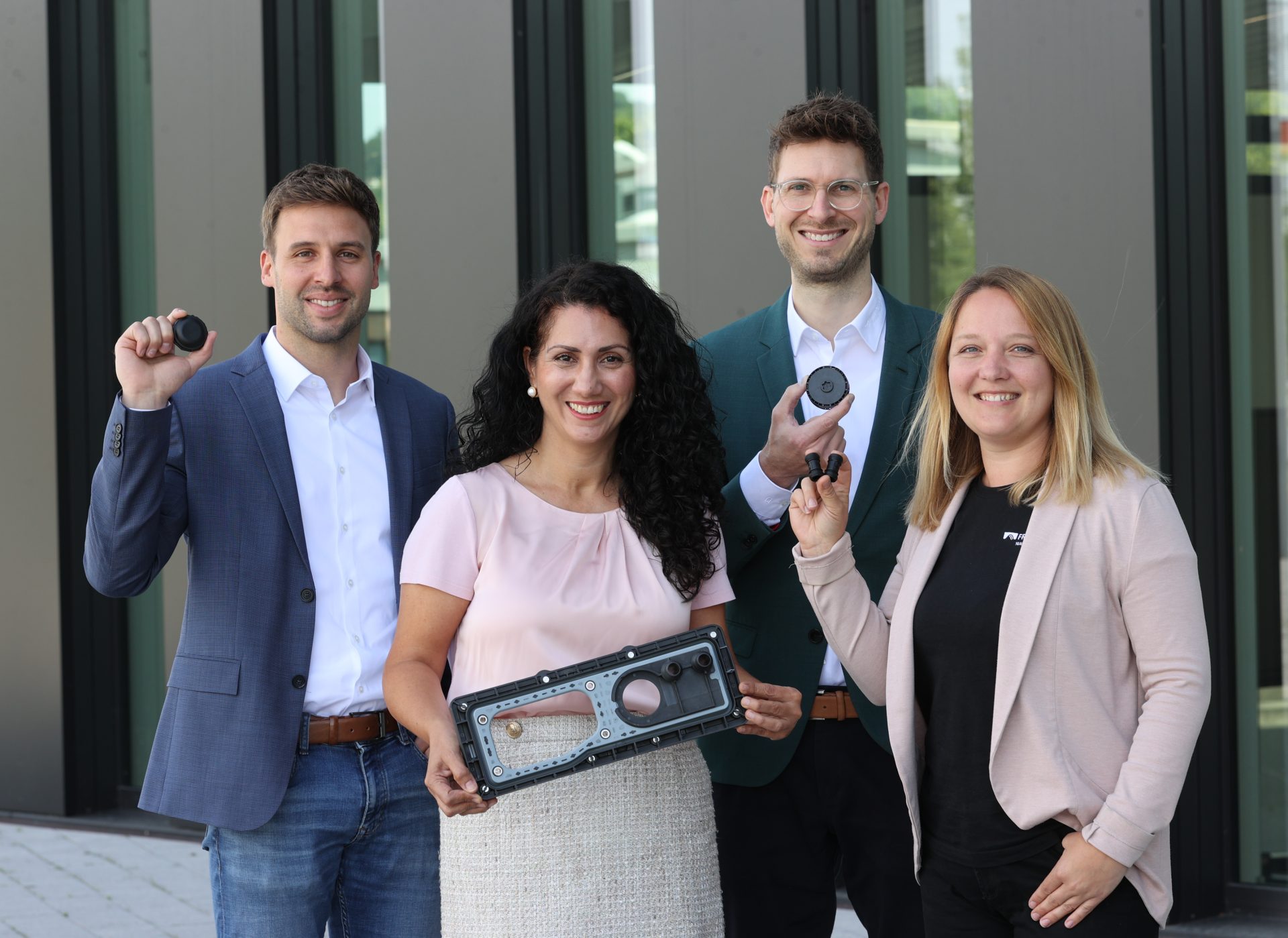
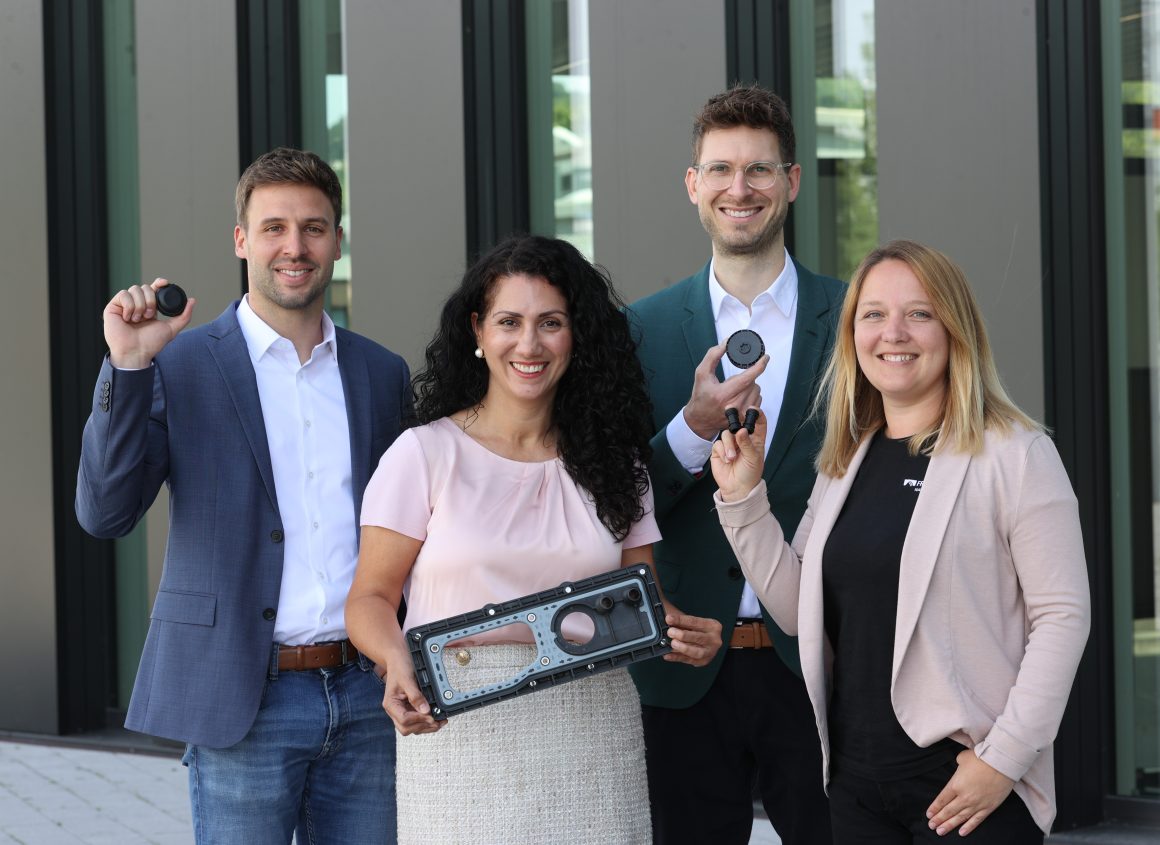
In these projects, FST supplies several components: two variants of the DIAvent pressure equalization valve, various Plug & Seal connectors that link the battery cooling plates, and USIT rings that keep moisture from entering the battery through the screw head.
One component, many functions
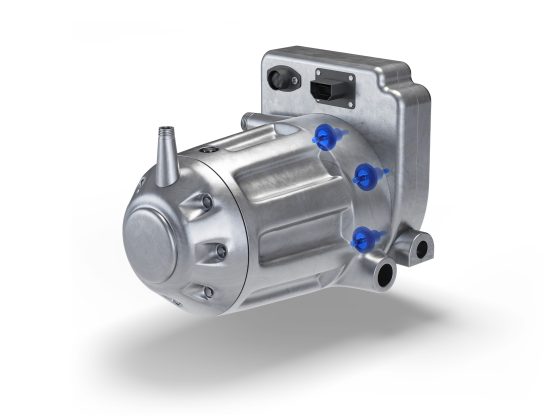
A technical highlight in one of the new orders is a multifunctional multi-component part “made by FST in Emmerich.” The material combination of hard plastic, soft liquid silicone (LSR), and metal bushings essentially forms the face of the battery. Cooling and electrical connections are routed into the interior via this component. It also seals the battery cover against the housing.
At the same time, it ensures the flexibility required for assembly and operation; experts refer to this as position or tolerance compensation.
“By integrating these functions into a single component, we can reduce the number of components in the system and thus the assembly effort for the customer,” explains Wecht. A welcome added benefit is weight savings. These are all factors that could also come into play in other, similarly designed electric vehicles from the same automotive group.
The success factors in all three projects are the same. They always involve the networked, collaborative “Together” approach of all participating departments, from Lead Centers, Corporate Legal, the FST Contract Team, and Key Account Management. Wecht highlights the excellent coordination with the FST Lead Centers at the Reichelsheim, Berlin, and Emmerich sites, particularly their flexibility – irst in making customer-specific adjustments during development, then during industrialization and the ramp-up of series production.
A major advantage is the global setup of Automotive Sales, specifically the local presence and customer proximity directly on-site in South Korea – the technical term “local to local.”
Operational issues with the OEM and the local Webasto battery plant could thus be resolved through direct channels in the native language. Webasto and the Key Account team in Germany handled the commercial-strategic and legal framework conditions.
At the same time, the market for battery-electric vehicles remains volatile. Geopolitical and legislative changes make it difficult in some cases to forecast future sales volumes. In this context, Sales Director Michael Schuhmann highlights the important role and collaboration between FST and the legal department (Corporate Legal) at Freudenberg & Co. “Despite all the optimism, it is essential – especially with new platforms and customers – to understand our business case, weigh potential risks, and address them contractually so that we can ultimately achieve long-term success together,” he explains.
Working closely with Corporate Legal, FST was able to negotiate and sign project-specific framework agreements with Webasto. These agreements form an essential foundation for future collaboration with the client.