Freudenberg Sealing Technologies (FST) uses the methods of customer centricity to generate ideas and test their prospects for market success before the actual development process. Customer desires and expectations become the benchmark. The filtering-out and follow-up processes only move forward for potential developments that customers need and explicitly want. There must be real demand for them. The second key criterion for launching the classic development process: FST must be able to carry out the ideas as part of a profitable business model.
What is the use of developing innovative products and services if no customer wants them or is willing to pay for them? Especially with markets in flux, with new customers, new contact persons, new applications, there is the risk of wasting development resources on innovations doomed to failure.

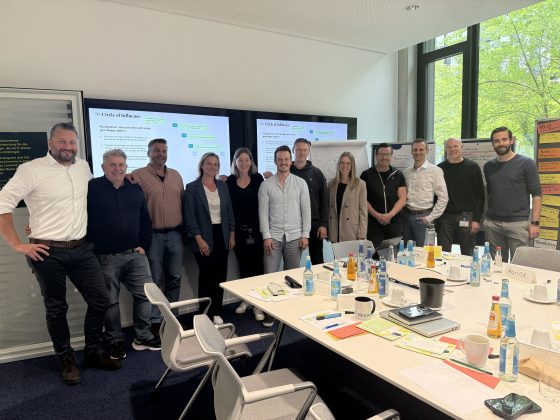
“Find the right ‘it’ before you work it right.” This was the striking headline that Reinfried Wobbe chose for his presentation on customer centricity at the FST Innovation Fair in September. Wobbe is Director, Digital Business Development/Industry 4.0, in the Technology & Innovation (T&I) department that handles innovation and commercialization. The main idea: Filter out the right idea and then map out the right course to keep the new development from being sidetracked.
Whenever FST enters new territory, it cannot draw on its decades-long experience. It has to develop new solutions. In these cases, it makes sense to precede the actual development process with the customer centricity methodology – whether in electric mobility, the hydrogen economy or water desalination. Wobbe described the basic principles involved: “Our customer-centric approach is designed to build a precise understanding of the customer and its entire value chain. We don’t go to the company with a finished solution that we want to sell. At that point, we don’t talk about products and concrete services. The idea of customer centricity means we are only interested in the challenges that the company faces. What tasks and activities does it need to perform? What problems and risks are emerging? What are its expectations for us and what would be helpful to it? When we finally understand all this, we consider the products and services that we can provide to support the customer.”

Customer Profile – Value Proposition – Business Model
The methodology follows a clearly structured process. Broadly speaking, it starts out with a consideration of the market and the business environment. Customer surveys follow – with numerous employees from different functions, ideally in person instead of with questionnaires. The results of the surveys are evaluated systematically to produce a customer profile. Then value propositions describe the value and benefits that FST’s business ideas could offer the customer. Each idea is tailored to its needs. Then the project team translates these value propositions into concrete business models that show the economic potential for FST.
If these business models seem to be profitable at the hypothetical level, they are put to the test. But the testing does not involve trials in a test stand. No, it involves identifying the customer’s true interest in the development that is envisioned.
For example, how many users click on product information on a landing page that they have reached via LinkedIn? The landing page is devoted to a potential development. How many people enter their personal data so they can download a white paper exploring the concept in depth? In this case, a high number of clicks indicates a high level of interest. Finally, after the idea is tested in this way, a decision is made on whether FST will pursue the matter in a classic development process with its tried-and-tested methods – or whether it would be better to
shelve it.
“Over the past three years, we have worked on a variety of potential development topics using customer centricity and have further developed the methodology in doing so,” Wobbe said. For example, customer centricity is suited for gauging whether existing development projects are still relevant to the customer when trends and circumstances are changing – and whether business models might need to be adjusted as a result.
The FST Academy offers training and workshops on the methodology on the LMS learning platform that teaches participants how to ask the right questions so FST is ultimately developing the right products for its customers. Reinfried Wobbe is the contact person for further information.