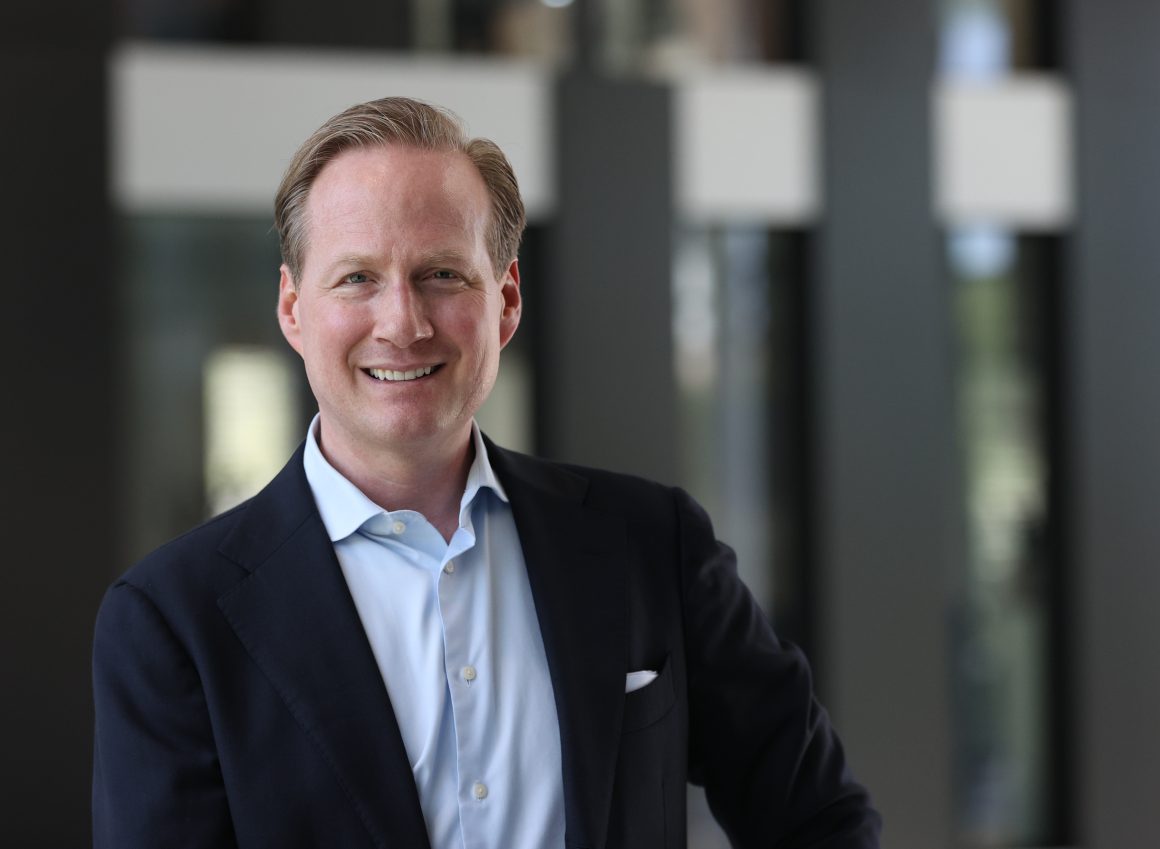
Since June 2025, Jan Witte has been leading the Fluid Power Division through a period of transformation. In this interview, he explains how the division is evolving, where the greatest growth opportunities lie, and why market proximity, speed, and collaboration are critical to success.
Jan, you have been leading the Fluid Power Division since June 2025. What priorities did you set, and how can progress be measured?
From the outset, one thing was clear: we needed to bring the division closer together, strengthen collaboration, and create a clearer organizational setup.
What guides us is a clear ambition: we combine system expertise, application know-how, and operational execution in a way that allows us to bring solutions into application faster and closer to the market than many others.
At the same time, we are fully aware that we come from a wide range of competencies, structures, and histories. This complexity is both a reality and our starting point. A central part of our mission is therefore to reduce complexity in a targeted way, create transparency, and simplify processes deliberately, without losing the strength behind them.
This included the consolidation of Lead Centers, the integration of Accumulators, and the addition of Freudenberg Xpress. The key is to break down silos and make synergies truly usable. Progress is reflected not only in numbers, but in whether we reduce complexity, shorten decision paths, and make results visible faster.
Structure is our foundation. Impact is created when priorities are clear and shared. That is exactly where “People Progress Power” comes in: we create transparency, make contributions visible, and drive development in a targeted way.Struktur ist das Fundament. Wirkung entsteht, wenn Prioritäten klar sind und gemeinsam getragen werden. Genau hier setzt „People Progress Power“ an: Wir schaffen Transparenz, machen Beiträge sichtbar und treiben Entwicklung gezielt voran.
How is the business set up today?
Our core business continues to be sealing technology, complemented by adjacent capabilities such as accumulators and material-based applications. This gives us broad coverage, from automotive to general industry, energy, and robotics.
At the same time, we are systematically evolving our portfolio toward higher value creation. Freudenberg Xpress strengthens our responsiveness and customized solutions, while we continue to advance innovations in areas such as battery technology and new materials.
Where do you see the biggest growth opportunities?
Above all, in General Industry. New applications emerge faster there, and that dynamic creates attractive opportunities, provided we stay close to the market and execute with discipline.
Automotive remains an important anchor. At the same time, the weighting is changing.
How is the relationship between Automotive and General Industry changing?
It is not about a shift from one to the other, but about a new balance. Automotive remains a core pillar.
At the same time, General Industry is growing. In agriculture in particular, we have won many projects in Europe and the U.S., especially with Accumulators.
In the U.S., we can continue to leverage our strengths in combustion engine applications. Longer product life cycles provide stability and give us the opportunity to prepare selectively for future technology shifts.
What defines the division globally?
We operate a global network of more than 17 sites, along with additional Xpress locations. What matters is not the number, but how effectively we use them.
Our strength lies in combining global presence with local application understanding and turning that into tangible customer value.
What role do the Lead Centers play?
They are a key lever, not only for strengthening existing capabilities, but also for our further development and the build-up of new capabilities.
One example is the new, globally unique test bench for large-diameter seals in Hamburg. Together with customers, we can standardize test criteria there and bring applications to market maturity faster.
We are also evaluating the use of AI in quotation processes through Proof of Concepts to understand where we can improve speed and efficiency.
Which projects currently have priority?
We are focusing on initiatives that combine growth, productivity, and transformation.
OPEX is not a temporary program; it is part of everyday business. It is about stabilizing processes, making better use of capacity, and grounding decisions in data.
At the same time, we are driving Smart Factory and automation initiatives, for example with solutions such as AVC in quality assurance.
What does market orientation mean in practical terms?
Market orientation begins with understanding where we operate, where we want to grow, and how decisions are made on the customer side.
Price matters, but never in isolation. It is always linked to quality, performance, and our brand promise. That is the combination in which we want to convince.
What are the implications for the organization?
We are aligning structures more closely with markets and applications.
Through the integration of Trygonal and DMH, units were merged and portfolios reorganized. The goal is to act faster, with greater clarity, and closer to the customer.
Where do you see the most important synergies?
Synergies emerge where capabilities come together.
One example is digital material characterization and batch identification in Schwalmstadt. Employees developed data-based approaches that enable faster machine setup and less scrap.
Another example is Findlay, where automation, including AMR, IMR (Industrial Mobile Robot), and cobots which link machines and processes, has been implemented. The site serves as a model for other plants.
At the same time, we see strong potential in linking the system expertise of Accumulators more closely with other areas.
That is exactly what makes our new division especially compelling: bringing together different capabilities, learning from one another, and developing better solutions together. This is also where our ambition comes from, to move solutions from idea to application faster.
Where does innovation come from?
Especially where we combine our material and system expertise.
One example is a damper developed in India for the two-wheeler segment. Through an adapted, integrated design, it meets local requirements more effectively while also enabling significant material savings. The solution has been received very positively by customers.
Simultaneously, we take an important lesson from this: just because something has worked well once does not mean it cannot be improved further. That openness to continuously challenge and develop processes and products is an important benchmark for us.
This solution is an excellent example of what defines FST as a whole: technical expertise, market understanding, and a clear commitment to creating real customer value.
What role does speed play?
It is critical to competitiveness.
We are accelerating decision-making processes and making knowledge more accessible.
One statement from the team captures it well: “China speed has long become the standard, the rest of the world is simply too slow.” That may sound provocative, but there is a great deal of truth in it because it reminds us how important speed, focus, and execution strength are today.
What role does AI play?
AI is not about technology for technology’s sake, it must serve a clear purpose.
We use it selectively where it creates real added value, for example in quality assurance or as decision support. What matters, however, is this: people remain involved. AI supports processes based on structured, clean data, but it does not replace responsibility or judgment.
What does this mean for leadership?
Leadership means providing direction and building trust.
Personal exchange plays a central role here. During site visits, time is deliberately set aside for conversations with talents in key positions in order to get to know them, include their perspectives, and generate impulses for further development.
These conversations show just how much experience, how many ideas, and how much commitment exists within the organization. You see very directly how passionately the teams work and how strong the shared understanding is.
What is the significance of “People Progress Power”?
The initiative creates transparency, fosters connectivity, and helps scale successful approaches.
Above all, it stands for what defines the division: people who take responsibility, share knowledge, and develop solutions together. Through innovation-driven collaboration across sites, we build a strong and unified sense of togetherness.
What is the ambition for the years ahead?
We are building on a strong foundation and continuing to develop the division with focus and purpose.
Our goal is to combine performance, technology, and collaboration in a way that creates an organization that is effective and one people can be proud of.
What matters most is that we shape this development jointly. Continuing to evolve and growing stronger together as one unit is what makes the difference for us.