After navigating volatile markets and shifting technologies, Freudenberg Sealing Technologies is now sharpening its course. In the second part of the interview, CEO Dr. Matthias Sckuhr explains how streamlined sales structures, incubator-driven innovation, and a clear focus on components, regional strength, and energy efficiency are shaping FST’s next phase of growth – amid geopolitical uncertainty and accelerating transformation.
Matthias, since January 2026, the General Industry and Industrial Services sales channels have been brought under one leadership in order to get merged. What was the rationale?
This has a clear objective: to be more successful in the market and to offer customers noticeably better service. Currently, there is considerable overlap between the two sales channels, which sometimes means customers are approached multiple times and internal processes are duplicated. This complexity is confusing for customers and ties up unnecessary resources.
With the new structure, we are joining forces, bundling and harmonizing sales activities, clarifying responsibilities and create a unified market approach. The result is clearer responsibilities, greater efficiency, and a sharper market focus.
How satisfied are you with the progress of FST’s incubators?
Extremely satisfied. I am impressed by what our incubator teams have achieved technologically. Their work is world‑class and clearly demonstrates what is possible when teams are given time, trust, and the necessary resources.
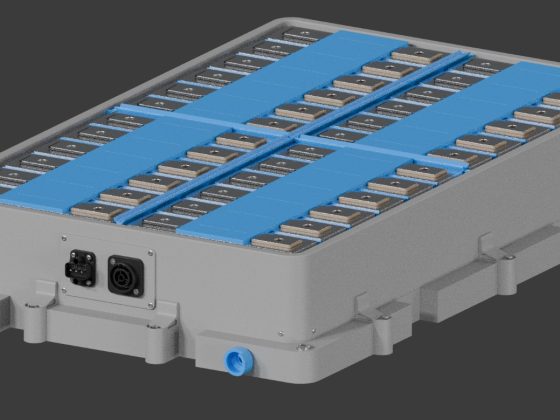
We have already secured our first major order for cell caps, and market feedback – also from other customers – has been extremely positive. As a result, we are confident that additional orders will follow.
We also see enormous momentum and potential in thermal barriers. This field is broader and, depending on battery technology and customer requirements, significantly more complex than cell caps. At the same time, we have already implemented strong projects and received orders in this area.
At present, we are seeing particularly strong interest from China, for example in our seals for busbars. Together with our joint venture partner NOK, we see excellent opportunities to build a relevant business there.
Freudenberg dissolved the Freudenberg e‑Power Systems (FEPS) business group at the end of 2025, linking the hydrogen components business to FST. Why?
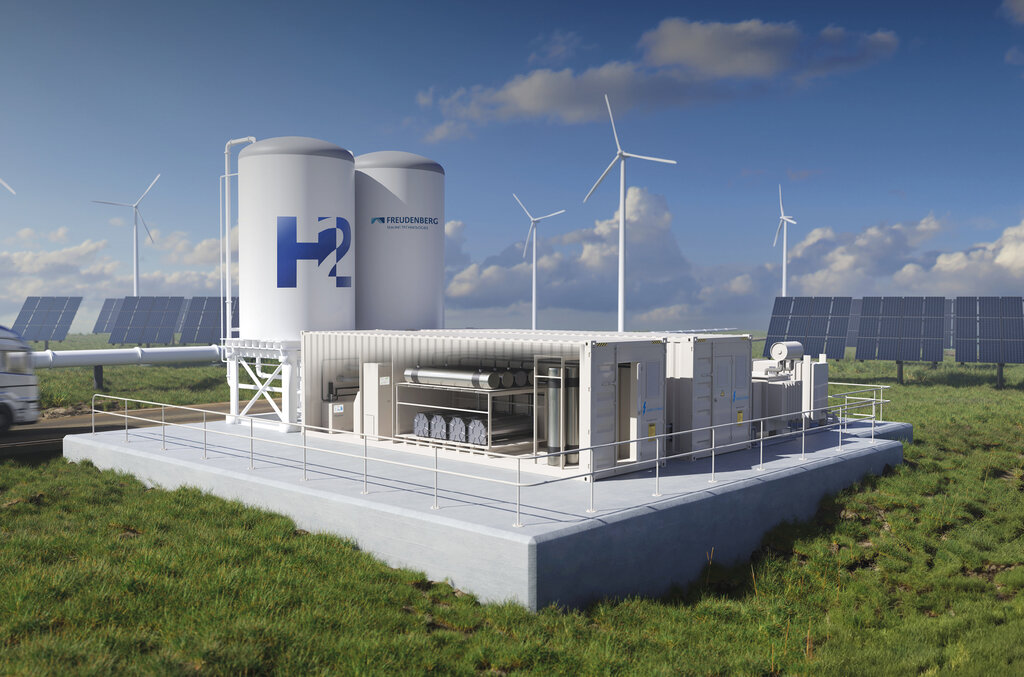
FEPS was strongly focused on battery and fuel‑cell systems. Freudenberg is no longer pursuing a system‑level approach. Our strength clearly lies in the development and industrialization of components. One such component is the catalyst‑coated membrane. We developed this technology but have not marketed it so far – that is about to change. It is more cost‑effective, more efficient, and more durable than comparable solutions currently available on the market.
What does that opportunity look like in concrete terms?
A new incubator team called Hydrogen Components is being established within the Static Sealing division. Experienced experts from FEPS are supporting FST for this purpose and will report to the Static Sealing Division. The goal is to bring catalyst‑coated membranes to market readiness. We expect initial sales to begin in 2028 or 2029.
This technology is relevant not only for fuel cells but also for electrolyzers. The membranes differ mainly in thickness; the underlying principle is the same. At present, our clear focus is on electrolysis, and we have already secured two major orders for seals in this area.
So this also benefit FST’s core business?
Absolutely. One key advantage is earlier access to customers. Our Hydrogen Components colleagues work very closely with the R&D teams of electrolyzer manufacturers. That enables us to position our sealing solutions earlier in the development cycle. This strengthens our core business over the long term.
Are the membranes already being produced?
The production facilities, which are located in Munich, are currently being ramped up and undergoing extensive testing.
We haven’t yet discussed waveguide antennas. Where do things stand with that product?
Unfortunately, our expectations in this area have not yet been met. We were somewhat late on the market and even though our solution clearly provided cost and design benefits the competitors solution works and they were earlier The division will continue to pursue the project, but with slightly reduced effort.
Turning to geopolitics and the global economy: What concerns you most?
Our people have repeatedly demonstrated their adaptability and commitment, especially in times of crisis. As a result, this gives me great confidence. We asked a great deal of our organization in 2025, but it was necessary in order to respond to sometimes erratic market behavior.
Geopolitical risks are currently among the biggest challenges for global supply chains. We are addressing this by focusing on local production and development as part of a consistent local‑for‑local strategy, which also reduces dependence on international supply chains.
We are strengthening supply security through coordinated purchasing and logistics strategies, as well as targeted dual‑sourcing. In parallel, we regularly analyze risk scenarios and invest in alternative transport routes to remain operational even in the event of geopolitical disruptions.
High energy prices remain an issue. How are you mitigating their impact?
Our first lever is consistent energy savings. In addition, we are gradually replacing outdated machinery, furnaces, and heating systems. At the same time, we are making targeted investments in our own energy generation, particularly photovoltaics. By 2026 alone, we expect to increase our photovoltaic electricity generation sevenfold compared to 2024.
What role do storage solutions and load management play?
Load management is critical for lowering electricity costs. Electricity pricing is based on peak demand. By staggering start‑ups and using battery storage, we reduce peak loads and lower electricity costs over the long term.
What payback periods do you expect for these measures?
At sites where we generate our own electricity or reduce peak loads, payback periods are typically between three and five years.
In Weinheim, people often ask why the site does not make greater use of additional rooftop solar panels. Why is that?
The site is already fully supplied with green electricity. Additional photovoltaic systems would offer little additional benefit in terms of carbon footprint and would take significantly longer to pay for themselves economically. That is why we prefer to invest where we can achieve the greatest ecological and financial impact, for example, in Southern Europe or North America.
China’s economy was mixed in 2025. What does that mean for FST business?
China was a challenging market in 2025, with weak domestic demand, an ongoing real estate crisis, and additional tariffs weighing on the economy. That makes our performance there all the more impressive. Despite these headwinds, we continued to grow.
We set new trends in general industry; an area that was previously not a major focus, which, however, is now delivering even higher growth rates than automotive.
This success is driven by a clear segment strategy and a simple principle: focus over breadth, and trust over centralized directives. We deliberately give our teams in China significant autonomy, from technology decisions to machinery investments. This proximity to the market, combined with support from our global lead centers in Europe, the U.S., and Japan, is the foundation of our success.
India is considered the fastest‑growing major economy in the world. What strategy will FST pursue there?
India is a rising star for FST. We have seen strong growth there in recent years, both in automotive and general industry. At the same time, we are planning to establish our own development center in India during the next strategy period. This would give us a truly global development footprint, alongside Europe, the U.S., China, Malaysia – and India.
How is FST progressing in Southeast Asia?
Southeast Asia is developing more slowly than expected. Early on, we examined whether acquisitions – particularly in the trade and spare parts business – could accelerate growth. However, the market environment has proven complex. In many countries, strong local structures and competitors with different product portfolios dominate, especially in the OEM space.
As a result, short‑term growth is limited. Nevertheless, the region remains strategically important. Our current approach is more realistic and long‑term, focused on building substance step by step.
Thank you for the interview!