Gary VanWambeke has been Chief Technology Officer (CTO) of Freudenberg Sealing Technologies (FST) since January 2025. He is responsible for Operations, Lean, Supply Chain Management, Purchasing, Quality Management, Health, Safety & Environment (HSE) as well as Innovation Management, Process Technology and Product and Material Development. Before becoming CTO of FST, VanWambeke headed the Dynamic Sealing division.

Compact
Focus: In the first few months in his new role, Gary VanWambeke concentrated on familiarizing himself and making the transition from a position as division head to a corporate function. His goal was to understand the different departments, corporate functions and strategies.
Strategic priorities: His strategic priorities include fostering a culture where everyone can contribute, focusing on the mobility transformation in the transport market, leveraging data and standardizing core processes. He emphasizes the importance of aligning teams and leveraging best practices across the company.
Innovation and sustainability: VanWambeke emphasizes the importance of sustainability in product development. He explains the clearly defined innovation process, the focus on reducing technical waste, the use of environmentally friendly materials and the integration of sustainability goals into every step of the innovation process.
Mr. VanWambeke, at the time of this interview, you can look back on six months in your new position. What was your focus?
In the first few months, I concentrated on familiarizing myself and making the transition from Division Head to a Corporate Function. Before my appointment as CTO, I worked at Freudenberg for 28 years in the Simmerrings division. Now I’m trying to get to know the other divisions and corporate lead functions and understand what their strategies are, what they do and how they work. I have gotten to know my colleagues on the Board of Management better and we have defined how we will work together. I also want to find a way to add value.
What do you mean by “creating added value”?
For example, what I can do to accelerate the further development and future growth of FST. I have learned a lot recently.
You’ve been traveling a lot in the past few months. Where have you been?
So far, I have often been to Weinheim in Europe to visit the various production sites and warehouses, as well as to Pinerolo and Remagen. In the USA, I have visited nine different plants. For the rest of the year, I am still planning trips to China and four other locations in Europe and the USA. All in all, it’s a challenge because we have so many plants around the world. When I worked in the Dynamic Sealing department, it took me two years to visit all the production sites belonging to the division. At the moment, I try to go wherever something important is happening. Let me give you an example: If we are working on a big project somewhere, I travel there and take a look at the plant. I try to get an idea of where we are making investments. And then there are all the different appointments for which I have to travel to a certain place, but I may not be able to visit a plant there at the same time. Of course, it’s not just the traveling itself that is challenging, but also the different time zones. I talk to people in Asia, the USA and Europe. But that’s also the beauty of working globally, isn’t it?
Your area of responsibility is quite broad. What are your main strategic priorities for the coming years?
In my view, culture and people must be at the forefront. By this I mean that we create an environment in which everyone has the opportunity to make a contribution. And more importantly, that they make the most of that opportunity. So how do we put the right teams together and give them the opportunity to make a difference? In my view, that is the crux of the matter.
If we look more specifically at my role, I would say that the priority is the mobility transition, the transformation that is taking place in the transportation market and the use of data. As you know, the Global Innovation Forum took place in the first week of July, where over 400 participants from the global Freudenberg R&D community and many other areas discussed the importance of artificial intelligence. The forum focused on data, and it is extremely important that we understand where the journey is going and how we can use this data.
Another important priority: how do we work and what are our core processes? It is difficult to standardize everything. However, some of our core processes work better if they are standardized, if we carry them out in a clearly defined way. We have already mastered this very well in the areas of finance and controlling. We are also already well positioned in HR, where we have standardized our talent management process with Workday.
Nevertheless, FST is a manufacturing company and has similar processes in many areas. There are best practices, but we don’t always use and share our experience sufficiently. So how can we understand the core processes and identify those from which we could benefit if we were to execute them optimally? This is a great opportunity for us. Much of what we do is already moving in this direction.
FST’s current strategic focus is on India, China and Southeast Asia, right?
Definitely. These are regions where we want to grow and we have great teams there. But how can we use the existing talent? In China, for example, the situation is somewhat reversed: The team there used to receive a lot of instructions from North America for US customers, from Europe for European customers and from Japan for Japanese customers. Today, China is the center of the great e-mobility revolution. So how can we use what they are doing for us? We need to learn from them and they need to help us. The way we operate in these markets can give us a huge advantage, precisely because we have teams there.
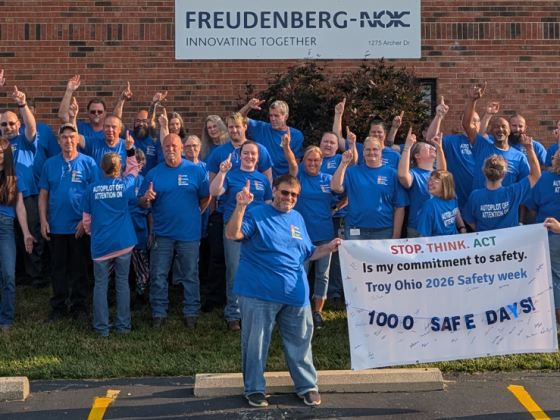
Freudenberg’s “We all take care!” initiative has been around for 23 years now. In your opinion, are there still weak points or challenges in terms of occupational safety?
We have done an excellent job of reducing the number of accidents and we are at a very stable level. But the fact is: there are still injuries, and when there are injuries, there is room for improvement.
When we look at the causes of accidents, we often see that they are preventable and partly have to do with a lack of attentiveness. Safety must therefore be a top priority every day. One of our tasks is therefore to bring the topic of occupational safety to the fore every day. Managers have to go into production and keep a close eye on what is happening there, they have to pay attention to safety aspects. If they notice something, it is their responsibility to ensure that the risks are rectified immediately. It is also important to sensitize the team accordingly. Safety in the workplace also has to do with mindfulness, personal behavior and care.
Let me give you an example. There was snow at one of our locations and there was a cleared path for employees to access the site. But someone took a shortcut, slipped and fell. This is a typical example of how important one’s own behavior is. So there is definitely room for improvement. I think we are quite well positioned, but accidents cannot be completely avoided. Nevertheless, we must also continuously improve in the area of occupational safety.
What’s new and exciting in our development pipeline?
Here, too, I attach great importance to our processes and we already have clearly defined processes. We started with Project OVID, from which the “Where to play” process has developed. We therefore have a connection to the market and know what is happening there. I think this process is very good.
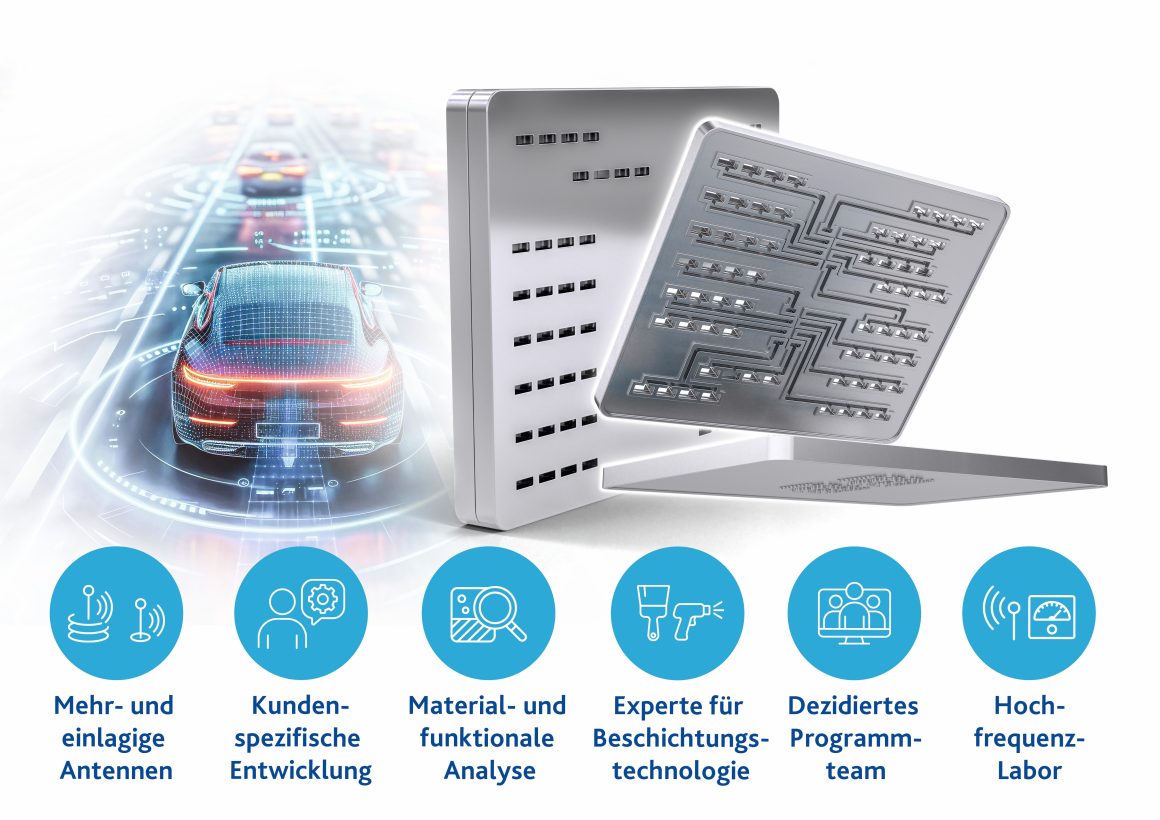
Each of our divisions has something to offer: The Special Sealing Products division has busbars and waveguide antennas in its portfolio. Static Sealing is working on electrolyzer seals and is expanding with new customers such as Tesla. The Fluid Power Division has won its first order for battery cell housings and the Dynamic Sealing Division has won an order to supply battery cell caps with the customer ACC.
When we started with Thermal Barriers, we were working with customers who manufacture electric vehicles. Then the project expanded to other areas and now there are both offers and samples of Thermal Barriers for energy storage systems.
All divisions are making progress, which is very good. The challenge, in my opinion, is that neither launches nor volumes have come at the pace that customers originally expected. In the beginning, everyone thought that with the decline of combustion engines, battery electric vehicles would conquer the market at the same time and that it would balance out perfectly. Unfortunately, this is not the reality. Although we have many projects in the pipeline, we have realized that we need to go back to the “where to play” process and refocus. We need to generate more ideas. I think we are on the right track overall. However, we need to address some points to close the gaps that could arise due to delays in the market and with customers.
How do you integrate sustainability goals into the innovation process and what role do they play in product development?
This is already happening in many ways. It may not always be visible from the outside, but literally every step in the innovation process takes a sustainability approach so that we can achieve our goals.
We have talked a lot about data and are now able to simulate things. For example, when we simulate inspection tests, we reduce physical tests, save resources and energy.
Product designs focus on reducing construction-related waste and using more environmentally friendly materials. In our processes, we make sure that we work in a way that conserves resources and energy and produces less waste.
We take sustainability into account in all capital investments. In this way, we want to ensure that new machines and systems also help us to achieve our goals.
Digitalization is becoming increasingly important. How do you deal with cyber security risks and how do you reconcile them with the need for rapid technological progress and digital transformation?
I would say cyber security is similar to general security, it has to be a top priority for all of us on a daily basis. Everyone plays a role in this – a simple click on the wrong link can cause a lot of problems. We should all be aware of that.
We are getting better at maintaining our business processes safely. We need to explain how we deal with risks to the business, not just in terms of cyber-attacks, but anything that could disrupt business continuity. We will entrust cross-divisional teams with the task of ensuring precisely this continuity. It is important that all employees are involved in order to link all aspects together. However, risk management does not necessarily mean that we are slowing down. We can manage risks and still be fast and agile. We just have to proceed carefully. There are many examples of this. I’ve already mentioned the Global Innovation Forum and how the different teams are working to protect us in terms of cyber security, but also to help us move faster.
Let me give you an example of a potential daily threat: I receive a lot of unsolicited emails with a handy “unsubscribe” link. I often ask myself: Is this really a link to unsubscribe from a newsletter, or rather a clever way to trick me? We all need to be extremely sensitive to potential cyber risks.
What experiences from your time in the Dynamic Sealing Division have most influenced your view of your current role as CTO?
I would say that I transfer the perspective of a division to a corporate function, which can be helpful. At Dynamic Sealing, I’ve learned how important it is to set ambitious goals and commit the teams to them. So when I think about goals, I imagine what ‘great’ they will look like. How do we make the leap from good to great? FST is certainly a very successful group of companies, but how do we get to the next level? And what steps are important to reach the goal?
For example, I imagine it is the year 2035 and FST is operating very successfully. We are known worldwide for many positive things. If you came to us and asked us to write the headline for a press release, what would it be? And if we put ourselves in the year 2035: Are we doing the right things today to lead to success in 2035? How can we achieve this together? I really like these “what if” conversations. What if we did this or that differently? What if we could get this information from the customer? How would the customer react? For me, these are conversations that you can build on and inspire people with. The Dynamic Sealing Division has very well-functioning lead centers in terms of market share, profitability and many other key figures. However, a look at the performance of the division as a whole shows that the improvements only really took off when we aligned the lead centers and they started to work together on some strategic projects. We focused on doing the right thing for the division and therefore also for FST. When we do the right thing for the division, everyone wins. Sometimes you give help, sometimes you get it. Hopefully, in the long run, it balances out.
Within FST, I think everyone has the same opportunities. We are getting better at breaking down silos and that is very helpful. The next step is to move from isolated, functional priorities to more general priorities. And we are working on that! Think of the new mixing plant project. The Components Division has taken the lead on this, which is good. But it’s actually an FST project. FST needs to bring together all the bright minds that can contribute to the success of this major strategic project. Bringing employees together and aligning priorities offers great opportunities. I have adopted a sentence from an innovation presentation that I really like: “If you want to go fast, go alone. If you want to go far, go together with others.” I think there is untapped potential in this. With this coordination, we can achieve the great things that make FST successful.
As the Board of Management, we are currently thinking about how we can connect all the bright minds we employ and give them the opportunity to contribute.
Now one last question: What does a CTO do when he is not working?
I like to do things together with my family. I like to be active, which I don’t always manage due to my new job and all the traveling. When I’m at home, I like to do yoga with my wife Tammy at the weekend. During the week I do CrossFit. I love to play golf, and Tammy and I are working on playing the best public golf courses in the US. I also try to stay active in the winter and enjoy skiing. Since that’s not possible in my hometown of Atlanta, we have to go to the mountains, usually out west to Colorado, Utah or Montana. I can’t sit still. I have to do something, even if it’s just housework or yard work.