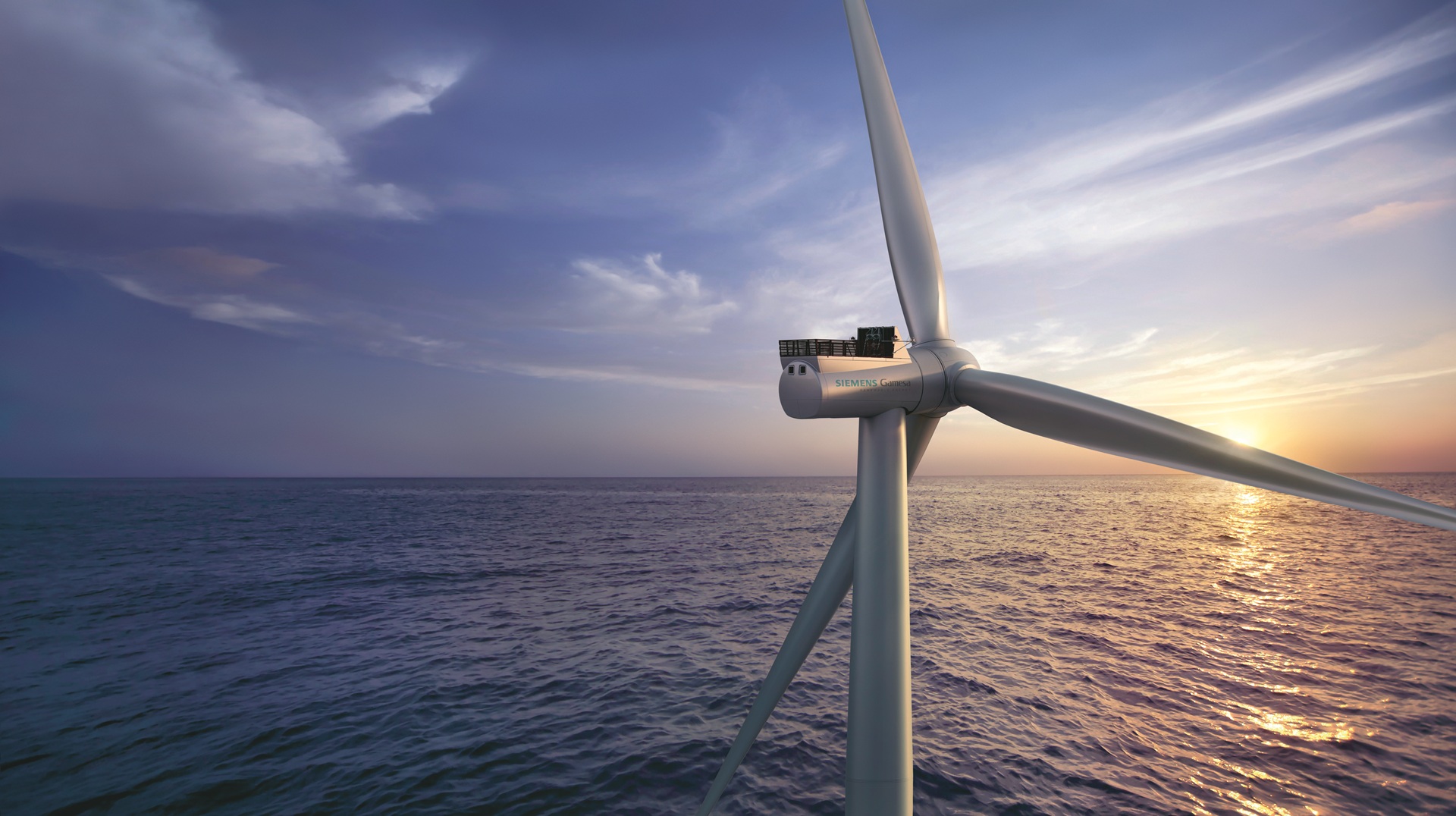
The European Union is planning to expand offshore wind power capacity to at least 60 gigawatts by 2030. Freudenberg Sealing Technologies (FST) supports this goal with modern sealing solutions that ensure that new wind turbines achieve a service life of 30 years or more despite the harsh conditions at sea. Special seals developed and manufactured by FST, such as monopile transition piece seals, protect the offshore systems against corrosion and other environmental influences. Since the beginning of 2025, FST has also been supplying Airtight Platform Seals (ATP Seals) for a large offshore wind turbine off the Dutch coast, which is scheduled to go into operation by the end of 2026.
The European Union plans to expand the capacity for offshore wind power generation to at least 60 gigawatts by 2030. Freudenberg Sealing Technologies (FST) contributes to achieving this goal with modern sealing solutions and also helps new wind turbines to achieve a service life of 30 years or more despite the harsh conditions at sea. From the customer’s point of view, this is essential, as maintenance work on offshore systems is not only difficult, but also extremely expensive.
In order to withstand the enormous forces of storms and hurricanes on the high seas, wind turbines must be immovable and remain “on a firm footing” throughout their entire service life. The foundations used to anchor the towers in the seabed play an important role here. In the North Sea today, this is mainly done by so-called “monopiles”. These are steel piles that are driven into the seabed and whose upper end protrudes out of the water. The tower of the system is usually connected to the steel pillar via a flange. To securely fasten this flange, dozens of bolts are required on the inside. It is important to ensure that no moisture penetrates and that the bolts are protected from salt water and – as a possible consequence – from corrosion.
Monopile Transition Piece Seal
The most important function is performed by a ring seal at the upper end of the pier: it is clamped in a groove between the attached transition piece and the monopile and provides a secure barrier against seawater. This flange seal is called Monopile Transition Piece Seal (MP-TP-Seal) and can reach a diameter of eight meters and more, analogous to the diameter of the pier. These large-format seals are continuously extruded, cut and impact-vulcanized at the Lead Center Special Sealing Industry (SSI) in Weinheim.
“As of today, FST has an extremely strong market position. Most of the offshore wind farms with MP-TP technology installed in the North Sea use MP-TP seals from FST, and we are the market leader in this area,” says Christian Kohl, Head of Product Management. Not all wind farms use monopile technology, but all of them have platforms inside on which fitters stand during assembly and maintenance of the giants. This is about the safety of the players, and this is where FST comes into play again. “FST manufactures so-called Airtight Platform Seals. These seal between the platform and the monopile and ensure that nothing falls from inside the wind turbine into the sea. At the same time, they form an initial barrier against moisture and – depending on the design – against gases that can be produced in the pile due to biological and electrochemical processes in the seawater,” explains Kohl.
Airtight Platform Seals
The Lead Center SSI and the Energy Segment of General Industry Sales recently won a new project for 52 offshore wind turbines against competitor Trelleborg. Around 53 kilometers off the Dutch coast near Ijmuiden, the operator consortium Ecowende (Shell, Eneco and Chubu) is planning the construction of a large offshore wind turbine realized by Smulders. With an operating capacity of around 760 MW, this will cover around three percent of the Netherlands’ current electricity requirements in an environmentally friendly manner. The wind farm is scheduled to go into operation by the end of 2026. “We have been supplying Airtight Platform Seals, or ATP Seals for short, to Smulders since the beginning of 2025,” says Kohl. The company can look back on over 50 years of experience in the design, manufacture, delivery and assembly of steel structures. Smulders was already active in the offshore wind turbine business 20 years ago, when wind energy was still in its infancy.
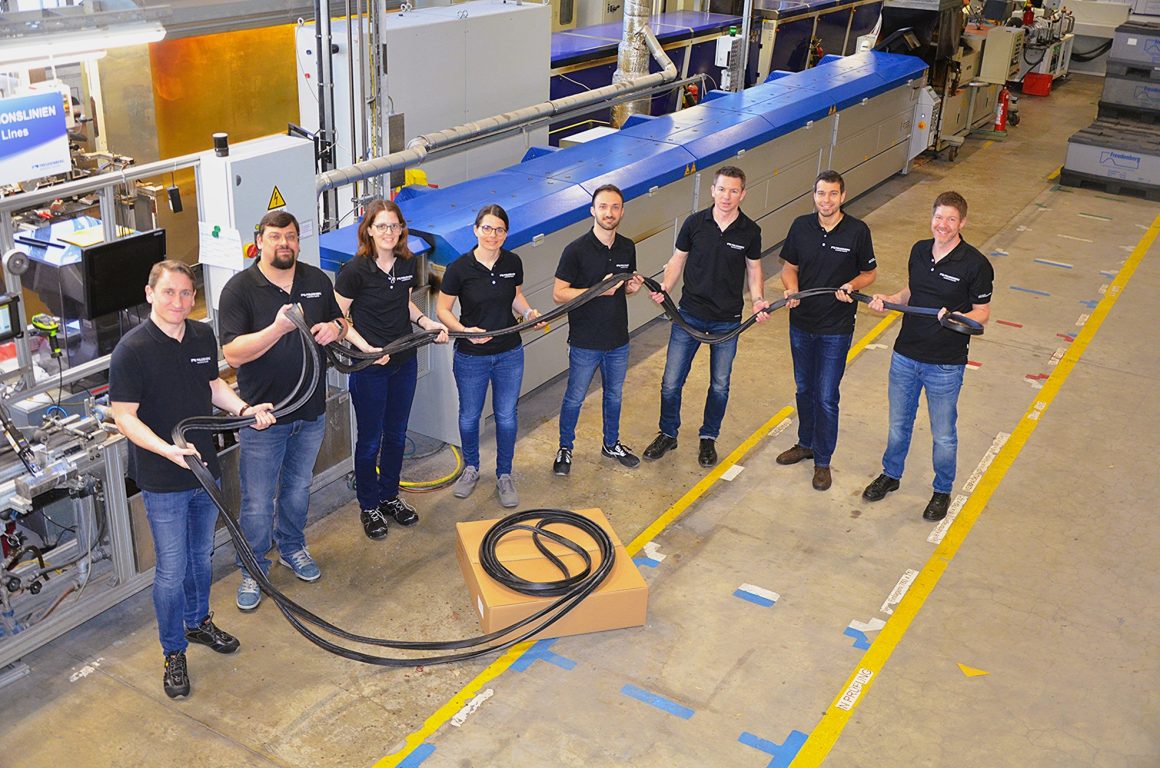
The success story began when employees of Freudenberg Sealing Technologies (FST) proactively approached Ramboll. Ramboll is an international engineering, architecture and management consultancy that was responsible for planning the offshore facility for Smulders and ultimately for Ecowende.
Competence scores
Their original specifications in terms of material and design were unfavorable. Experts from FST warned that these would not meet the requirements and advised a new design. The wind power industry is placing ever higher expectations on the service life of components in offshore turbines, and up to 35 years is now being discussed. Such a long service life cannot be ensured for this application using test bench tests alone. A modified design and profound material expertise initially opened the door for the customer. “What ultimately made Ramboll completely switch to our approach was our FEA analysis, the service life calculation and our extensive knowledge and experience in the offshore wind industry,” says Marcel Schreiner, Segment Director Energy. Finite element analysis (FEA ) is a general method used for various physical tasks, with which, for example, the strength and/or deformation of solids can be investigated.
“After we were able to convince Ramboll of our alternative proposals, they informed both Smulders and the operators of the wind farm, and all parties agreed to our recommendations,” says Frank Schönberg, Team Leader Product Development LC SSI, looking back. “Ramboll was convinced by the solution expertise and creativity of the SSI lead center, even in the design phase. The installation space was limited, and this is ultimately always the limiting factor for a sealing system.
Another bonus for the FST experts: at FST, solution expertise and creativity do not end with the signature on the order: “Our specialists are involved in the initial assembly of the seals. This has earned us additional points with the customer,” says Kohl.