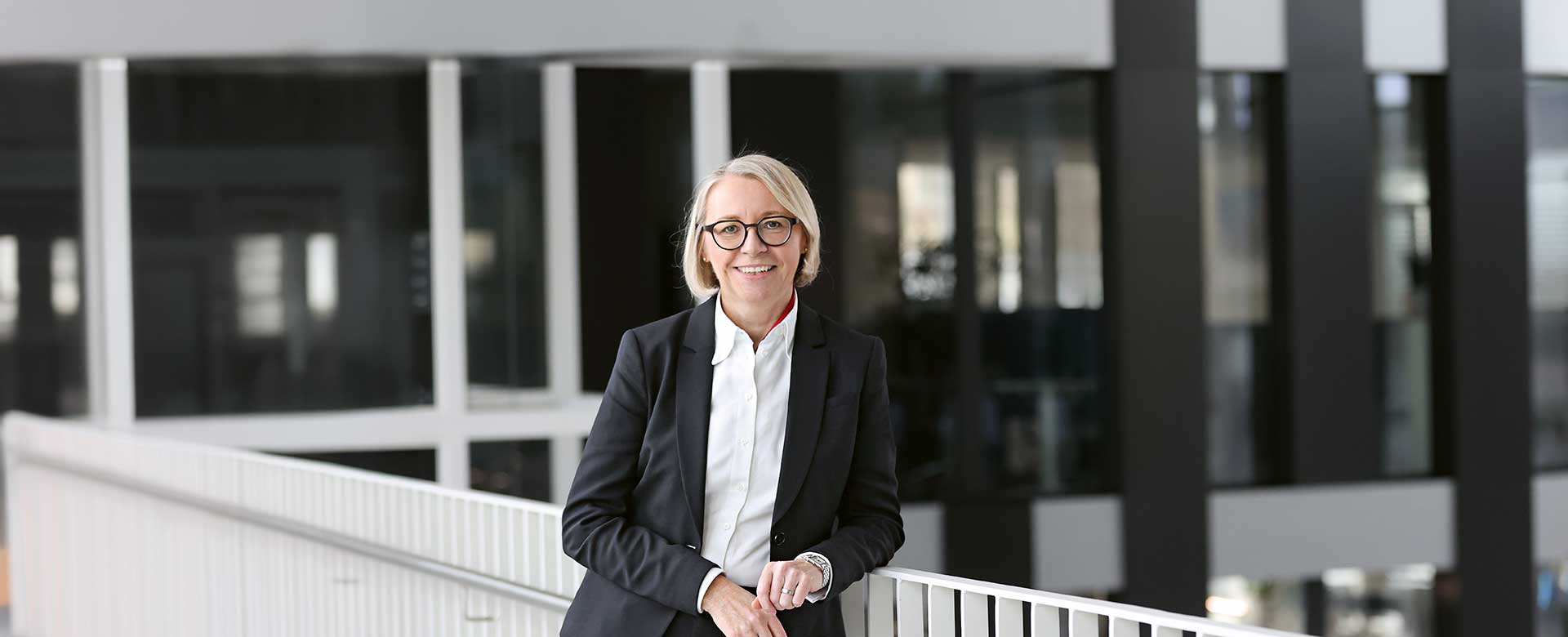
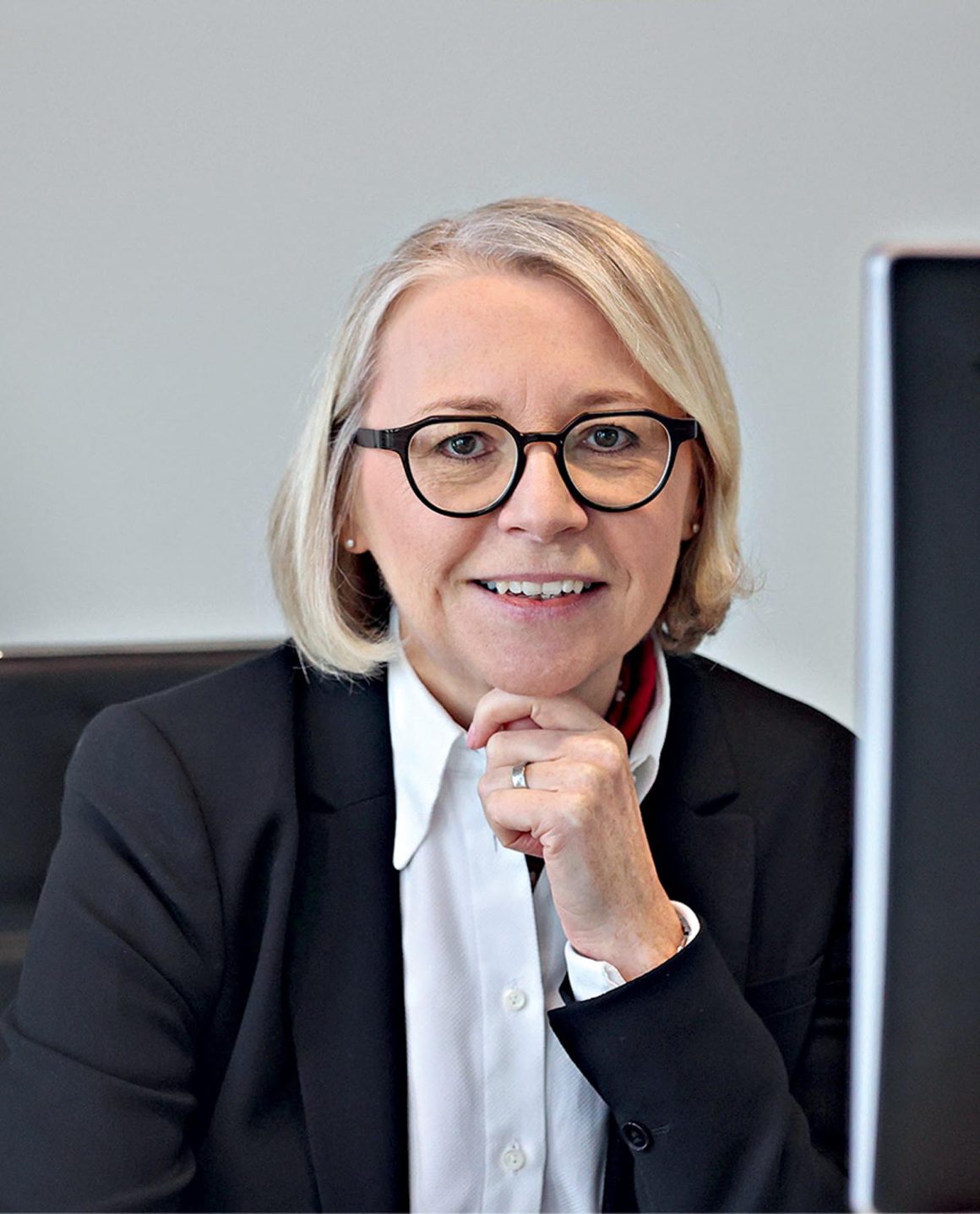
Kerstin Borrs has been an important asset on the Freudenberg Sealing Technologies (FST) Board of Management since January. In April, she accepted the baton from Ludger Neuwinger-Heimes to become the company’s Chief Financial Officer (CFO). She is now in charge of Finance, IT and Mergers & Acquisitions.

Ms. Borrs, you are not a newcomer to Freudenberg. Where did you work before you joined FST?
I started at Freudenberg Home and Cleaning Solutions in 2018. I worked there until the end of 2023 and moved to FST. Before coming to Freudenberg, I spent 25 years in the consumer goods industry and trade, specifically at Mars, REWE Zentral AG, and Mondelez, the former Kraft Foods.
You began working at FST at the start of the year, and you have been CFO since April. What has surprised you the most in recent months?
Our Business Group’s ability to innovate has surprised me the most. I am impressed by how proactive and engaged our employees are as they tackle the challenge of the transformation from conventional powertrains to electric mobility. The sheer quantity of promising innovations is stunning. In some cases, they are already generating new revenue. I believe that the foundation for our success can be found in our deep material expertise, as well as our close cooperation as partners internally, and with our customers.
Is what you are seeing different from your expectations?
My expectations were very high since FST is seen as a pioneer in many initiatives and projects within the Freudenberg Group. After my first months here, I can confirm that we are very well positioned. Our development expertise is one example. We can provide the right solution for any customer and any market.
We are also good at managing complexity, which is, incidentally essential given the diversity of our products and customers.
What is your view on innovations, system landscapes and processes?
As far as innovations and research go, we are operating at an extremely high level. We are making investments continually and systematically in this area to ensure a high capacity to innovate in the future as well.
We have high quality standards and strive for perfection in manufacturing, day in and day out. This was clear to me when I visited various production sites.
In recent years, FST has continually invested in systems and processes as well, and has pressed ahead with additional advances. They include investments in new systems and their development, along with employee training and effective international cooperation. We can be proud of that. At the same time, the successes should encourage us to continue along this path and work on improving our processes and operations.
What will you be paying attention to in the future?
I used the first three months to develop a view of the company’s strategy, organization, structures, work methods and corporate culture. It was important for me to become very familiar with the company’s history and environment to make the best-possible decisions for the future.
As CFO, together with my two colleagues on the FST Board, I am responsible for the success of the company. This includes the development and implementation of the business strategy. More specifically, we have resolved to become more active in mergers and acquisitions during the current strategy period, which runs from 2024 to 2026. That means purchasing companies and expertise when necessary, and integrating them into the company. That will be the primary focus of my activities.
Furthermore, it is my job to make sure that we are working with effective, efficient business processes so we can analyze the relevant data adequately. This is the only way to make sound decisions. After my first months as CFO at FST, I can say that we are well-positioned, thanks to our many effective initiatives. But my philosophy is that there is always room for improvement.
Have you gotten to know all the FST facilities yet?
Not all of them at this point, but I am planning to visit other locations to develop a full picture of our employees, products, manufacturing, structures and processes.
In a recent interview, CEO Claus Möhlenkamp stressed the considerable financial strength that FST has at its disposal to fund the transformation into new fields of business. How do you make sure that this financial strength will continue in the future?
In recent years, FST has continually managed to increase its financial strength. The main drivers behind the effort have been successful products, price increases implemented in the market to pass on rising material costs, and efficient, continually improved processes, especially with regard to supply chains and working capital management. The latter aspect requires us to keep our stocks at an optimal level and closely track receivables and payables based on deliveries and services. This is important for our liquidity. All of this has led to a situation where our profitability and financial strength have been steadily improving.
It is essential to protect these strengths and expand them. Our goal is to be in a position to finance our transformation over its entire time frame, with investments in research and development on one hand, and in our facilities on the other. After all, new products require new production technologies. But we should not lose sight of our existing products. They are our moneymakers. They must continue to be produced in uniformly high quality, and on continuously improved equipment.
FST wants to get in shape for the future with savings on sales and administrative overhead. How much does FST want to save and what measures will it be using?
A benchmark study based on comparisons with our direct competitors shows that our administrative overhead costs – including research, development, sales, warehousing and logistics – are around 4 percent higher than those of the competition. To close the gap and become competitive in our support activities, we are focusing on organizational structures, process efficiency, and the purchase of services.
Our organization has continued to grow in the admin segment and has become very complex. We are now checking to see what is really necessary, what can be optimized, and where we can reduce costs on a sustained basis. Here the objective is to stay competitive in a market environment that is undergoing rapid, dynamic change. This could have an impact on decisions on hiring for open positions. We also have to develop ideas on whether and how we can offer our employees good options, and alternative assignments, when their current job change, or may no longer exist due to structural adjustments.
We want to improve our processes, modernize them, and make them leaner and more digital. We want to bid farewell to outmoded ways of working. Our uniform ERP system is the perfect foundation for this.
We are also closely examining our purchases of services. That means we are questioning whether we still need them in their entirety and at the same costs, or whether there might be alternative suppliers.
Is FST currently using artificial intelligence (AI) in its financial processes?
We have already had a positive experience with artificial intelligence in Customer Relationship Management using SALLY, our virtual assistant, to prepare for customer visits. We are currently evaluating how we might use artificial intelligence in all our administrative activities.
Our pilot project “Microsoft Co-Pilot” is a good example. A group of FST employees is testing the application. They would like to find out how a personal co-pilot could help with data analysis. Or how it could help during meetings and in creating minutes, and what it could do for the automation of routine work.
There are more areas of application for artificial intelligence in finance. Controlling, in particular, can benefit from the use of AI in financial planning and analysis, creating added value for the company. One example involves artificial intelligence creating tailor-made analyses to support decision-making. Improved real-time reporting would make it possible to improve the precision of forecasts. Predictive prognoses and simulations can be generated, and compliance processes automated.
Let’s look at your time away from work: What do you do like to do to relieve stress in your daily life?
I can easily switch off by the time I am heading home after work. Otherwise, a stroll in the evening helps, along with regular sports activities. My favorites are swimming and back exercises. My personal “toolbox” includes mindfulness and meditation, and I have been practicing them for more than 30 years. My passion for so-called “mindfulness activities” began with a tai chi course at an adult education center. I also like to get together with friends and visit my family – we cook and eat together and talk about the personal and professional things that are on our mind.