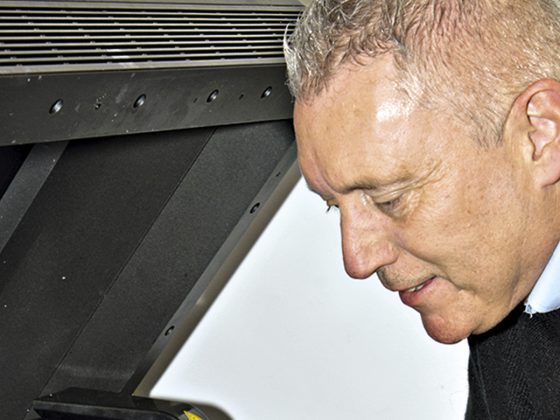
Chad Bauer has led the Lead Function Technology & Innovation (T&I) at Freudenberg Sealing Technologies (FST) since mid-2022. He took on the assignment during a period marked by major upheavals in FST’s business. T&I mainly deals with strategic future projects, often carried out over the medium and long term. Its mission is to move ahead with innovations in a structured way, fill FST’s pipeline with the right products, and put the company on the path to profitable growth. SEALING WORLD spoke with Bauer on how he sees the company’s situation and what he is emphasizing.
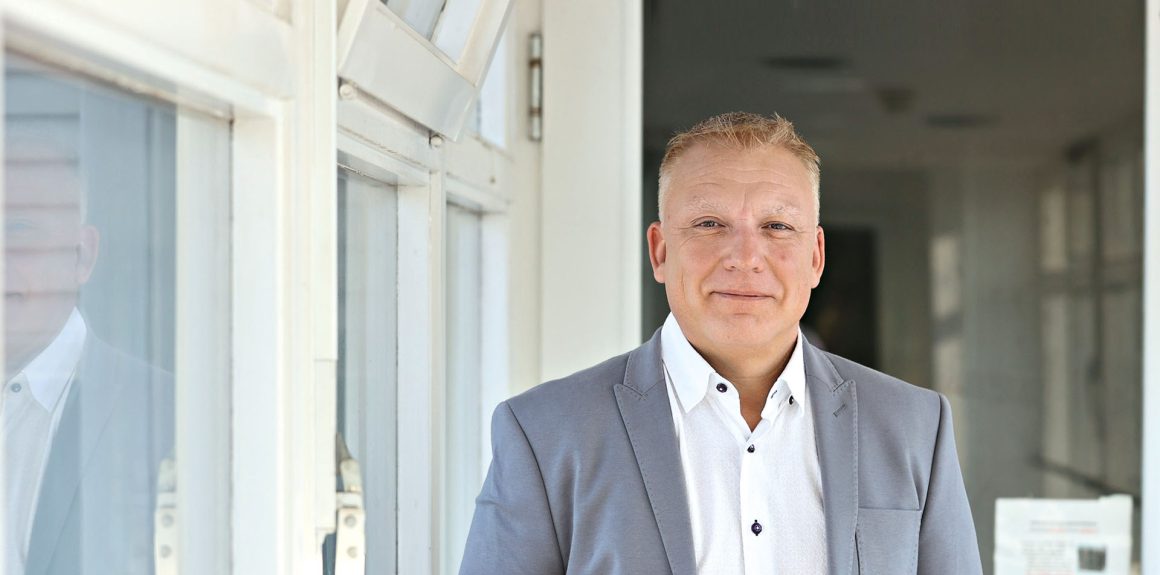

CHAD BAUER …
… holds a bachelor’s degree in mechanical engineering and a master’s degree in engineering and management. After positions at General Motors and Delphi, he joined. Freudenberg-NOK Sealing Technologies in 2002. He spent the first 10 years in Plymouth, “in the world of research and development,” that is, at what is now the Lead Function Technology & Innovation. Over the next 11 years, he was in charge of research and development in FST’s largest division, Powertrain & Driveline. He has been back at T&I since July 2022. As the head of the function, he divides his time among the T&I facilities in Plymouth and Weinheim, as well as at his home office in Gainesville in the U.S. state of Georgia.
The Challenges
“We have been at home in our mature markets and businesses. We have had a great deal of experience with them, along with a huge amount of know-how. We knew the applications, the products, the competitors, and the decision-makers at our customers. We had a sealing solution ready for nearly any problem.
Our baseline is now going through fundamental changes – especially in the auto industry, which still has the highest share in FST. The key terms here are electric mobility and autonomous driving. The interest in hydrogen, electrolysis and robotics is a sign of the change in the industrial business. In every field, we need to develop new, value-creating products and services for emerging markets. In many cases, we are no longer offering our customers individual seals but rather more extensive solutions, for example, for managing temperature or pressure in batteries. Or we are dealing with radar antennas. They are new products and services for new applications in new technologies. Our products are also becoming more safety-oriented. Exaggerating a bit, you could say we are no longer dealing with a few drops of oil on the asphalt. In the case of hydrogen and batteries, we are talking about protecting people from thermal events.
In these new businesses, we do not yet have the same level of knowledge and experience that we had in our classic businesses. For example, we have to establish new supplier networks. The up-and-coming markets are also changing quickly, and you have to take risk factors such as material shortages, geopolitical conflicts, and changes in the political leadership of important countries into account. Or consider new rules such as those for PFAS. The European Union plans to ban perfluorinated and polyfluorinated chemicals, which are contained in our FKM and PTFE materials, among others. All this can have a major impact on our existing sustainability activities and our whole change process.
That means all the players are finding themselves in a test and learn mode. That includes us. We do not know precisely what our customers need. In some cases, they don’t even know themselves. Under these conditions, we have to rely on our ability to learn along with them and to interact with them early – sometimes without even knowing who the right contact person is. Ideally, we should always be a step ahead of our customers. Or at least as far ahead as possible.”
The Approach
“We are in our comfort zone when it comes to the classic sealing business. We know precisely how we can help our customers along and what we have to do for them as developers. Our development strategies have been as well-practiced as a commute to work: Afterwards, you often don’t recall the trip because you handle it almost automatically. But imagine changing your workplace and location. As a continental European, you might suddenly find yourself in England driving on the left side of the road with your steering wheel and shifter on the other side and taking an entirely different route to work. In that situation, you have to sharpen your senses and adjust your manual movements. This takes the highest possible concentration and discipline. You are paying attention to every intersection and traffic sign.
We have to do something similar at T&I. We have to concentrate on all the details of our Innovation Management Process – with great care and discipline. When necessary, we will be making adjustments in our robust project tracking and monitoring, for example.
All of this is a matter of ruling out – as far as possible – the errors that could lead to the failure of a development project. We simply cannot allow errors to occur in up-and-coming markets that are teeming with new players and competitors.
The Design for Six Sigma methodology gives us valuable strategies to precisely focus our development processes on customers and their requirements. We are now going to take Design for Six Sigma to a new level. With its help, we plan to guarantee that our market launches for new products will be as error-free as possible. In the end, we always have to create added value – for our company and for our customers.
We are now using a method called the “Rolling Top 5” to select the most promising projects from our pipeline. It helps us set priorities as we focus on, and select, the right projects. We can’t do everything. We can’t get bogged down. We have to focus on what is important and zero in on it. “The vital few, not the trivial many.” The Rolling Top 5 is all about understanding the value that an innovation creates: What is the value to the company? What added value are we creating for customers? We use the rating system to filter the most important, potential projects in the different business fields and zero in on them. It sounds simple, but it’s complicated in practice.
Developments such as radar antennas require us to develop entirely new capabilities. A few years ago, who would have thought that FST would need radar specialists in addition to mechanical engineers and chemists? But now we are looking for different resources when we fill positions and when we train and educate employees.”
“Innovating Together”
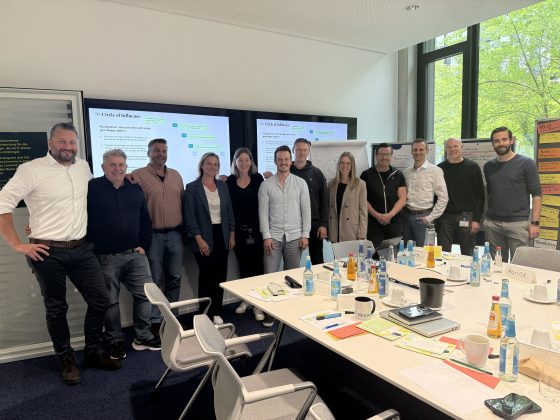
“One of T&I’s key tasks is to bring the individual R&D organizations at FST divisions and Lead Centers together. Our alignment meetings go even further. Here we generally bring every field, such as technology, sales, purchasing, divisions, lead centers, lead functions and even senior management, to the table to examine our portfolio. Are we working on the right technical fields? Has the market changed? Do we need to set new priorities? Do we have to make organizational changes? Everyone is at the table.
This is all about creating the greatest possible transparency for well-informed decision-making. The risk of error is minimized by transparency, mutual control, and the close linkage of T&I with the rest of the FST organization. One example: What’s the use of a tremendous development if purchasing cannot get enough raw materials for series production? It’s impossible to develop in a vacuum.
The interdisciplinary alignment meetings are preceded by ‘active project review meetings’ held by each of the units involved. Are there any technical problems? Are additional resources required? Does the financial framework fit? Our Stage Gate process brings development teams together regularly at the working level.”