Thermal interface materials play an important role in heat dissipation in the field of electric mobility. Freudenberg Sealing Technologies (FST) has designed one of its new materials to be injection molded and produced as a two-component part. The innovation recently went into series production at a major automaker and is opening up new market opportunities for FST.
You know the phenomenon: Your mobile telephone becomes noticeably warmer during rapid charging. In much the same way, heat builds up when an electric car is charged, but on a larger scale. The greater the electric current, the warmer it gets. FST has developed a new two-component part that makes charging vehicles with a high level of current more efficient and safer. It is a game changer for the broad acceptance of electric vehicles and their suitability for everyday use.
The Lead Center Integrated Precision Solutions in Öhringen, Germany, has expanded its array of products with its two-component thermal interface carrier. “With the customer’s approval of the component, we have achieved an important goal in process and material development after several years of intensive work on the project,” said Christopher Wecht, Key Account Manager, Automotive Sales.
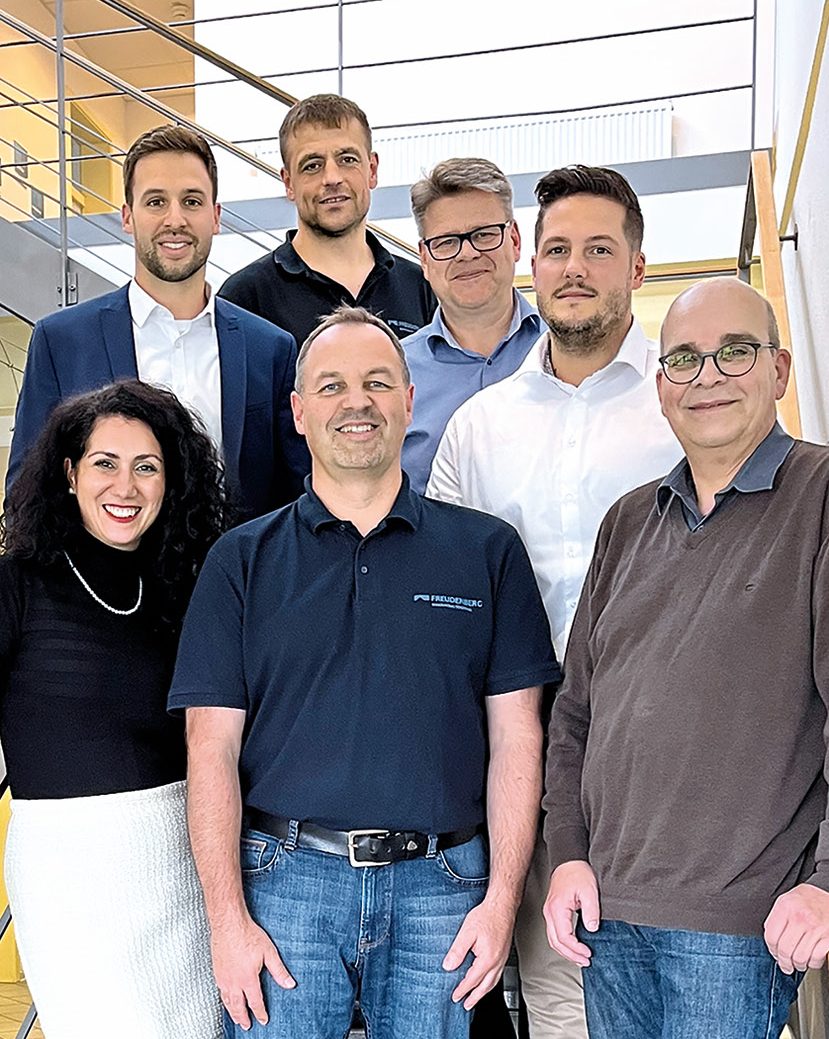
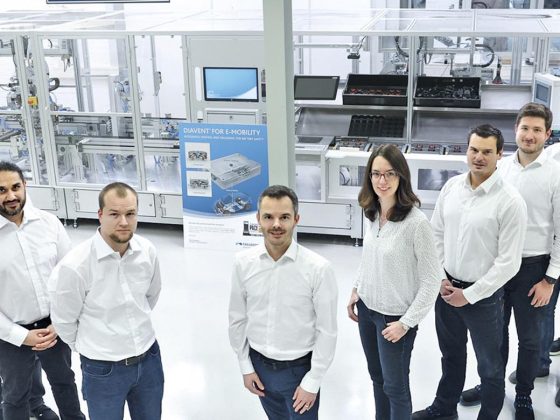
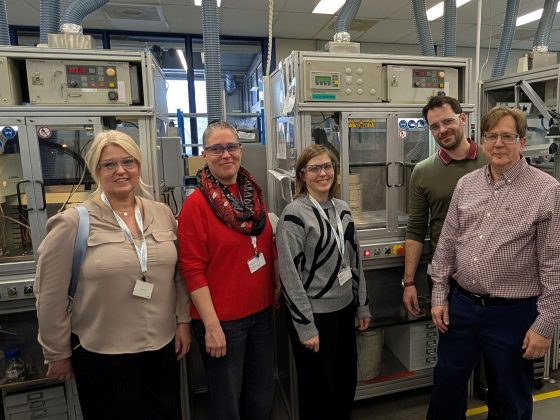
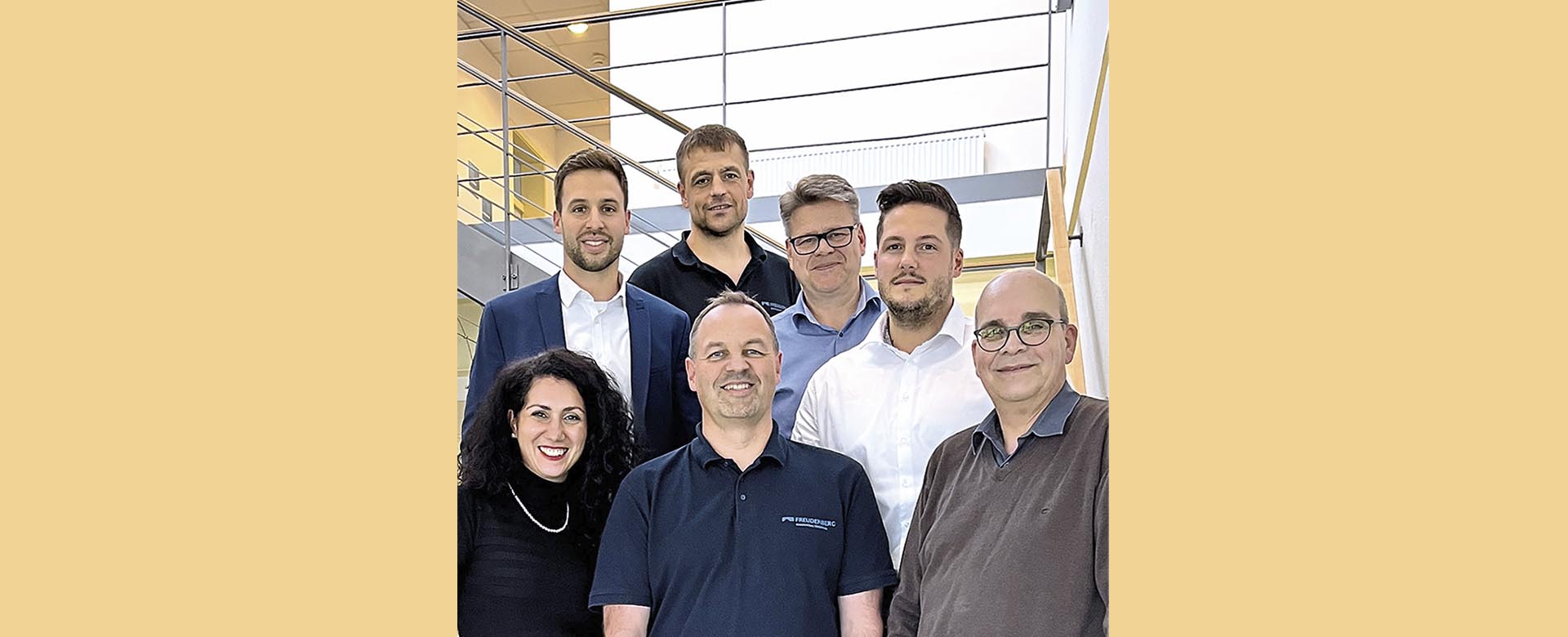
These bright minds are behind the innovation known as the “two-component thermal interface carrier,” which is opening up new opportunities for FST. Back row (from left): Christopher Wecht, Edwin Mayer, Joachim Scheufler and Denis Glonning. Front row (from left): Suzan Klein, Jürgen Müller and Thomas Müller. Missing in the picture: Armin Striefler.
Business development in the automotive area
Product Manager Denis Glonning spelled out its importance: “This is a milestone, both for our facility and for FST. For the emerging market of electric mobility, we have brought a new product made of a newly-developed material into series production – for an application that is completely new to us and was not on our radar a few years ago.”
Wecht added: “Thanks to the new material and process know-how from Öhringen, we were able to acquire a new customer and develop a new application area.” The customer is a supplier to Volkswagen, one of FST’s top customers, and has not sourced parts from FST before. The new part has now found a home in VW’s electric vehicles. Based in Germany, the new customer specializes in vehicle electronics, including onboard networks, and is ranked among the top 100 automotive suppliers.
The thermal interface materials, or TIMs, developed by FST combine two characteristics: They conduct heat – experts use the phrase “thermally conductive.” But they are simultaneously electrically insulating. FST takes advantage of their their dual nature for high-voltage charging sockets.
During charging, the TIM component of the new part guides heat past sensors. They do not come into contact with the metallic pins of the plug connection – that would lead to a short-circuit. Instead, the FST part feeds the sensor with thermal information. That enables the charging process to be continually monitored and reliably managed. Justin-time monitoring promotes short reaction times, with maximum flow of charging current during fast charging with a minimal risk of overheating. That translates to increased safety.
TIMs are not inherently new, but they are very good at dissipating heat. TIM sample plates developed and produced in Öhringen reached the new customer after the first trade-fair contacts and a TechDay in 2019. The material’s electrically-insulating and thermally-conductive properties were important, but the real challange was ensuring that the material could be produced in two-component and injection-molding production for the specific application.
“Heat can only be distributed or dissipated over a large area via a flat pad or paste. By injection-molding the part, we can give it a three-dimensional structure and selectively direct the heat through a given topography at several points within the part, going directly to the sensor via the shortest possible route,” Glonning explained. This promotes targeted cooling of a system, he added. It expands the fields of application for the new material for the protection of electronic components.
Two components for two functions
When it came to functional integration, the second major challenge involved the attachment of the new TIM to a two-component part with a carrier material – specifically a thermoplastic main body tailored to the application. Aside from channeling heat for temperature monitoring, the new part plays another key role: It positions and affixes an electronic component in the installation space. The component is required for the charging system.
The development team tackled this hurdle by turning to its extensive experience in multicomponent technology. The new TIM was not just injection-molding capable – the team gave it the capacity for adhesion as well. Thanks to its design and advances in material and process technology, the new part combined two functions in the smallest possible installation space. “So we managed to generate customer-specific, added value in the mounting process, over and above the technical benefits we are offering,” Wecht said.
The learning curve for the project was steep. Time was pressing, and there was a lot to do. An order with a new customer worth millions is never a matter of chance – it is the result of painstaking development work, moving step-by-step through an iterative process. Wecht is full of praise for the entire team, which has developed a new market opportunity for FST. “The Lead Center in Öhringen overcame all the challenges, developed a new material and design, made sure its production processes were right, and met the customers high requirements for quality.”
New tests were among those requirements. Glonning cited an example: “We had been familiar with the test requirements for seals for decades. But we are now testing new parameters such as heat conductivity and electrical dielectric strength.”
There are many opportunities for injection-molding-capable TIMs in single components and multicomponent combinations. The existing customer has already commissioned part variations in the same application area and is offering other attractive avenues for cooperation. “We have built up a level of trust,” Wecht said.
Other uses for the innovation are conceivable, in charging stations, for example. Or wherever a customer needs temperature monitoring and targeted heat dissipation. Glonning puts it this way: “There is a lot of know-how in the technology, and it has loads of potential.”