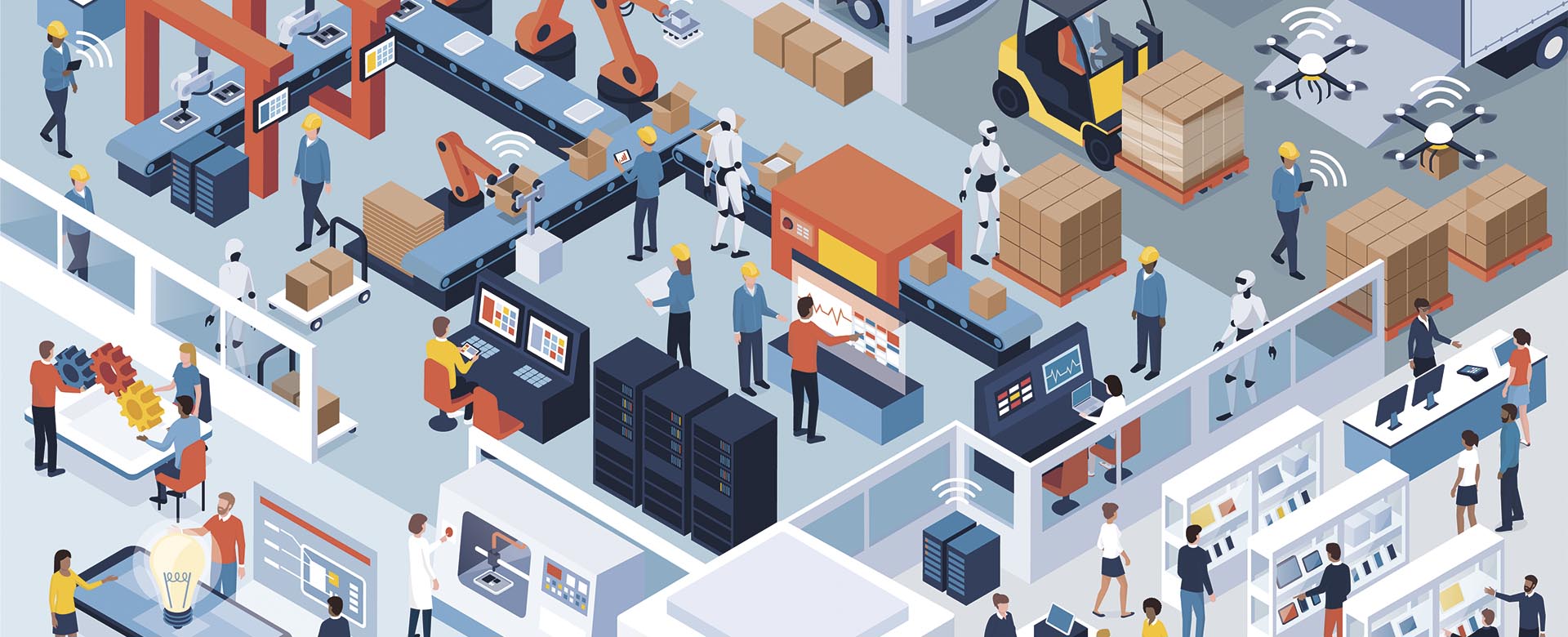
The buzzwords race through discussions of digitalization: the Internet of Things, Industry 4.0, Factory 4.0, Smart Factory, and the Connected Factory. They all more or less describe a vision of production in which machines largely cooperate independently and self-organize, without the benefit of human intervention. How far has Freudenberg Sealing Technologies (FST) come in this direction?
Abatch of products has been completed, and the worker sends for a transport robot with the push of a button. The robot carries the parts autonomously from the machine to the warehouse. Scenarios of this kind are already a reality at many FST locations. This relieves employees of unproductive transport tasks. They can then concentrate on value-creating activities at the machine.
It is an even smarter process if the machine sends for the transport robot completely on its own – and does so promptly, before it has even completed a batch. Then the robot stands ready at precisely the right moment so no time is wasted and there are no delays. Vision control systems are similarly helpful. They use image recognition to separate out defective parts, making it no longer necessary to check them manually at the final inspection.
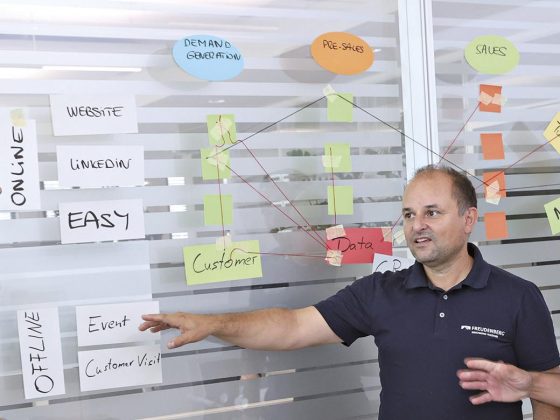
“There is huge potential associated with the digitalization of production processes. We will unquestionably do this. It is only a matter of what we are doing, when we do it and how quickly. Otherwise, we fall behind,” said Oliver Müller, VP Digital Systems for Product Engineering and Manufacturing/CPIM. He attaches great importance to the fact that the growing “Connected Factory Community” formed in 2021 is multidisciplinary and includes employees from many different departments. “Aside from money and technology, ideas from employees are the capital for digitalization. It doesn’t matter whether someone works in manufacturing or IT. Digitalization is making hierarchies and silo thinking obsolete,” Müller said.
It is a long way to the Connected Factory, and it will take years to reach it. This mammoth task is divided into segments. For example, experts first have to tap into the machines to get the data flowing. Sensors can capture process data from the production halls and not just the machines. Environmental temperatures are one example. If the temperatures are too high, a compound could start to harden even before vulcanization.
Refining Crude Oil
In the next step, known as shop floor management, the collected data are linked with IT systems. “In acquiring the data, we first get the crude oil, so to speak. At FST, we have come a long way and have done a lot with it for a long time. The question is, what will we further refine this crude oil into?” Müller asked. “After all, like every other business activity, digitalization needs purpose, objectives and a justification of the benefits to be achieved with its help.”
At its core, the work involves the aggregation of data from countless sources. The next step is setting the elements in relation to one another. Then, with the help of simulations and algorithms, practical insights are derived from the information. The path leads from the machine into the cloud. Incidentally, FST has set up an Internet of Things (IoT) platform where process data from machines and sensor data converge and can be interwoven.
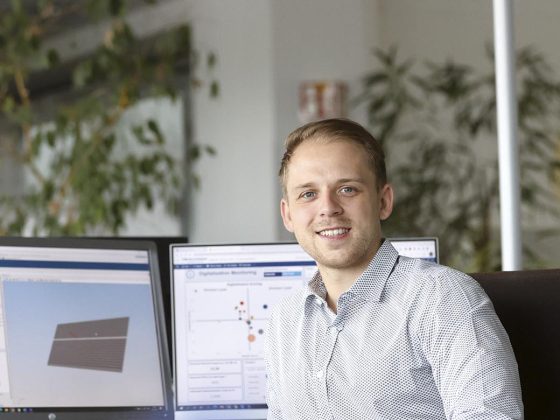
Production data capture using MSCADA is the flagship of shop floor management. Nearly 20 FST manufacturing departments use this program to see how their production is running in real time. Based on data from production processes, the “crude oil,” changes in processes can be quickly identified. Measures and improvements can be derived directly from the information.
Data “refinement” can result in the optimization of a company’s production processes, for example, in recommendations that settings be changed. Or they can lead to proactive maintenance and repair on the shop floor. New business models and tangible added value for customers could be the result. Another example: Delivery times and deadlines can be precisely calculated. The data also make it possible to precisely document and retrace the production process. Customers expect this in many sectors.
Mixed reality and HoloLens glasses are already proving themselves in real-life applications at FST. They are making it possible to present interactive, three-dimensional projections in a real environment. The users can control the virtual holograms hands-free. They can also place them in an existing, physical field of vision. With wireless holographic devices, employees can network with one another from any location. With the same image in front of them, they can train their counterparts, give them direction, or consult and share information with them. As they work, machine operators can be supplied with machine data “live” with the help of this technology. Or they can have trends in specific process parameters such as temperature or pressure presented graphically – the right information at the right time. This shows that the Connected Factory not only networks machines. It also links those who work with them.