The Berlin site is replacing plastic in DIAvent® shipping with an environmentally friendly packaging alternative, thereby reducing its costs.
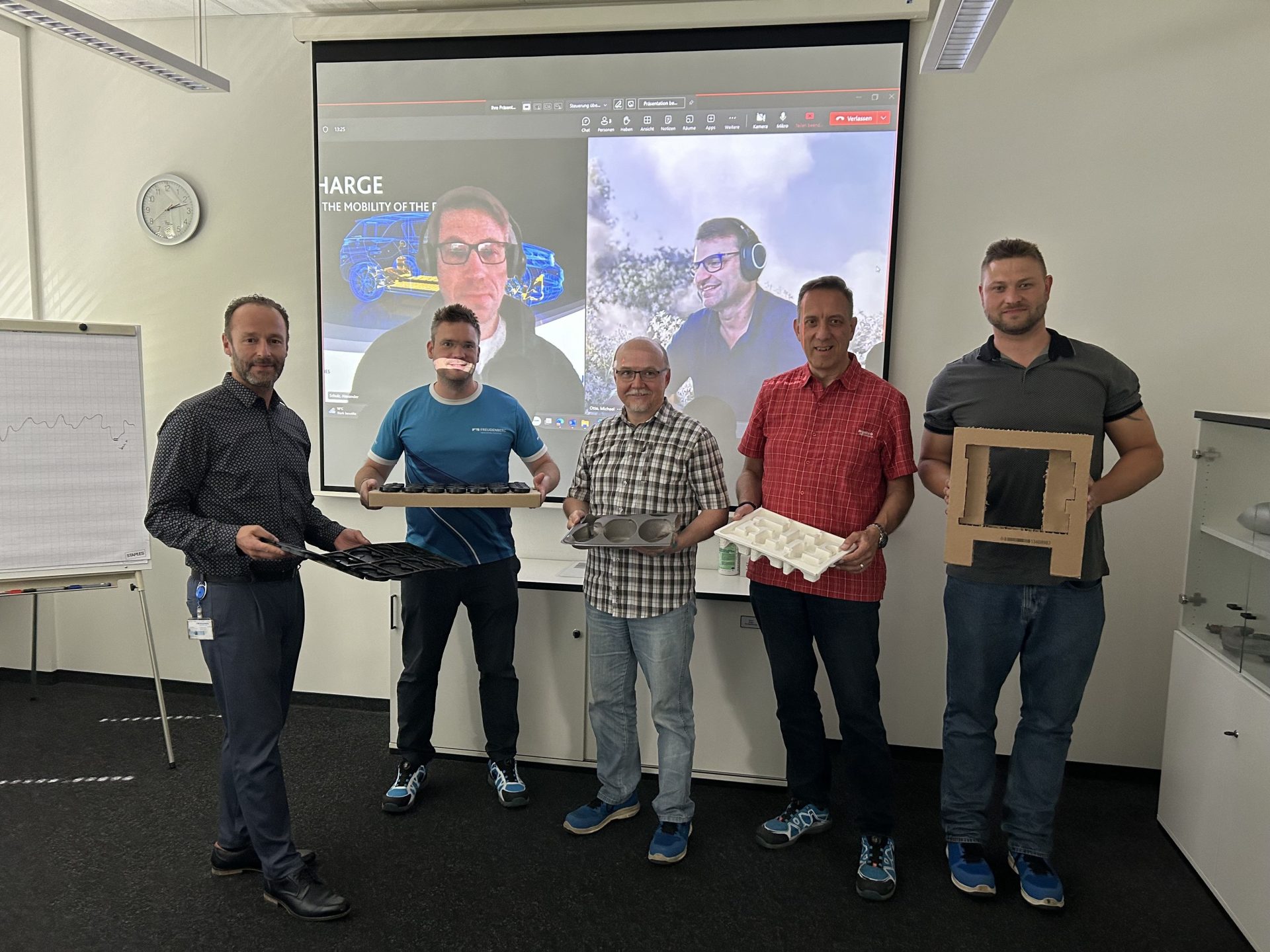
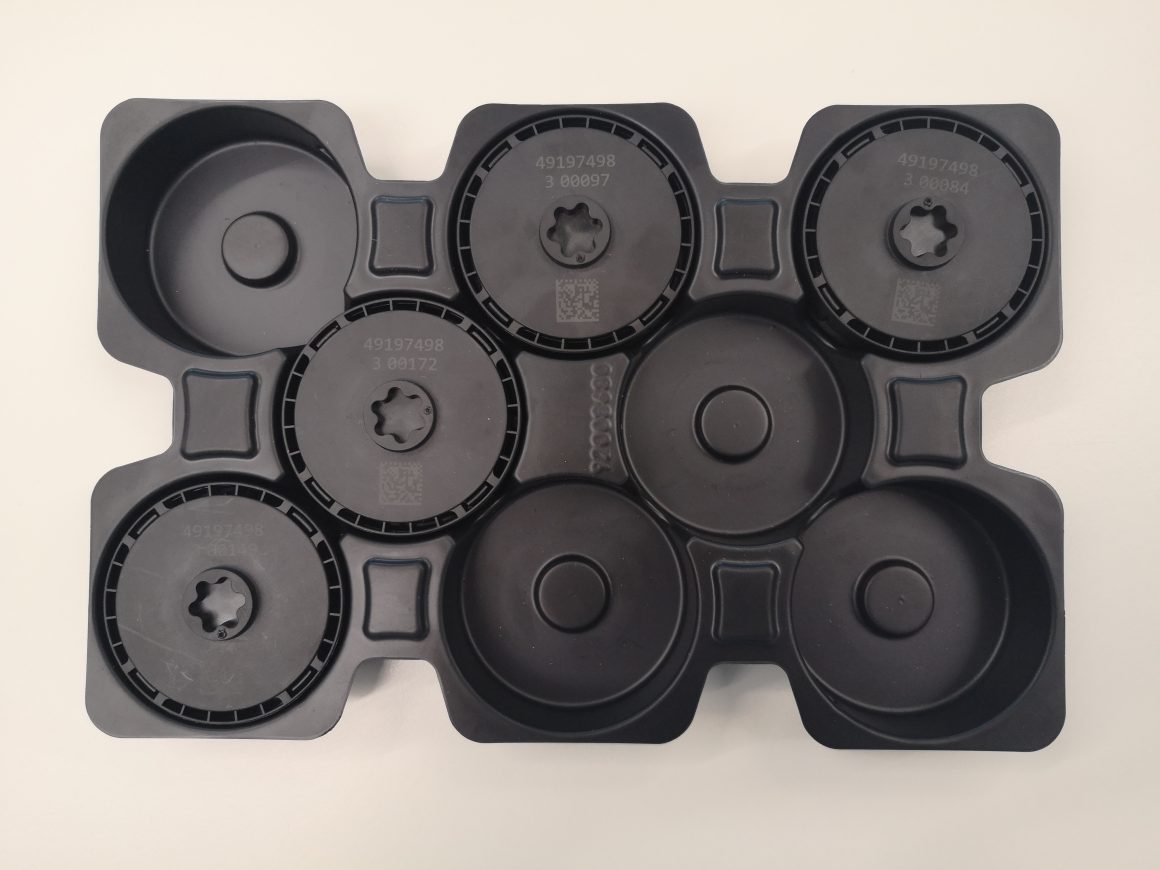
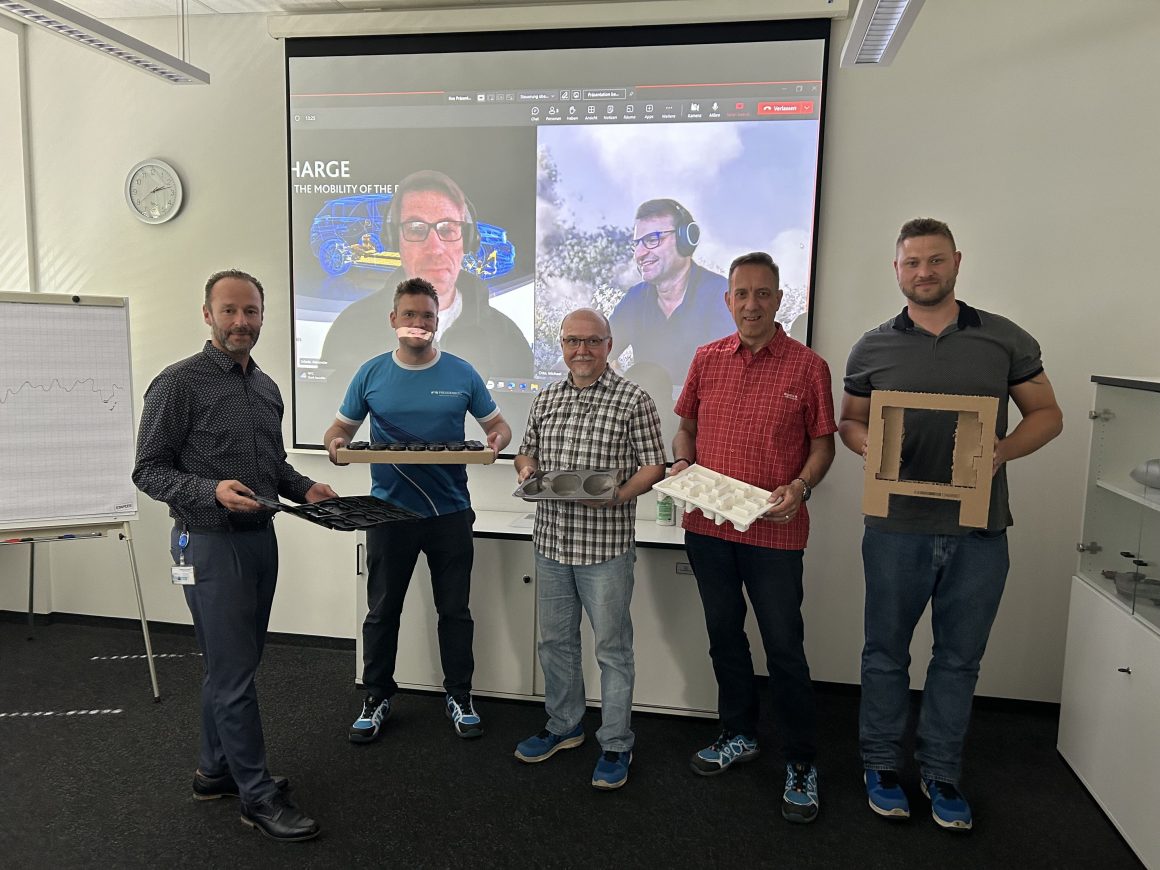
“It looks like plastic, it feels like plastic, but it’s plastic-free and made from natural, renewable raw materials,” explains Richard Böhle. The sustainability coordinator at the Berlin site holds a packaging carrier in his hand, in which the DIAvent® pressure relief valve reaches the customer safely and undamaged. Several finished parts fit side by side in one layer without touching each other. Several of these carriers – often called blisters or trays – are stacked on top of each other per shipping carton. The exact quantities per packaging unit vary depending on customer requirements and the size of the box.
The plastic blister packs used to date cannot be reused once the finished parts have been removed by the customer and must be disposed of as waste or, at best, recycled. This will improve shortly when the Berlin site introduces its new packaging concept for DIAvent®.
This is because the new carriers are compostable, i.e., biodegradable. This means that no more environmentally harmful plastic waste is produced. “That’s bound to be expensive,” some may immediately object. But that’s far from the case. The new sustainable packaging solution not only benefits the environment, but also the bottom line. “We have achieved price savings of 12 to 41.5 percent,” reports Böhle.
He trained as a Black Belt in Sustainability in 2023 as part of the Growtth program. In this context, he developed the new solution in a “Value Analysis/Value Engineering (VA/VE)” project, together with a competent team of employees from the Berlin, Reichelsheim, and Weinheim sites.
In this project, a systematic approach and analysis of more than 20 plastic-free packaging alternatives initially identified fiber-molded paper as the best option. One of the suppliers considered for this, Pulp-Tec in Bischofswerda, Saxony, was ultimately able to offer a material called “Paper Compound” that is not only stable and easy to handle. It also meets the high purity requirements for shipping DIAvent®.
“Packaging often drives up a product’s CO2 footprint. It is therefore advisable to take a closer look at packaging,” says Böhle, summarizing one of the lessons learned from the project. It was a real eye-opener for him that sustainable practices – or packaging, in this case – can pay off economically. “Before the project, the premise was not to increase packaging costs. In the end, we actually reduced them significantly.” And don’t forget: the approach can be transferred to other locations and products.

DIAvent® packaging blister carries OK compost Industrial certification
This certificate confirms that a product is completely biodegradable in industrial composting facilities under controlled conditions. Organic materials are decomposed under controlled conditions in large composting facilities. The temperatures typically range from 55 to 70°C, and constant ventilation is ensured.