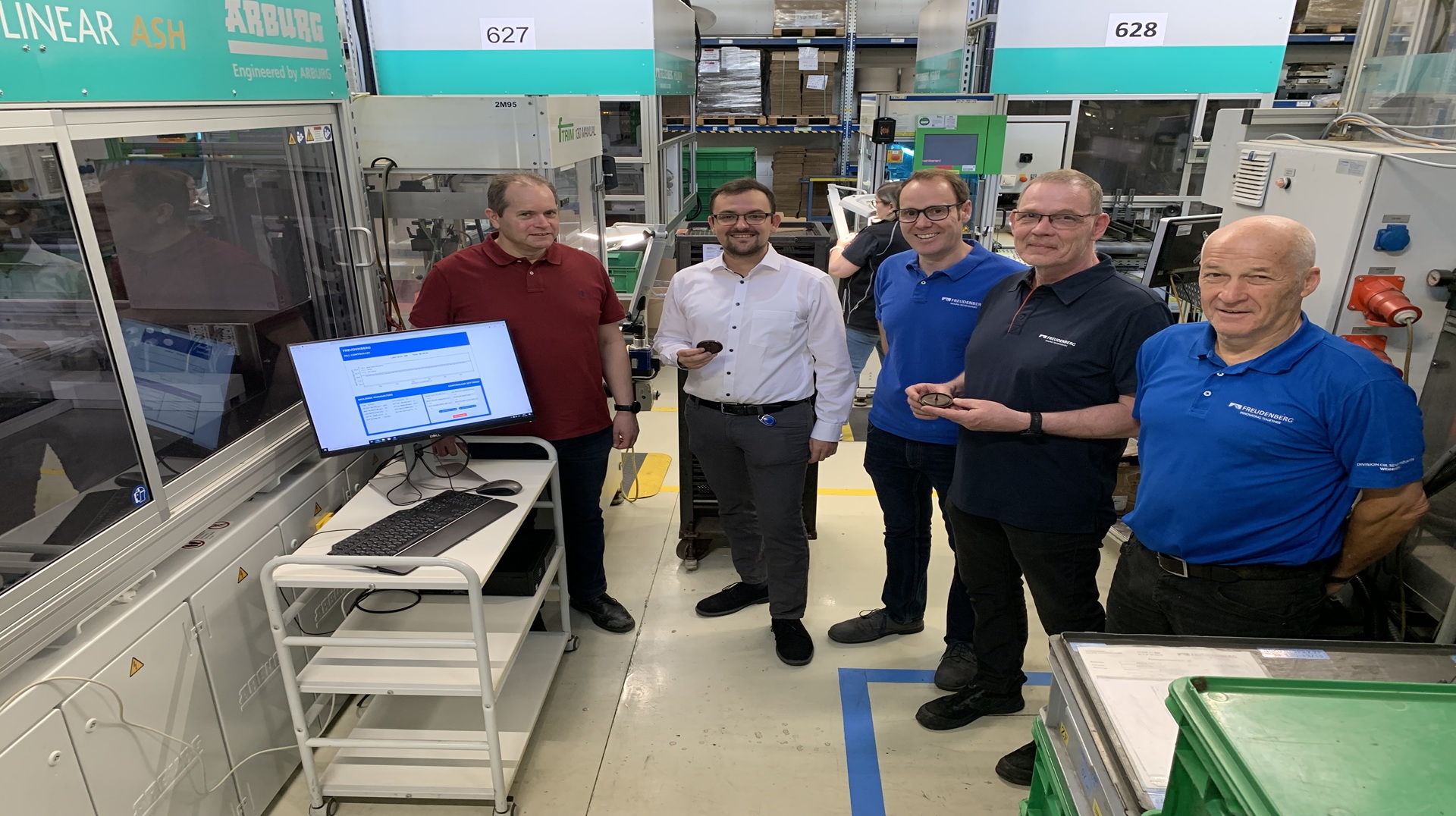
Experience meets technology: The Simmerring® production facility in Weinheim is the setting for a research project on artificial intelligence.

In Brief
The project has also initiated collaboration with other Freudenberg sites, including Kufstein and Freudenberg Home and Cleaning Solutions in Italy, to transfer and scale AI solutions.
The Simmerring® production facility in Weinheim is hosting a research project on artificial intelligence (AI) to enhance industrial processes.
The project aims to use AI to predict the quality properties of injection-molded elastomer components and optimize the manufacturing process, focusing on reducing waste and increasing efficiency.
Traditional AI approaches require large amounts of data, but the method applied incorporates physical correlations and the expertise of colleagues to reduce the necessary training data and development times.
The research has expanded to multiple machine types and articles, with the goal of transferring knowledge to as many articles as possible while ensuring product quality.
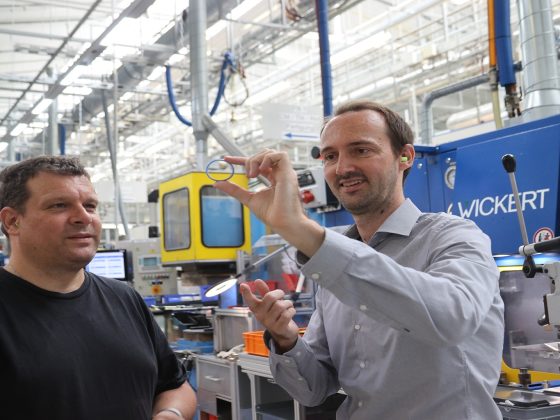
Alexander Olbrich has been working for years on how industrial processes can be improved with the help of artificial intelligence (AI). As a doctoral student at the German Institute of Rubber Technology, he works for Freudenberg Technology Innovation (FTI). He has conducted plenty of experiments in the technical center as part of his dissertation. “My aim was to transfer my results to specific Freudenberg products. In order to gain a sound understanding of the processes, it was particularly important for me to be on site. I wanted to get to grips with the production process in detail and seek close contact with experienced colleagues who work on the systems every day and have in-depth practical knowledge.” This is how he describes the reasons why he temporarily moved his place of work to the Simmerring® production facility in Weinheim around a year ago.
Sarang Etemadi, Head of Operations at the Dynamic Sealing division in Weinheim, supported this project. “We are not doing this because AI is the buzzword on everyone’s lips, but because we expect AI to have economic potential. AI has to help our people on shopfloor. With this in mind, we were happy to offer Alexander Olbrich a platform for innovation as part of his AI research project. It’s a win-win situation that helps us to master the diversity and complexity of our processes even better,” he says.
Predict properties, optimize processes
How can AI be used to predict the quality properties of injection-molded elastomer components? And how can the manufacturing process be optimized based on AI models? For Olbrich, the focus was specifically on two topics: Reducing waste and increasing efficiency by optimizing cycle times.
He uses the term “viscosity disturbances” to describe the issue of rejects. Even slight fluctuations in individual mixing batches and changing ambient conditions influence the flow behavior of the material during injection molding. This can lead to underfilling or overfilling of the mold cavities. The result: rejects. Such material waste increases production costs.
Other types of rejects are in turn directly linked to process variables which may be limiting efficiency. For example, materials, that are not sufficiently crosslinked, can have bubbles or sprue defects. This results in a complex conflict of target values between achievable cycle times and reject rates. The resulting optimum operating point can in turn shift due to batch and environmental fluctuations.
“The idea is that we calculate the influence of these fluctuations and, based on this, specify an optimum vulcanization and cycle time at an optimum temperature,” he explains. Mold fouling can also cause unnecessary production waste – Olbrich has therefore also taken this into account in his research.
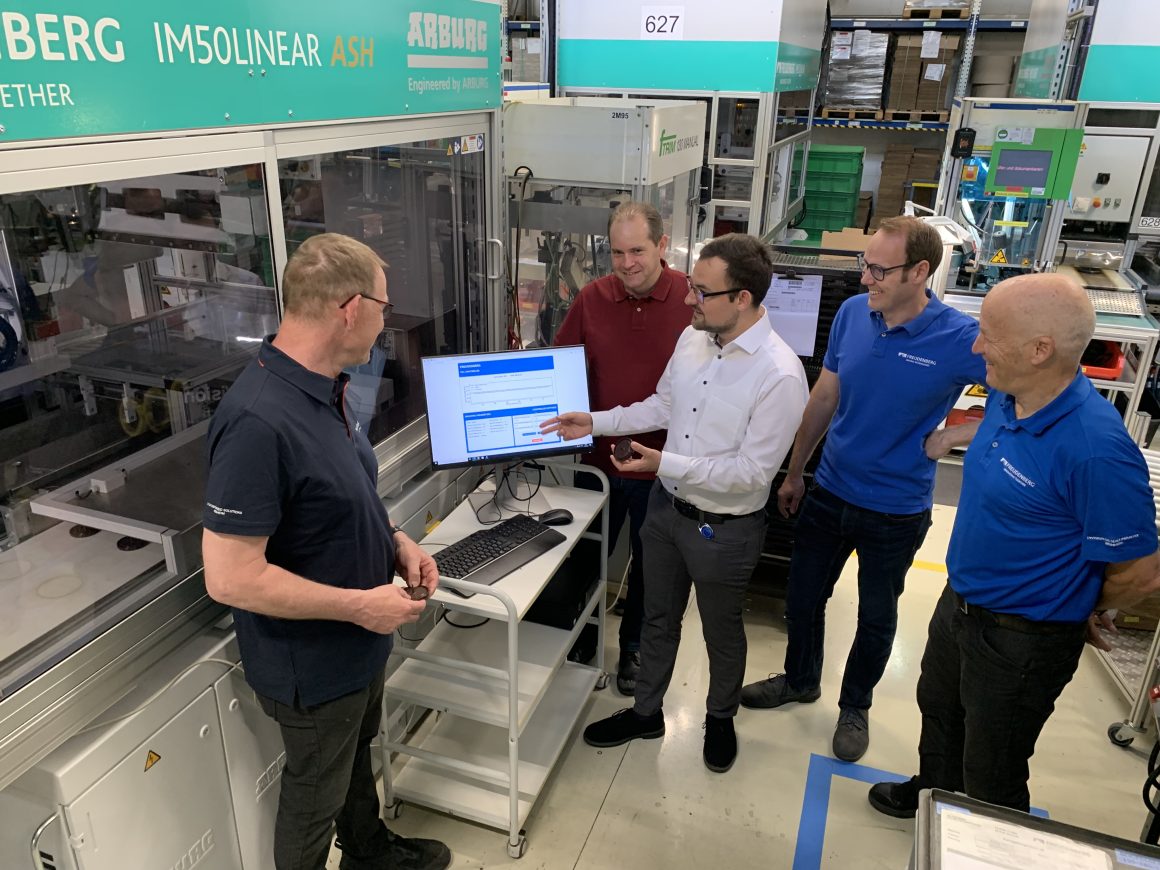
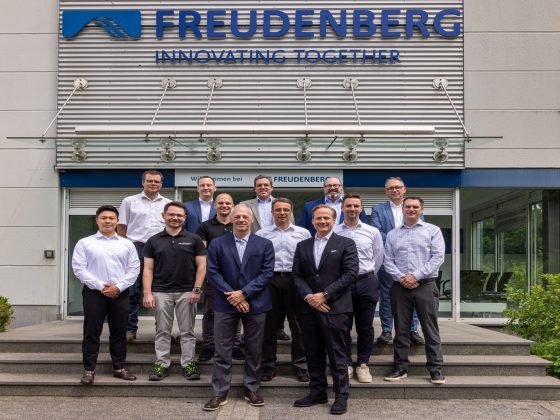
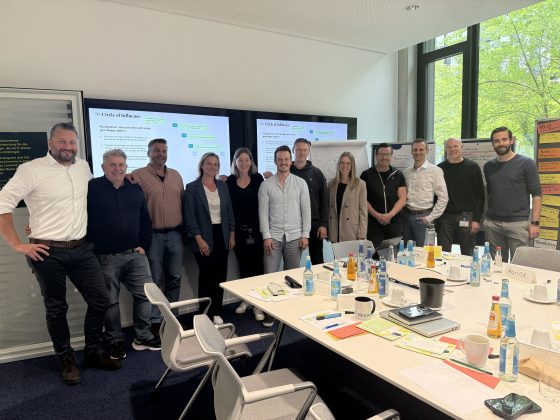
From left: Bernhard Bräunig, Christian Ernst, Alexander Olbrich, Philip Stein, Egbert Gölz.
Transfer knowledge
Traditional AI approaches require a large amount of meaningful data to build up their solution expertise using machine learning. An initial situation in the production environment that is usually not given due to a large variety of products and machines of different ages from different manufacturers. The solution to this problem when modeling the process is to take physical correlations and the expertise of colleagues on site into account.
This determined Olbrich’s approach: Running test plans, reading and evaluating data in the process, then developing machine learning models with predictive power, and finally implementing control algorithms that correct faults and optimize the process. “Incorporating the experience of the setters and the expertise of our colleagues from process engineering was crucial to dramatically reduce the necessary training data and the associated development times,” Says Olbrich. What initially began on one machine with one article, Olbrich later expanded to several machine types and articles in Weinheim Simmerring production. “With the wide range of variants at the site, the aim is to transfer knowledge to as many articles as possible,” he explains.
As product quality must not suffer as a result of increased efficiency, test bench tests show whether the desired properties are still present after process adjustments. Olbrich emphasizes: “The quality of the end products is of the highest priority. To ensure future usability, it is important to closely involve colleagues from product development in order to critically test the functionality of the optimized items.”
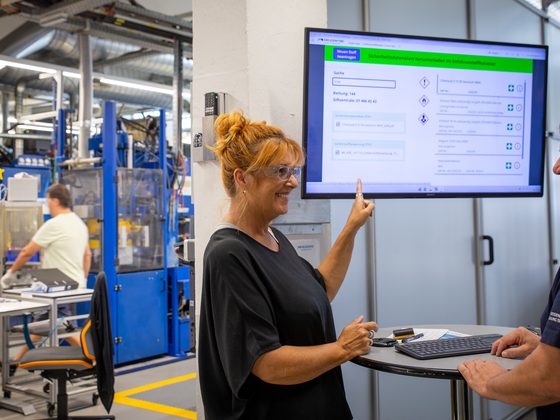
Olbrich’s research is based on the idea that machines can use AI to recognize when there is a problem and take direct steps to optimise the process. Alternatively, artificial intelligence supports the workers with suggestions for process adjustments. Both he and Etemadi emphasize: AI is an aid, not a panacea. Etemadi says: “AI can create transparency, make faults and fluctuations visible that would otherwise be almost impossible to detect. But our people remain enormously important with their expertise and experience.” He adds: “Our processes generate a lot of data. This needs to be analyzed. In combination with our Manufacturing Execution System (MES), AI can significantly support this evaluation in order to optimize our processes. Alexander Olbrich’s research work proves that this works.”
Innovating Together – also with Kufstein
Olbrich’s doctoral thesis also took him to the Lead Center Integrated Molded Components plant in Kufstein. “In Kufstein, the focus was on reducing rejects and optimizing cycle times in the production of tilting armatures for solenoid valves. The Austrian colleagues are at an impressive technological level and were able to provide the best starting conditions for my work,” he explains. The similarity of the two cases enables many positive synergies between the sites. Thanks to the joint collaboration with the Special Sealing Products Division’s digitalization experts, the solutions developed were transferred into the first demonstrator apps. His work also initiated the exchange between the two Lead Centers: to find standards and necessary framework conditions for the use of AI that can be scaled within FST, i.e. used on a broad basis. “This is Innovating Together,” Etemadi says.
At Freudenberg, this also works beyond FST. “For a joint project with Freudenberg Home and Cleaning Solutions in Italy, we were able to transfer the solution developed with FST Weinheim and Kufstein – in a modified form – to the injection molding of thermoplastics and transfer it to a pilot process,” Olbrich says. His next business trip will take him to Freudenberg Medical in the USA. And at some point “in between”, he will have to write up his projects and findings as a doctoral thesis – without AI support, of course.