Green hydrogen can only rarely be produced affordably at sites where it is needed in large quantities. So a new transport infrastructure is necessary to link producers and users of green hydrogen in different regions of the world. It also has to guarantee the safe, efficient transport of this important energy carrier and raw material.

“Industry is the first focus,” said Dr. Britta Mayerhöfer, Application Specialist Hydrogen. The reason: Industrial sectors such as the chemical industry and refineries are already producing hydrogen in large quantities for synthesis processes in their facilities – but it is so-called gray hydrogen from fossil energy sources, especially natural gas. The use of green hydrogen in existing processes could drastically reduce CO2 emissions in these sectors.
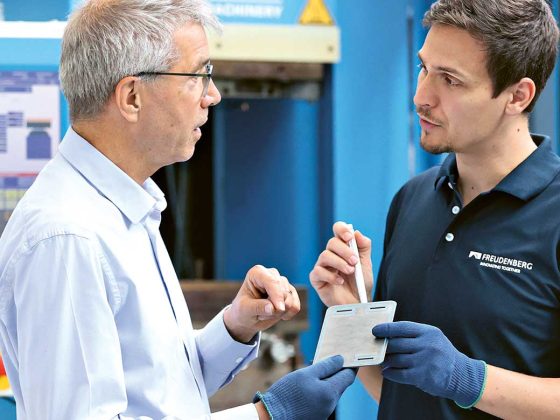
Dr. Britta Mayerhöfer is an Application Specialist Hydrogen at Freudenberg Sealing Technologies.
“For this to happen, you would first have to connect the facilities producing green hydrogen – domestic electrolysis facilities – and import terminals at the ports with chemical facilities,” Mayerhöfer said. For example, existing natural gas pipelines with adapted sealing systems could carry hydrogen instead of natural gas. In a comparatively short time, this would create a significant, positive climate effect.
But the plans could run into a catch-22. Consider the construction and expansion of a wide-ranging, worldwide hydrogen supply network. “At present, there is still not enough green hydrogen to directly reward investment in infrastructure. In turn, it is difficult to invest in hydrogen without the right infrastructure in place,” she said. “In addition, green hydrogen is still significantly more expensive than the gray variety.”
Incentives promoting the use of green hydrogen in large volumes have often been lacking so far. Experience with the technologies has been in short supply, too. “But there are already many subsidy programs that – after some hesitation – are slowly getting started and helping industry invest in the production, infrastructure and use of green hydrogen to demonstrate its feasibility on a large scale,” Mayerhöfer said.
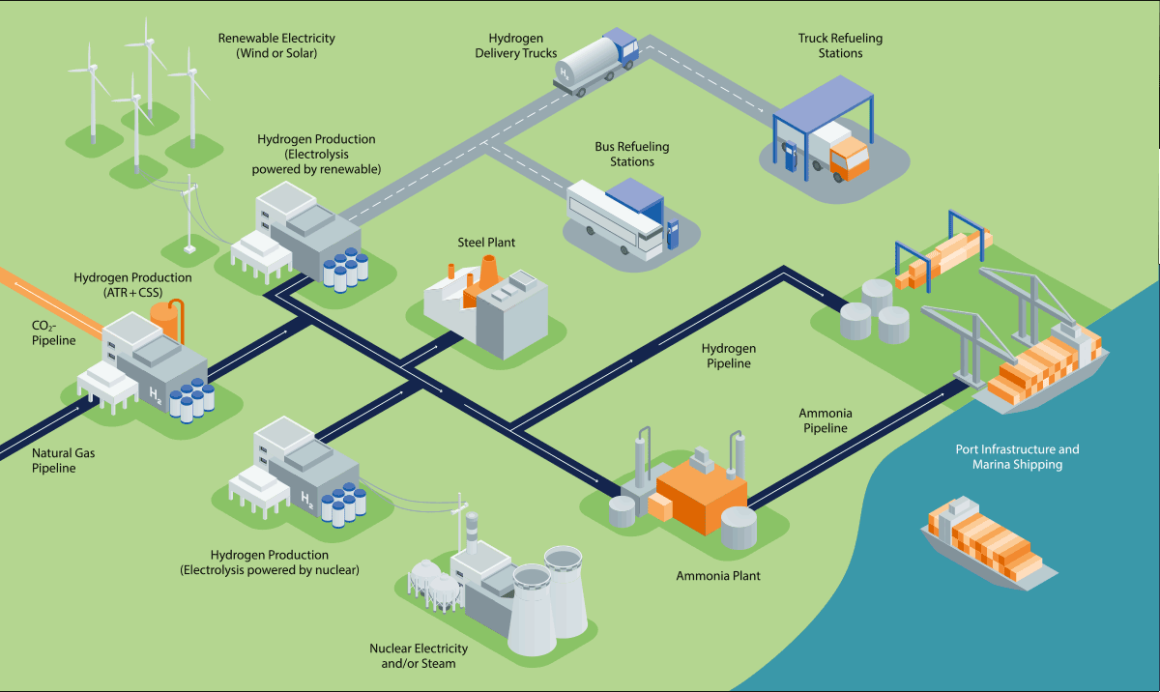
She addressed another challenge: “At present, there are many ways to transport hydrogen, although the efficiency is different for long and short distances,” she said. Is the hydrogen being transported from one location to another in gaseous or liquid form? The first approach requires enormous pressure to compress the gas. The latter requires a great deal of energy to cool it since hydrogen only becomes a liquid at –253 °C (423.4 °F). Or is the hydrogen converted to ammonia, methanol or methane to facilitate its transport? The chemical industry already has experience with this. But the volumes would be of an entirely different magnitude in the future.
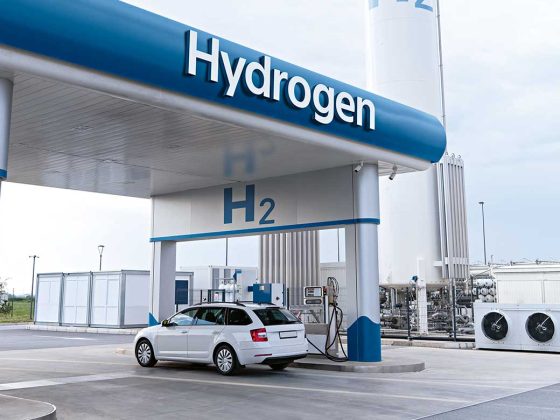
In any case, there is a need for a wide-ranging hydrogen infrastructure consisting of ports, loading terminals, pipelines, stationary interim storage and fueling stations. Mobile tanks on ships, trucks and trains are also part of the approach. Mayerhöfer is optimistic that FST can score points as it tackles infrastructure expansion. “Together with our customers, we have already found a solution to many of these issues on a small scale. As soon as the direction is clear, we can ramp up production at any time,” she said. High-tech seals for piston compressors are one example. (See post: Powerful Compression)