A plastic component is no better than the cavity in which it is cast. So it is no surprise that excellence in mold-making is a trump card that Freudenberg Sealing Technologies (FST) likes to play. It has now set a new mold-making standard and is exploiting its opportunities in sensor applications and other areas in the cutting-edge field of autonomous driving.

Imagine a golfer in mid-swing. If the golf club mishits the ball by the slightest margin, the ball deviates more and more from the ideal path as it travels the full distance of the shot. Something similar is at work on streets and highways. Autonomously driven vehicles need to draw on exact position data and operate with high precision to remain safely in the correct lane. Sensors enable them to do this. As with the path of a golf ball, however, the smallest errors can lead to deviations with significant consequences.
Maximum precision is important for components in operating and driver-assistance systems. That makes the cavities used to cast them crucial for their form and surface quality. The exact dimensional accuracy down to the micrometer range is the highest priority here. Experts refer to this as contour fidelity. In this area, FST’s mold-making has set a new standard with its enhanced high-precision toolmaking center.
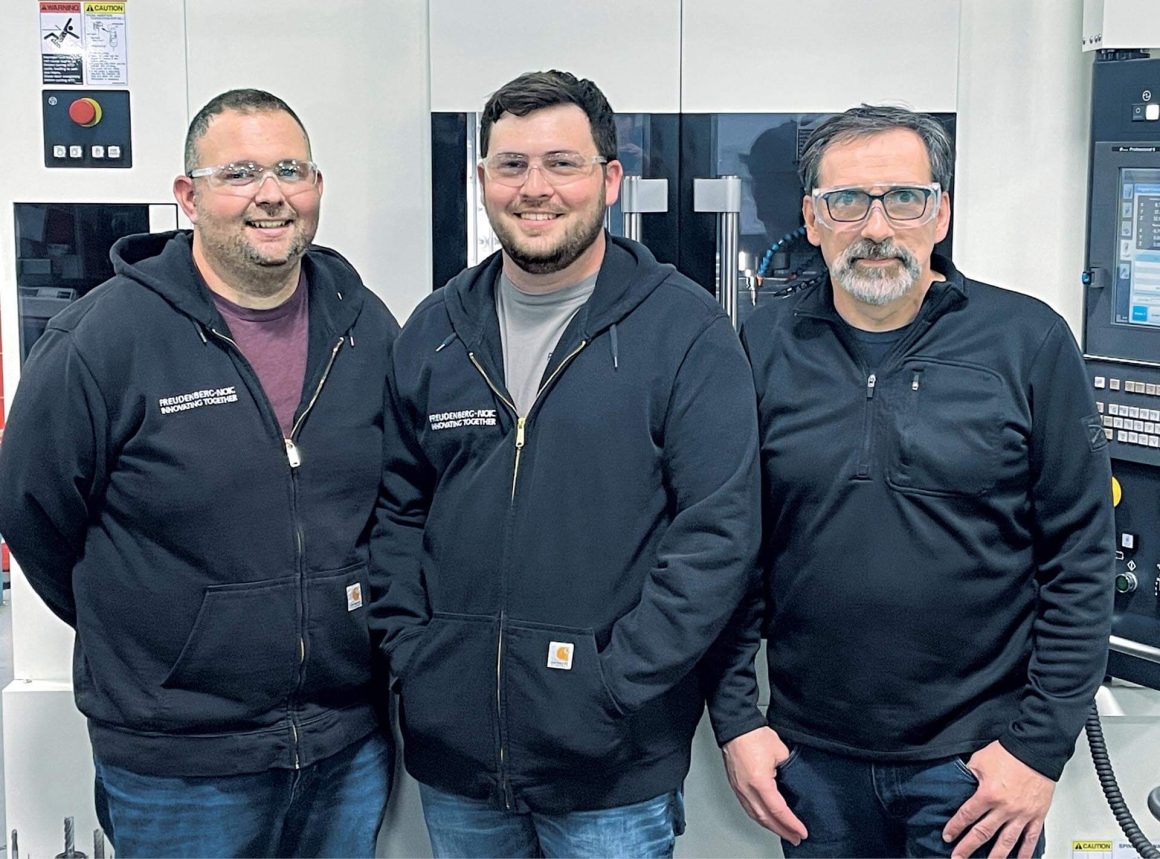
“An interdisciplinary development team led by the Northfield tool shop has developed a new machining technology that can achieve dimensional precision and surface quality in a cavity in a single work step, something that has not been achieved before,” said Matthias Hauer, a plastics expert at Technology & Innovation. Accordingly, the quality of the parts produced with cavities is extraordinarily high. Prime examples are the components that FST is developing for sensor applications for the mobility of the future. “This is Champions League level,” Hauer said enthusiastically.
Laser Technology For Greater Precision
Several factors are crucial to ensure dimensional precision and flawless surfaces. One is the laser-based measurement method used to optimize the precision of cutting tools. Those tools at the high-precision machining center make it possible to turn metal blanks into cavities. The other is the modified cooling lubrication system for “ingenious surfaces,” as Hauer puts it. This makes it possible to do without the standard manual polishing afterwards. This is important because polishing may slightly change the contour of the cavity. The example of the errant golf stroke comes to mind. The highest possible performance in a single production step is the equivalent of a great swing.
One ironic aspect is that FST originally developed the new mold-making process for the manufacture of transmission seals, increasing the operating life of the molds many times over. But now, this knowledge is carrying over to the world of the “new mobility.” A project involving “sensor systems for autonomous driving” with a well-known customer has now reached the pre-series stage.