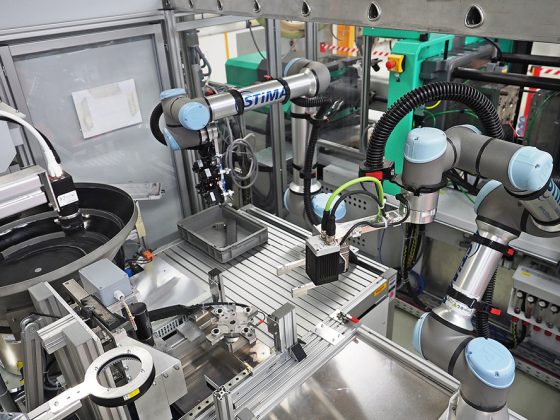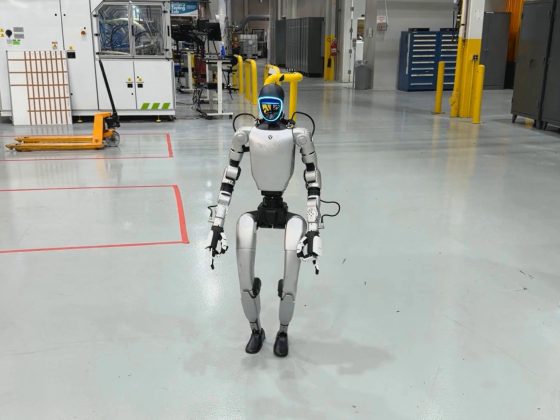
Today there is no way around the use of industrial robots in manufacturing. They work diligently, precisely and quickly. Some of them can even move enormous loads. In these ways, they are helping to accelerate and automate production processes. Or they are making a contribution to warehouse logistics. In the future, a new form of robot could begin making inroads in industry and even beyond it: humanoid robots.
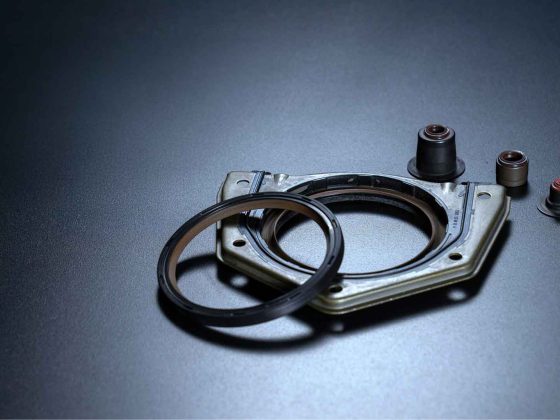
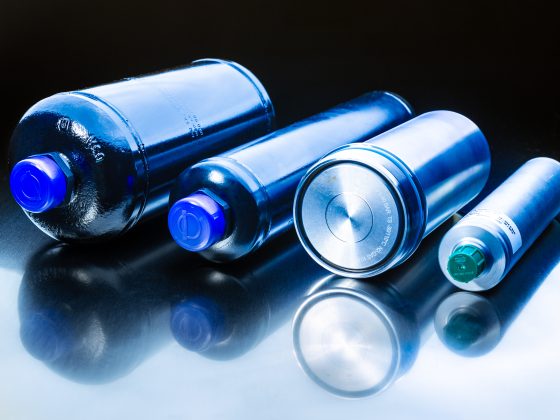
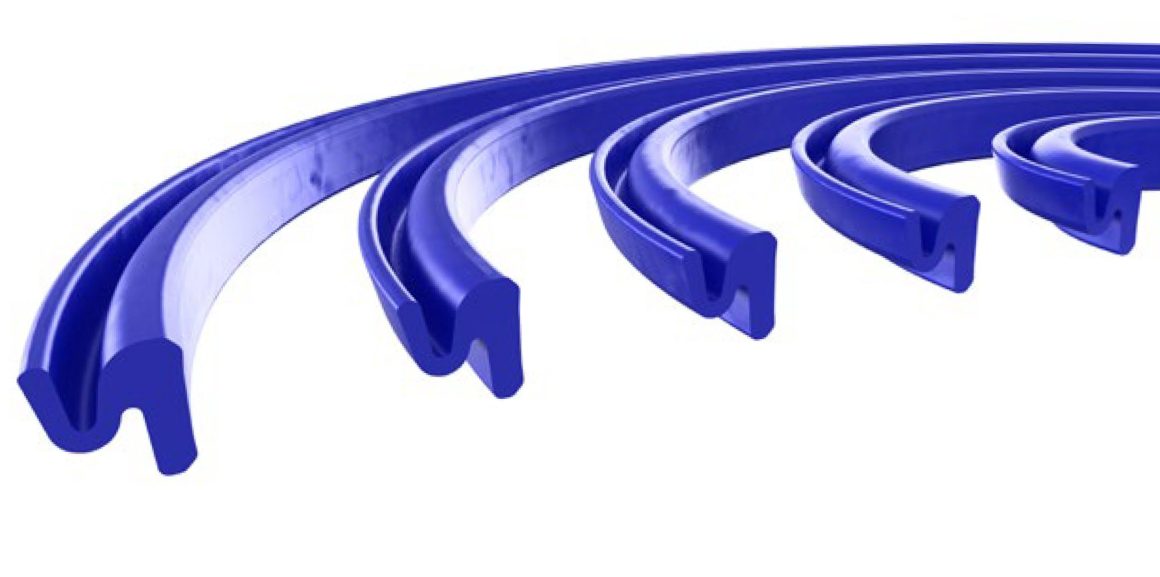
Freudenberg Sealing Technologies considers humanoid robots to be a young but not unfamiliar field. “Our expertise in the development of made-to-order solutions for classic industrial robots makes it easier for us to provide seals for humanoid robots that satisfy the machine’s requirements all the way to its finger joints,” said Gregg Goings, Global Segment Manager for New Business at Freudenberg–NOK Sealing Technologies. Seals play a key role, especially in the built-in actuators that initiate the robots’ movements. They must be extremely robust and long-lasting. Low-friction seal materials are also in demand. “Our IPSR seal has these attributes,” Goings said. “Due to its characteristics, including its wear-resistant material, it provides outstanding protection against harmful environmental influences such as dust or the penetration of water.” It also performs well in very small installation spaces and can compensate for both axial and tangential displacements. The IPSR seal is already being built into humanoids by a well-known international robot manufacturer.
The PSS seal from Freudenberg Sealing Technologies is also an option for humanoid robots. “Thanks to its remarkable qualities, it has long proven itself in the motors and gearboxes of industrial robots,” Goings said. With its unique design, it seals reliably both externally and internally, preventing contamination. Due to its low friction, this long-lasting seal ensures that less of the robots’ performance is lost over time. PTFE wafer seals from Freudenberg Sealing Technologies also exhibit outstanding results for friction reduction. In addition, these disk seals made of high-performance PTFE plastic are water-repellent and in demand in various industries.
Materials for Battery and Heat Management
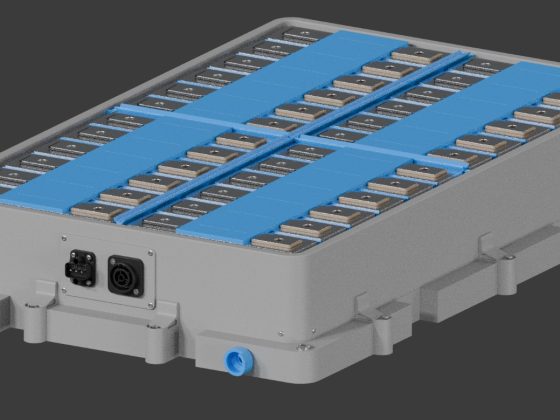
Miniaturized solutions are a wide-ranging trend in the industry. In the case of humanoid robots, it relates to the batteries that provide the machines with power and that are mostly installed in the robot’s thorax. But the batteries are not just expected to be more compact today – they should offer higher performance as well. But that tends to generate more heat, which is why the materials surrounding the batteries must be heat-resistant. Once again, thanks to its extensive material expertise, Freudenberg Sealing Technologies has the right solutions in its portfolio. The company has recently developed a thermoplastic – Quantix® ULTRA – that can withstand temperatures as high as 1200°C (2192°F). This material is suitable for use in close proximity to electric-vehicle batteries since it meets the flame-retardant requirements for these environments. In the case of electric powertrains, the material is an option for the encasement of important electrically conductive rails known as busbars. They are also in demand for humanoid robots, although on a smaller scale. Freudenberg could offer package solutions in the battery area to help with heat management in these sensitive robots.
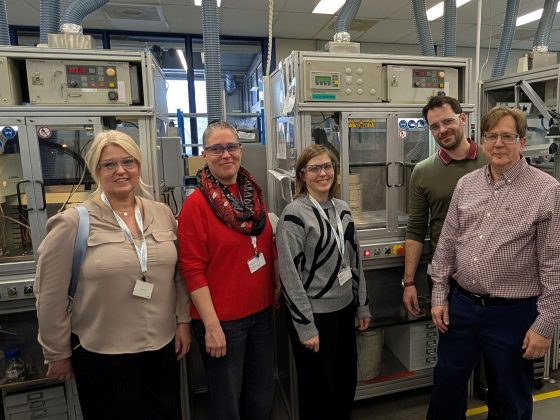
“We have now visited several makers of humanoid robots and shared information with many of them at trade fairs,” said Hunter Cheng, Global Segment Manager, with a focus on robotics, at Freudenberg Sealing Technologies. “When we talk to them, we continue to see just how much these manufacturers are interested in our expertise in developing materials and designs.” Freudenberg Sealing Technologies has a wide-ranging portfolio of products and designs that are a good fit for any application. “When sealing products have to be tailor-made, we can do it,” Cheng said. “We’ve shown that often enough. Whether in the field of robotics or the manufacture of machinery and automobiles.” The success of Freudenberg Sealing Technologies is based on in-depth material research and development. In combination with its in-house test facilities, it is able to create solutions that are highly performing and innovative in equal measure
Equipping Humanoids for Use in a Demanding Environment
What makers of humanoid robots also have been looking for are seals that have a damping effect. They should reliably keep moisture out as well. “Both are the preconditions for the new class of robot to develop new areas of application,” Cheng said. “The humanoids are not expected to work solely in factories and warehouses but in caregiving and outdoors in harsh weather and working conditions too.” That means the seals in the highly sensitive joints, in particular, must be especially resistant to dirt and the penetration of moisture. In the future, it is conceivable that humanoid robots could be used in potentially hazardous environments such as mines. In that case, the seals themselves and the materials will have to be extraordinarily robust and durable.
When it comes to boosting the potential of humanoid robots, it will be important to teach them quickly. So far this still is a tedious process. Cheng is convinced that machine learning can be accelerated with the use of electromagnetic rubber compounds for muscular movement, neural signal and even brainwave transmission. These have been widely applied in Asia for life science applications. If they were applied to the hands of the humanoids, they then could relay haptic signals that the robot could process. The signals then culminate in the right movement. With its material expertise, Freudenberg Sealing Technologies could provide valuable support in not only remote control but also an alternative way of machine learning which could be more intuitive and efficient than traditional programming and video shadowing. Cheng is confident about the opportunities. “These are still ideas. But we have such an extensive knowledge of materials that we could certainly move in the direction of electromagnetic materials,” he said.
With its already existing solutions such as ISPR, PSS, busbars and PTFE wafer shields, Freudenberg Sealing Technologies is laying the foundation to expand humanoid robots’ range of applications while increasing their safety, longevity and range of functions.

In brief
Machine learning: FST could use its materials expertise to support more intuitive and efficient machine learning.
Humanoid robots are a significant growth market. They are expected to be used not only in factories, but also in care and mining.
Market growth: The global market for humanoid robots will grow to $66 billion (approximately €64 billion) by 2032.
Know-how: Freudenberg Sealing Technologies (FST) is applying its expertise in industrial robotics to seals for humanoid robots.
IPSR seal: This FST seal is particularly robust and protects against harmful environmental influences such as dust and water.
PSS seal: Proven in engines and transmissions, this seal reduces power loss in robots.
Battery and thermal management: FST offers thermal management solutions for humanoid robots, including Quantix® ULTRA thermoplastic.
Humanoid robot manufacturers are very interested in FST’s expertise in material and design development.
Applications: Humanoid robots are designed to work in a variety of environments including manufacturing, care and mining.