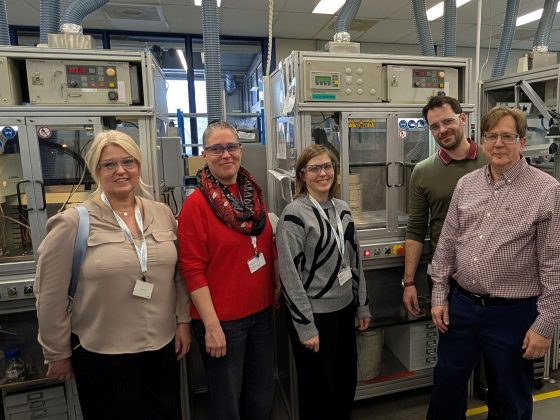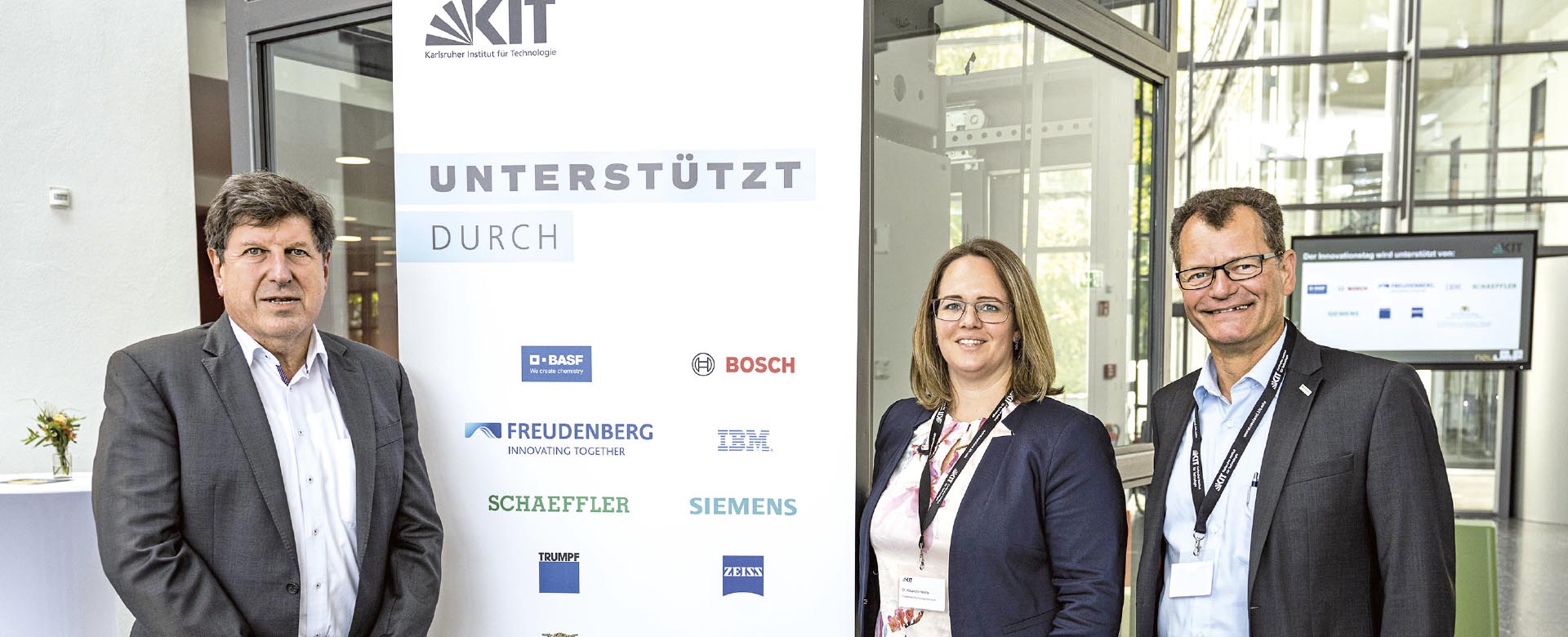
At the “Neuland Innovation Day 2022” at the Karlsruhe Institute of Technology (KIT) in Germany, Dr. Eberhard Bock, Freudenberg Sealing Technologies (FST), and Dr. Alexandra Heislitz, Freudenberg Technology Innovation (FTI), gave a joint lecture laying out Freudenberg’s multifaceted approach to sustainability.
Innovation means venturing into new territory, which happened to be the theme of KIT’s annual Innovation Day. Freudenberg has cooperated and partnered with the institute for years.
Freudenberg has built up and maintained ties with networks made up of universities, institutes, startups, other innovative companies and associations, mainly to interact with them and jumpstart innovations. Dr. Eberhard Bock, Vice President, T&I at FST, and Dr. Alexandra Heislitz, Head of Innovation Networks at FTI, have taken on this task for their organizations. Universities are reservoirs of qualified talent that companies like Freudenberg are pursuing with great urgency.
In its research and instruction, KIT ranks among the top technical universities in Germany and around the world. With the “Freudenberg Award – Mobility,” formerly the “Carl Freudenberg Prize,” the company honors outstanding scientific work by KIT graduates in the field of mobility systems every two years. Freudenberg maintains contacts with the KIT Business Club, and projects are underway with several institutes. KIT students are extended exclusive invitations to visit the company, most recently for the “Talents for IT career@ Freudenberg” event in late July in Weinheim. Freudenberg has also repeatedly taken part in KIT events, sometimes delivering technical lectures.
Sustainability was on the agenda at the “Neuland Innovation Day 2022” in July. Events of this kind offer Freudenberg an outstanding opportunity to foster connections personally. Innovation Day is a meeting platform for anyone interested in technology transfer and business startups at KIT.
In their joint presentation, Bock and Heislitz pointed out that Freudenberg has had long experience with sustainability and is not venturing into totally new territory – even if the climate neutrality envisioned by the company is still a long way off. Heislitz outlined their goal: “We wanted to highlight the diversity of our approach and provide examples of what we have already achieved even as we encourage cooperation in the field.”
In The Microcosm Of Atoms And Molecules
When Freudenberg develops products, for example, sustainability means creating the precise material for the purpose with the help of virtual aids, Heislitz explained. Innovative designs and different materials make it possible to reduce weight, friction and wear while increasing the longevity of the component. Smart sensors allow maintenance staffs to determine the exact timing for a seal to be replaced as part of a predictive maintenance regime. Together, with this objective in mind, Freudenberg and KIT have taken a look at the microcosm of atoms and molecules to develop material models virtually with “atomic simulation,” Heislitz said.
The valve-gate cold-runner injection molding technology is an example of an FST success in reducing its footprint. “We are saving three-quarters of a seal’s rubber and shrinking our footprint to the same degree,” Bock explained. Foldable seals are also reducing the consumption of material and energy. They are a smart technology using smaller tools and consuming less material and energy during manufacturing, Logistics and assembly are meanwhile simplified at the customer’s end.
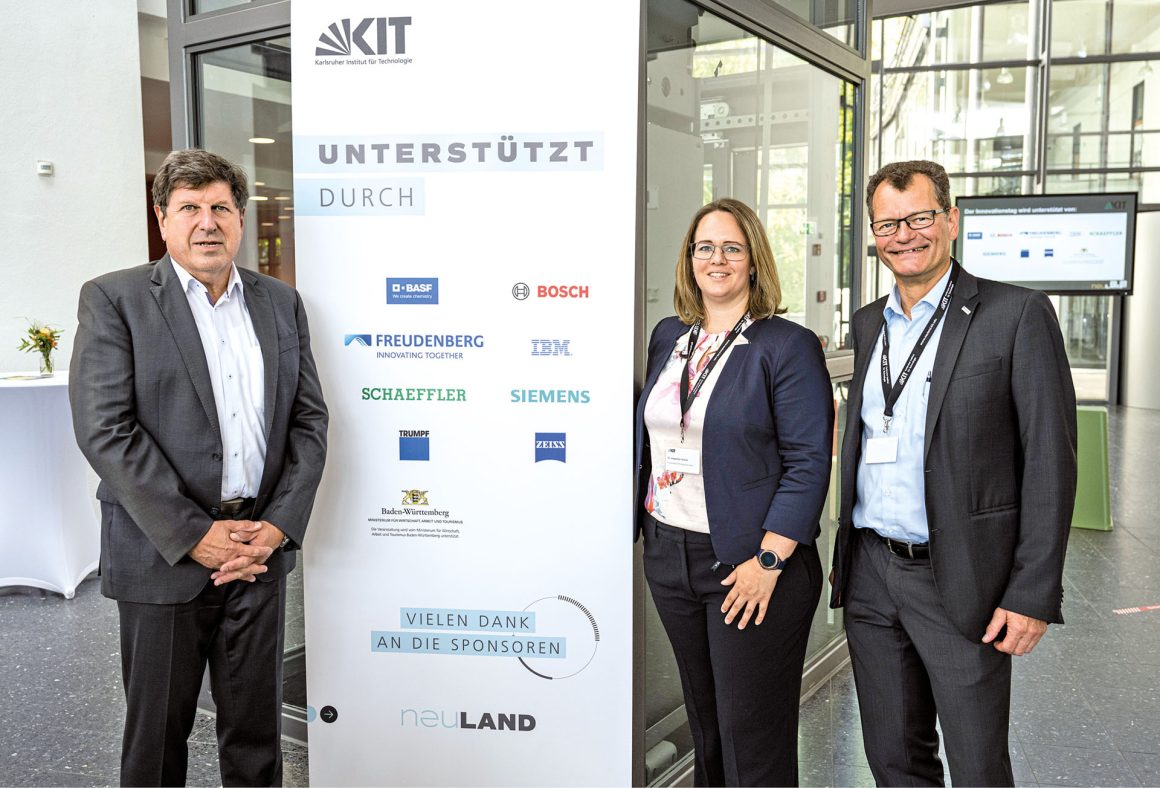
At Freudenberg, operating the business business sustainably also means expanding customers’ handprint with innovations that offer them ecological benefits. Bock presented the students with a whole series of completed projects. Many FST innovations reduce energy consumption by decreasing friction. He pointed to FST’s gas-lubricated mechanical face seal Levitex as a prime example in the auto industry, along with the Premium Pressure Seal (PPS) for hydraulic pumps for motors. Bock offered this illustration: “The number of our PPS seals sold in just one year has an energy-saving potential equivalent to the annual electrical consumption of all the private households in Karlsruhe.” The fact that the city has about 300,000 residents puts the impact into perspective.
The presentations of the two Freudenberg employees were streamed live from KIT’s main lecture hall. There was time for personal conversations on technology in the afternoon – in short, to network. The participants could learn about and discuss new ideas from the research and introduce themselves to new businesses. “We made new contacts with KIT scientists, well known people in industry, and startups. The goal is to drive Freudenberg innovations in the future as well,” Bock and Heislitz summed up.