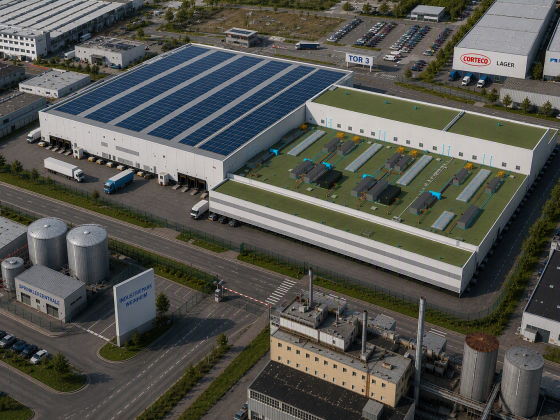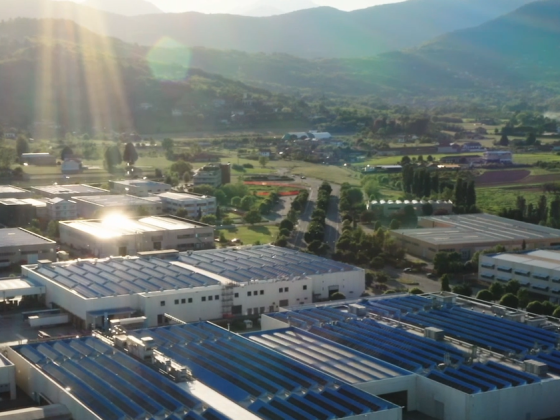
When people at Freudenberg Sealing Technologies (FST) talk about pioneers in the sustainability field, the name Oberwihl quickly comes up. With a combination of woodchip heating and a combined heating and power unit, the site in Germany is doing justice to its reputation and is investing about 1.2 million euros in a green heating system. The current investments are collectively resulting in CO2 savings of nearly 600 tons a year.
The O-ring production facility has been taking a leading role in energy efficiency and CO2 savings ever since a board-level pilot project was launched there about two years ago. The energy services provider, Bosch Energy and Building Solutions, found potential for optimizing energy use and consumption and developed plans for improvements. “Bosch showed us the way to CO2 neutrality, put the first price tag on it, and presented us with opportunities for public funding,” said Hans Haenle, CFO, O-Rings Division.
The pandemic certainly dampened interest temporarily. But the facility in southwest Germany was already rolling on the project again in 2021. “We immediately carried out the improvements that we could tackle with available resources, that is, without external support. We put the remaining portions of the overall project out for bid and ultimately consulted with a competent energy services provider, the Tenag company,” Haenle said.
A decision emerged from the current project: The Oberwihl plant will meet its need for the site’s heat and hot water in a largely carbon neutral manner in the future. As of early 2023, the plan is for woodchips from the Black Forest to replace heating oil. The facility is investing about 1.2 million euros, with some of money coming from public funding. First, the funds are being invested in two furnaces, each of which will produce more than 300 kilowatts of heat from biomass. Second, they will go into a special small cogeneration unit that burns woodchips as well. The unit will cover the heating baseload over the entire year. The two furnaces won’t need to operate during the summer months. A permit for a building on the edge of the Freudenberg property has been applied for. It will contain the three systems as well as stored woodchips.
GREEN HEATING OIL
A positive side effect of the cogeneration unit: In addition to heat, it generates 20 kilowatts of electric current that will be fed into the plant’s operating network. Oberwihl will have to maintain some of its oil burners in order to meet peak demand and remain flexible. “But we are assuming that we will have just 4 to 5 percent of the heating oil consumption that we had in the past. We will then cover the remainder with ‘green’ heating oil,” SEO Rainer Weiss said.
Haenle added: “By converting the heating technology from oil to biomass, that is, with wood as a fuel, we avoid about 425 tons of CO2 per year, while saving money on energy costs. The payback period is projected to be somewhat longer than usual. But we accept this because it is an investment in sustainability.”
One sidenote: Oberwihl has long used waste heat from its production facilities to heat its manufacturing areas. A current investment in compressed air production is taking a similar tack. Three compressors are employed at the plant. “First, we replaced one of the three compressors with a new, energy-efficient option. Second, we have integrated all three into a heat recuperation system. In all, we are preventing the release of 135 tons of CO2 annually with these two innovations,” Weiss said.
SMALL EXPENDITURE, BIG EFFECT
The needs-based control of the five transformers in the factory provides another 11 tons of CO2 savings from the electrical supply system. In this setting, it was possible to shut off one of them, enabling the remaining transformers to function with greater efficiency. Automated, needs-based off-and-on switching is being planned as a further improvement. “The example shows that, with just a little money and effort, there is a great deal you can accomplish when it comes to sustainability,” Haenle said.